
Is the Mediterranean Diet Actually Worth the Hype?
It is the most studied eating pattern in modern nutrition. It is also widely misunderstood, oversold in supermarket aisles, and stranger in origin than you would guess.
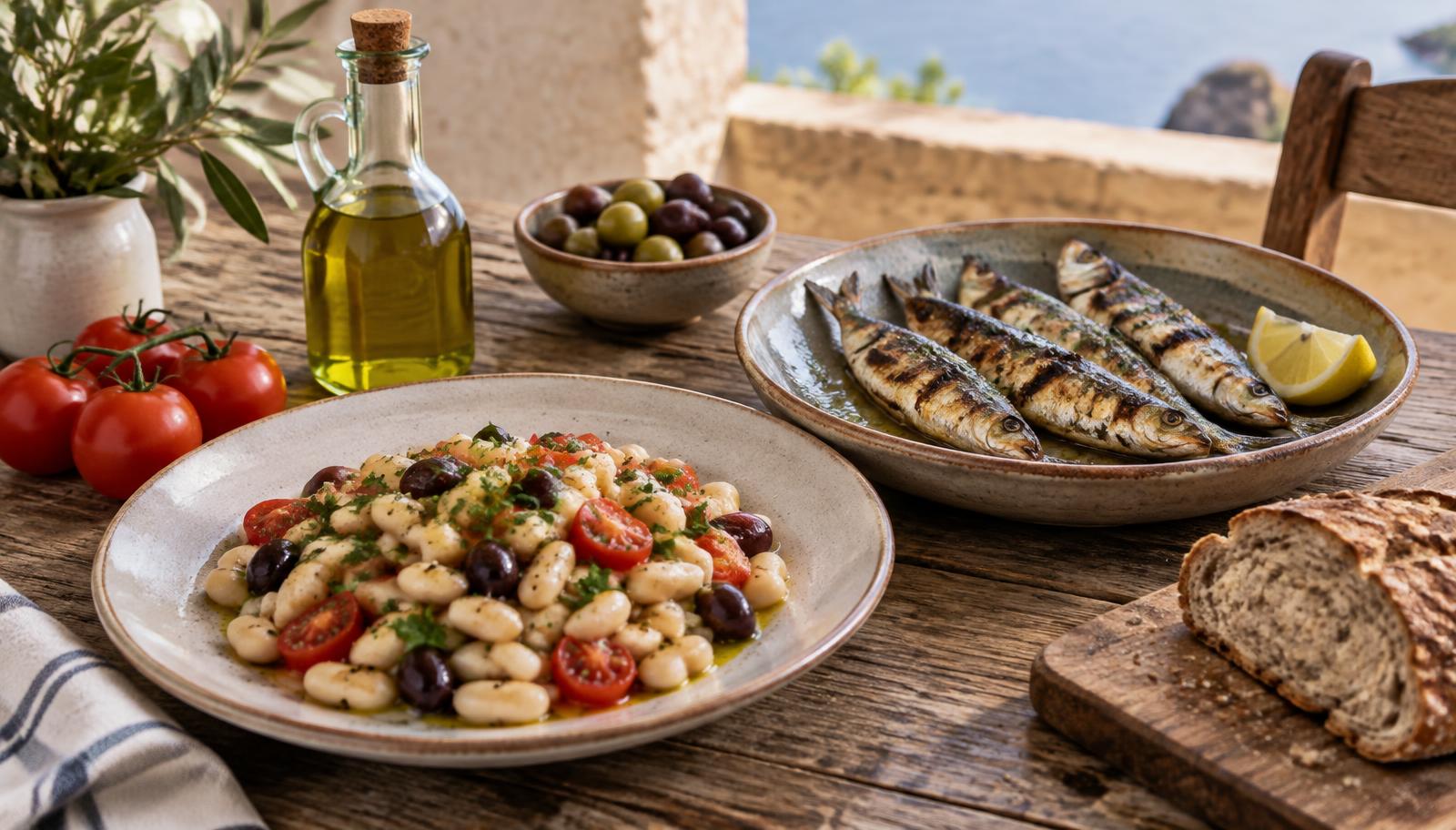
Short answer: yes, the Mediterranean diet is worth the hype, and it is the closest thing nutrition science has to a consensus winner. It has the strongest long-term evidence of any popular eating pattern for cardiovascular health, and the largest randomized trial to test it, Spain's PREDIMED study, found roughly a 30 percent lower rate of major cardiovascular events among people assigned to eat it with extra olive oil or nuts compared with a low-fat control group [1](https://doi.org/10.1056/NEJMoa1800389). What is not worth the hype is the version sold to you: the jarred pesto, the "Mediterranean-style" protein bars, and the idea that olive oil alone is doing the work.
What the Mediterranean diet actually is, and what it is not
It is not a menu from one country. There is no single Mediterranean cuisine shared by Morocco, Lebanon, Greece, Italy, and Spain, and anyone who has eaten in all five knows it. What researchers mean by the Mediterranean diet is a pattern abstracted from mid-century rural eating around that sea, and it is defined more by proportion than by recipes.
- Extra virgin olive oil as the dominant fat, used generously and often uncooked.
- Vegetables, fruit, whole grains, nuts, and legumes at nearly every meal, with legumes doing much of the protein work.
- Fish and seafood a few times a week, poultry and eggs in moderation, dairy mostly as yogurt and cheese.
- Red meat and sweets as occasional foods, measured in times per month rather than times per week.
- Wine, if at all, in small amounts with food, and no health authority now recommends starting to drink for your heart.
Notice what is missing. Chicken breast and rice is not it. A large plate of pasta with a swirl of olive oil is not it either. Cleveland Clinic's own summary puts the emphasis on plants first and describes olive oil as the main source of fat rather than the point of the diet [2](https://my.clevelandclinic.org/health/articles/16037-mediterranean-diet). The Mediterranean diet is best understood as a diet built on beans and vegetables that happens to taste rich because of the oil.
The evidence: what has been established
Most diets get their reputation from observational studies, where researchers watch what people eat and see who gets sick. Those studies are useful but easily confounded, because people who eat lentils and walk to the market also tend to smoke less and earn more. The Mediterranean diet is unusual in that it has been tested in a large randomized trial, which is a much stronger form of evidence.
PREDIMED enrolled around 7,400 adults in Spain at high cardiovascular risk and randomly assigned them to a Mediterranean diet supplemented with extra virgin olive oil, the same diet supplemented with mixed nuts, or a control diet with advice to reduce fat. The trial was stopped early because the Mediterranean groups were doing measurably better on a combined endpoint of heart attack, stroke, and cardiovascular death. The results were republished in 2018 after a reanalysis that corrected for enrollment irregularities at a handful of sites, and the effect held [1](https://doi.org/10.1056/NEJMoa1800389). Miguel Angel Martinez Gonzalez, one of the trial's investigators, has since said flatly that there is no doubt the diet lowers rates of heart disease and diabetes [3](https://news.harvard.edu/gazette/story/2025/11/why-the-mediterranean-diet-works/).
So the cardiovascular case is about as solid as nutrition gets. It is worth being precise about what that means: a lower rate of events in a high-risk population over about five years. It is not a promise of immortality, and it says nothing about whether adding olive oil to an otherwise poor diet helps.
| Claim | What the evidence supports | Confidence |
|---|---|---|
| Lowers risk of heart attack and stroke | Randomized trial evidence in high-risk adults, plus consistent cohort data | Established |
| Reduces risk of type 2 diabetes | Trial and cohort evidence both point the same way | Strong |
| Slows cognitive decline | Cohort studies and some trial substudies are encouraging, results are mixed | Suggested |
| Helps with depression and mood | A handful of small trials, promising but early | Preliminary |
| Extends lifespan | Associated with longer life in cohorts, hard to isolate from lifestyle | Plausible, not proven |
| Causes weight loss on its own | Weight is generally stable unless calories are also reduced | Not supported |
| Any single ingredient (olive oil, feta, wine) drives the benefit | Benefits track the overall pattern, not one food | Not supported |
Where the hype outruns the science
Three overreaches show up constantly. The first is weight loss. The Mediterranean diet is not calorie-restricted by design, and PREDIMED participants were explicitly not told to cut calories. Adherence improved their cardiovascular numbers without dramatic weight change. If you want to lose weight on this pattern, portion size still applies.
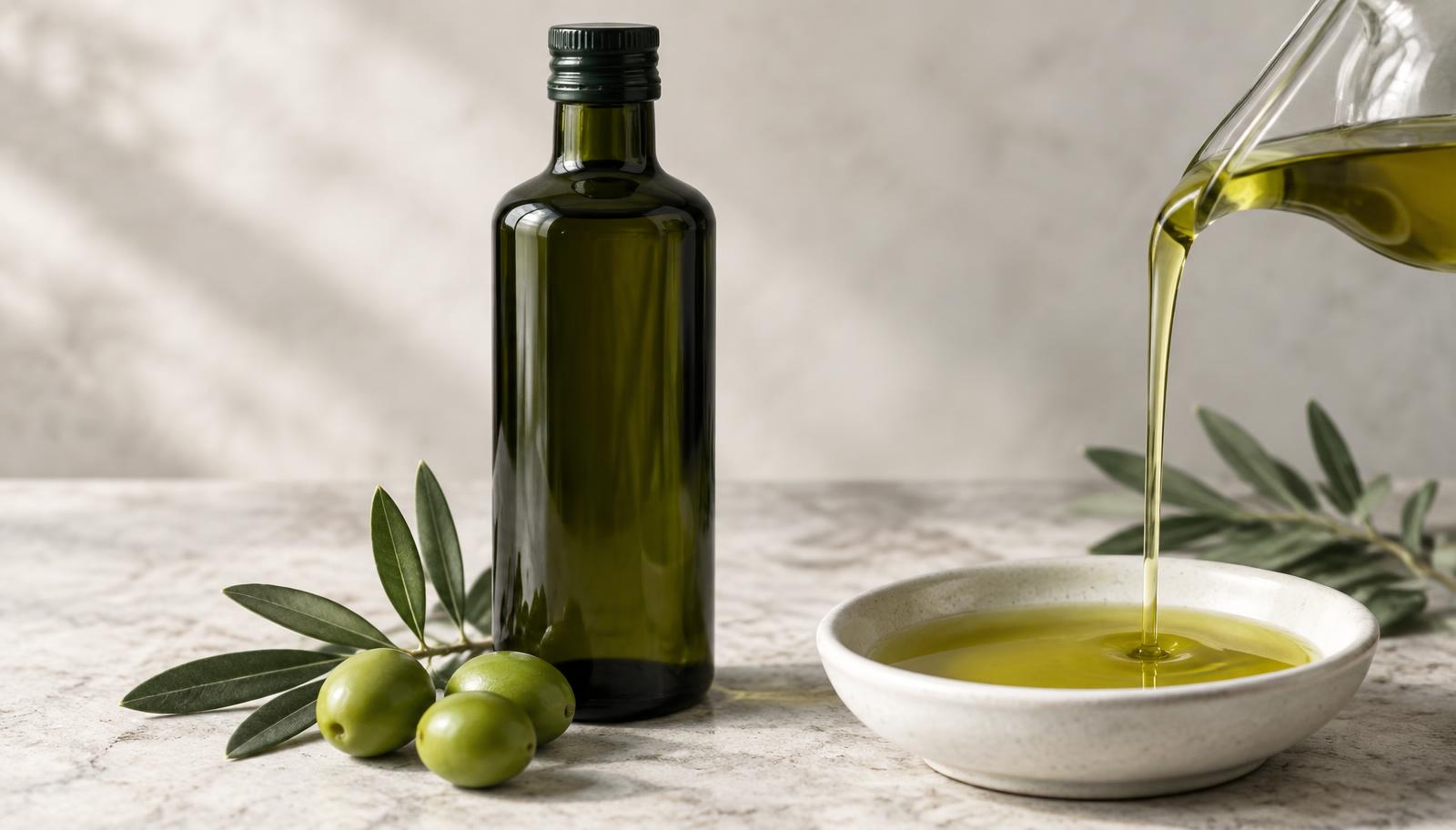
The second is the olive oil halo. Extra virgin olive oil contains polyphenols and monounsaturated fat, and it is a genuinely good fat to build a kitchen around. But a supermarket bottle labeled "olive oil" that has been sitting under fluorescent light for a year is a different product from fresh, peppery extra virgin oil, and no amount of it fixes a diet built on ultra-processed food. If oil is the only thing you change, you have changed almost nothing.
The third is the wine clause, which people quote with suspicious enthusiasm. Modern reviews have steadily walked back the idea that moderate drinking protects the heart, and no major health body suggests taking up wine for health reasons. Treat it as a cultural detail of the pattern, not a prescription. This is general information rather than personalized medical or dietary advice, and anyone managing blood pressure, cholesterol, or diabetes should talk it through with a clinician or registered dietitian.
The surprising part: the diet was studied during Lent
Here is the detail that tends to stop people mid-sentence. The Mediterranean diet entered nutrition science largely through the American physiologist Ancel Keys and the Seven Countries Study, launched in 1958, which found strikingly low rates of heart disease on Crete. But some of the Greek dietary surveys behind that picture were carried out during periods of Orthodox Christian fasting, when observant households avoid meat, dairy, and eggs for weeks at a time. Later researchers, including nutritionists who worked on the original data, have argued this may have skewed the recorded intake toward an unusually plant-heavy extreme.
That does not invalidate the diet, since the randomized trial evidence came decades later and stands on its own. It does complicate the origin story. The 1960s Cretan diet was also the diet of people who were relatively poor, physically active all day, and eating what grew nearby. Some of what looks like brilliant dietary design was scarcity, seasonality, and a long walk to the field. UNESCO eventually recognized the Mediterranean diet as intangible cultural heritage in 2010, which is a telling classification: it listed a way of life, meals shared slowly and food bought locally, not a nutrient profile.
Why it works: the mechanisms worth knowing
Think of a diet as a set of swaps rather than a list of superfoods. Every serving of legumes, whole grains, or fish is a serving of something else you did not eat, usually refined starch or processed red meat. That substitution logic explains most of the effect.
- Fat quality changes blood lipids. Replacing saturated fat with monounsaturated and polyunsaturated fat consistently improves LDL cholesterol in controlled feeding studies.
- Fiber from legumes and whole grains slows glucose absorption and feeds gut bacteria that produce short chain fatty acids.
- Polyphenols in olive oil, nuts, and vegetables have antioxidant and anti-inflammatory activity, though the size of the real-world effect is still debated.
- Omega-3 fats from oily fish such as sardines, anchovies, and mackerel influence triglycerides and clotting.
- Very low ultra-processed food intake reduces sodium, refined sugar, and the sheer ease of overeating.
How often each food group appears in the classic pattern
typical servings per week
Legumes and vegetables show up far more often than the foods the diet is marketed on, and red meat is close to a rounding error.
How to actually eat this way outside the Mediterranean
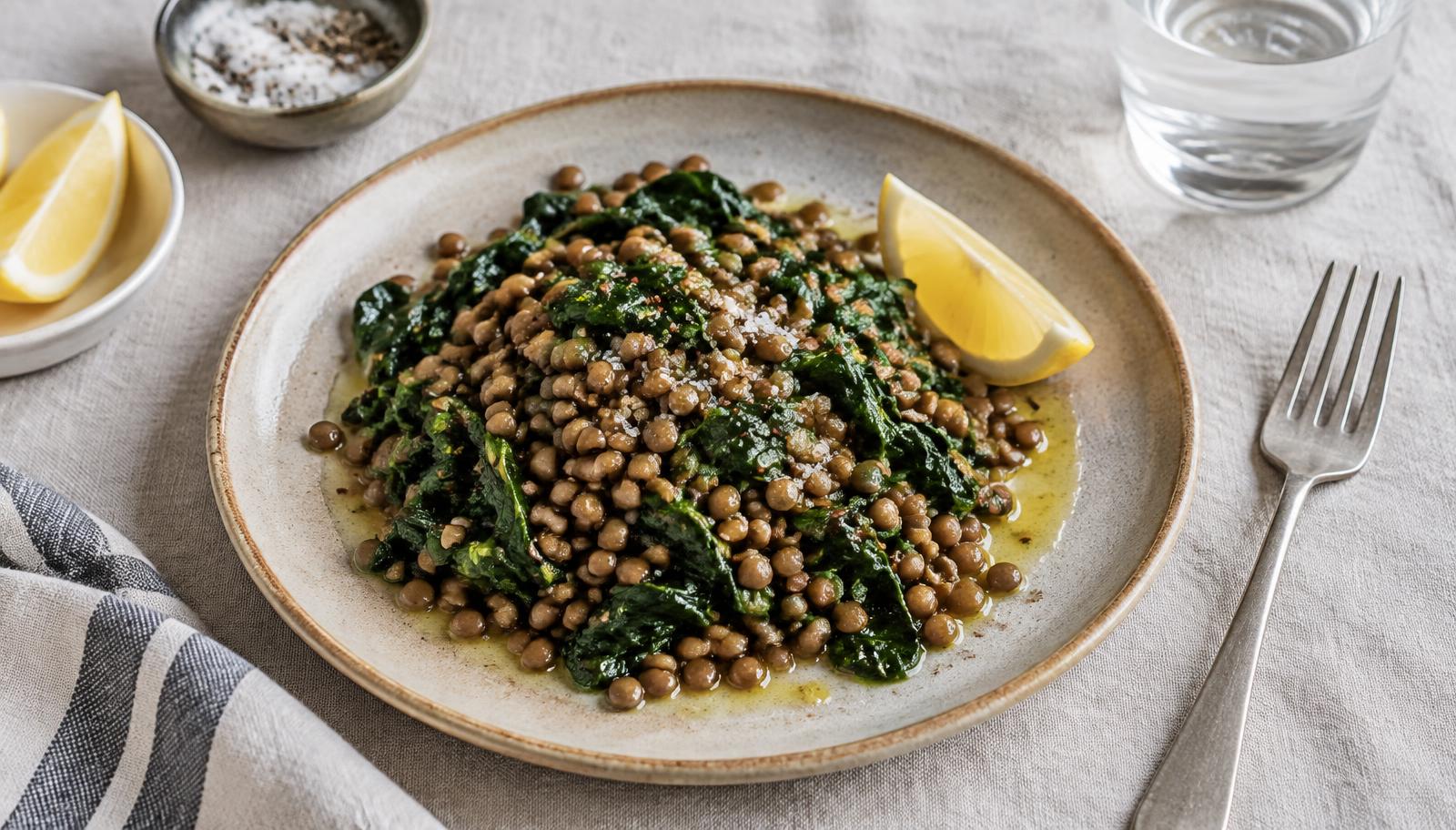
You do not need Ligurian olives or a sea view. You need to change the default center of the plate. The cheapest, fastest way in is a pot of lentils, good olive oil, lemon, and whatever greens are in season, which is roughly the plate below and takes about 25 minutes.
- 1
Make legumes a habit, not a side
Two or three dinners a week built on chickpeas, white beans, or lentils moves your pattern more than any supplement. Canned is fine, rinse them and season aggressively.
- 2
Buy oily fish that is cheap and canned
Sardines and anchovies are the most Mediterranean thing in your supermarket and cost less than chicken. Mash sardines onto toast with lemon and you have covered a week's omega-3 target in five minutes.
- 3
Use more olive oil than feels reasonable
PREDIMED participants in the olive oil arm were aiming for around four tablespoons a day. Finish vegetables with raw oil rather than relying on it only for frying.
- 4
Demote red meat to an event
Not banned, just rare. Once a week, well chosen, as a centerpiece rather than a default, which is closer to how it was actually eaten.
- 5
Fix the snacks before you fix the dinners
Nuts, fruit, and yogurt in place of packaged snacks accounts for a surprising share of the pattern's difference, and it requires no cooking skill at all.
If you want a template for how a full day of structured eating fits together, our day of high-protein eating guide uses a different lever but the same logic, and the timing questions people bring to any eating pattern are covered in our look at whether late dinners cause weight gain. For a weeknight dish that lands in the same flavor territory, the one-pan Tuscan chicken is richer than the classic pattern but built on the same aromatics.
So what is the verdict
Worth the hype, wrongly attributed. The Mediterranean diet earns its reputation on cardiovascular outcomes and on being one of the very few eating patterns people actually stay on, because it is built from food that tastes good rather than food you tolerate. The hype fails only when it gets narrowed to olive oil and pasta, which is the version that sells jars. Copy the beans, the fish, the vegetables, and the near-absence of processed food, and you have the diet. Copy the branding and you have a shopping habit.
It is also a useful reminder that the food debates we love arguing about, from which pizza style deserves the top spot to what Romans really put on their food, mostly circle the same Mediterranean pantry.
Frequently asked questions
Sources and further reading
- Estruch et al., New England Journal of Medicine (2018), PREDIMED primary prevention trial
- Cleveland Clinic, Mediterranean diet food list and overview
- Harvard Gazette (2025), why the Mediterranean diet works
- Harvard Health Publishing, guide to the Mediterranean diet
- UNESCO, Mediterranean diet inscribed as intangible cultural heritage (2010)
Here is the challenge: cook three legume dinners this week and nothing else changed, no oil audit, no wine rules, no app. Then tell us whether the pattern felt like a diet or just like eating well, because that answer is the real test of whether the hype holds.
Filed under
More from Health
Is Breakfast Really the Most Important Meal of the Day?
The phrase is marketing, not physiology. What the research says is more useful, and more interesting, than either side of the argument admits.
Priya Raman · · 11 min read

Does Eating Late at Night Really Make You Gain Weight?
The claim gets repeated everywhere, but the honest answer is more interesting than a flat yes or no.
Priya Raman · · 9 min read
Why We Eat Turkey at Thanksgiving and When It Started
The 1621 harvest meal probably featured venison and wild fowl, not a roast turkey. The bird got its seat at the table more than two centuries later.
Clara Bennett · · 10 min read