
What the Ancient Romans Really Put on Their Food
Forget salt and pepper. Ancient Romans built their entire flavor palette around fermented fish sauce, reduced grape must, and an herb that no longer exists.
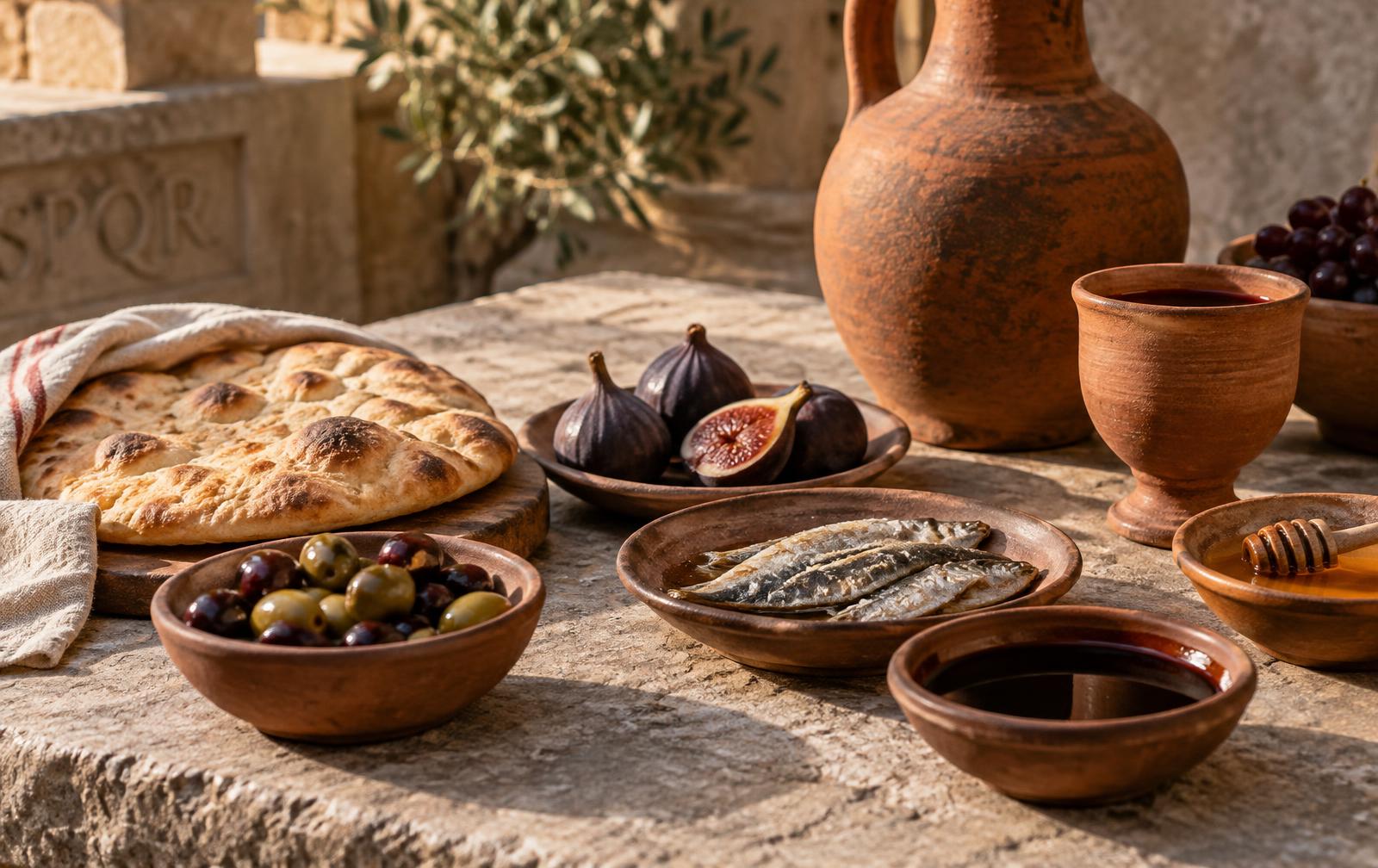
Ancient Romans did not season food the way we do. There was very little fresh citrus, no tomato, no chili, and pepper was an imported luxury. Instead their kitchens ran on garum, a fermented fish sauce, on reduced grape syrups called defrutum and passum, and, for a while, on an herb called silphium that a whole empire eventually ran out of.
Garum: the fermented fish sauce that flavored everything
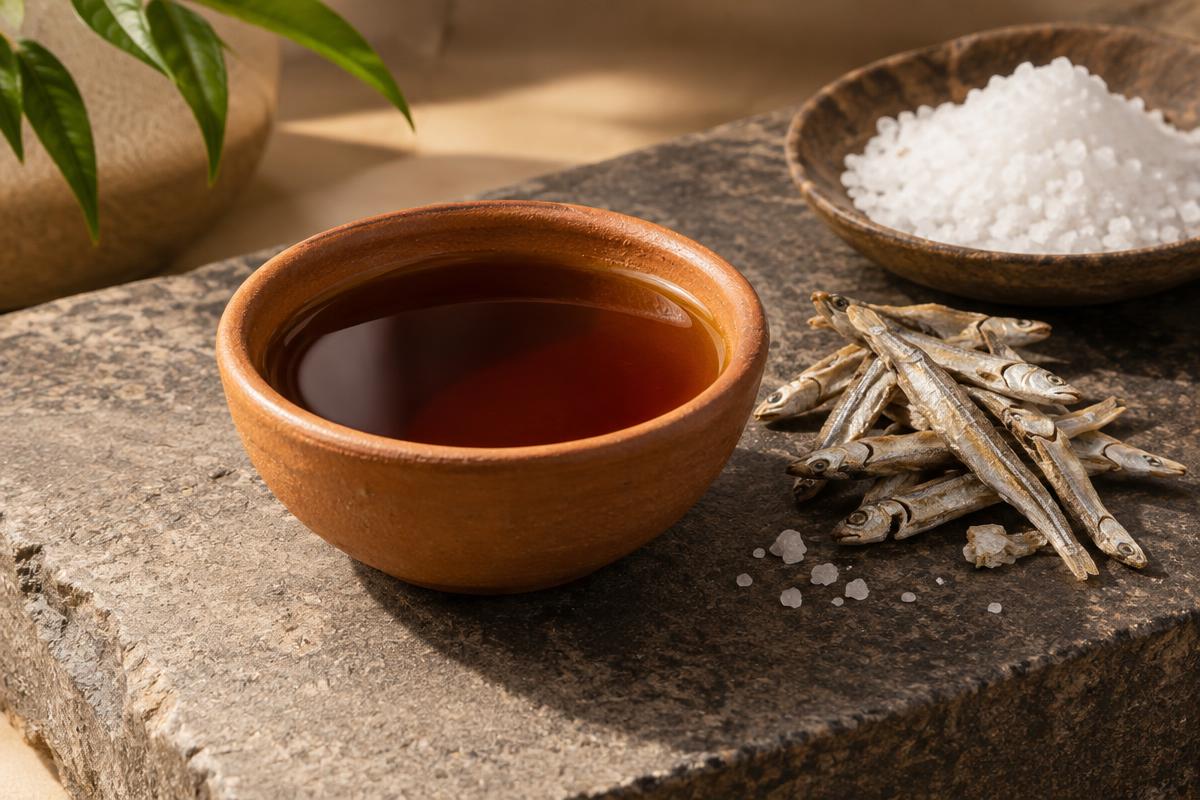
Garum was made by packing small fish, often anchovies or mackerel, with salt and letting them ferment in the sun for weeks to months, then draining off the liquid. The clearer, higher grade liquid was called liquamen, and the leftover fish paste, allec, was sold separately. Archaeologists have found garum production vats, called cetariae, built into stone at coastal sites, and fish sauce amphorae are common finds at Pompeii and Herculaneum, some still bearing merchant stamps naming a producer.
The taste logic is close to how cilantro tastes like soap to some people and not others: a strong compound that some palates read as savory depth and others read as overwhelming funk. Modern Southeast Asian fish sauces, like Vietnamese nuoc mam or Thai nam pla, are made by an almost identical process of salting and fermenting whole fish, and chefs and historians have repeatedly pointed to the parallel as the closest living equivalent to what a Roman kitchen tasted like.
Sweetness without sugar: defrutum and passum
Cane sugar was not part of the Roman pantry. Sweetness came from honey and from boiled-down grape must. Defrutum was grape juice reduced by roughly half or more, and sapa was reduced further still into a thick syrup; passum was a sweet wine made from dried, raisined grapes. These syrups turn up constantly in the recipe collection known as Apicius, stirred into sauces for meat, fish and vegetables to balance the salt of garum, in almost exactly the sweet-savory pattern found in pizza styles ranked today, where a touch of sweetness offsets a salty topping.
There is a genuinely contested and sometimes overstated claim attached to sapa: that Romans were routinely poisoned by lead leaching from the lead-lined pots historically used to boil it down. Lead cookware did exist and lead exposure in Rome was real, documented through skeletal and even ice-core lead pollution evidence, but historians caution against the popular leap that lead-sweetened wine syrup single-handedly caused Rome's decline. It is one plausible contributing health hazard among many, not a settled explanation for the empire's fall.
The herb that vanished from history
Before pepper became widely available, Romans prized an herb called silphium, grown almost exclusively around the North African city of Cyrene. It was used as a seasoning, a digestive aid and reportedly a form of contraception, and demand for it appears on Cyrenian coins stamped with its seed pod. By the first century CE, Roman writers including Pliny the Elder describe it as already rare or extinct, apparently overharvested into oblivion, one of the earliest recorded examples of a food plant being consumed out of existence.
Once silphium disappeared, Roman cooks reached for substitutes: asafoetida, a pungent resin from a related plant native to Central Asia and still used across South Asian cooking today, along with lovage and rue, both of which show up throughout Apicius as stand-ins for silphium's sharp, savory bite.
Apicius: a recipe collection with a messy history
Most of what we know about specific Roman recipes comes from a Latin text known as De re coquinaria, traditionally attributed to a gourmet named Marcus Gavius Apicius who lived under Emperor Tiberius. In reality, the surviving manuscript is a compiled collection assembled and edited later, likely in the fourth or fifth century CE, drawing on older material and probably several contributors rather than one author. Food historians treat “Apicius” as a name for the text's tradition rather than proof of a single historical cook, and dating any individual recipe within it precisely is difficult.
Roman seasonings, modern equivalents
| Roman ingredient | What it was | Closest modern equivalent |
|---|---|---|
| Garum / liquamen | Fermented, salted fish liquid | Fish sauce (nuoc mam, nam pla) |
| Defrutum / sapa | Grape must reduced to syrup | Balsamic reduction, pomegranate molasses |
| Passum | Sweet wine from raisined grapes | Sweet dessert wine (e.g. Vin Santo) |
| Silphium | Extinct North African resin herb | Asafoetida (closest documented substitute) |
| Lovage | Celery-like aromatic herb | Lovage (still grown), celery leaf |
| Rue | Bitter, pungent herb | Used sparingly today; no direct common substitute |
How often the core flavors actually appear
Reading through a standard modern edition of Apicius, Yumlore counted how often its recipes call for each major seasoning. Garum or liquamen dominates by a wide margin, appearing in a large majority of recipes, which tells you plainly what the base flavor of Roman cooking actually was.
Share of Apicius recipes calling for each seasoning (Yumlore count, Vehling English edition)
% of recipes
Garum/liquamen appears far more often than any other single seasoning, confirming it as the backbone flavor of Roman cooking rather than an occasional condiment.
A surprising fact worth repeating
Garum was not a cheap, everyday condiment the way ketchup is now. High-grade liquamen from certain producers, especially from Spanish production centers, was a genuine luxury export, and archaeologists have traced branded garum amphorae shipped across the empire the way a modern collector might trace a specific vintage of wine.
What would you actually taste like a Roman
If you wanted a genuinely ancient Roman flavor experience tonight, a splash of good fish sauce and a spoon of pomegranate molasses stirred into a simple roast would get you closer than most restaurant "Roman inspired" menus manage. Would you actually cook with fish sauce the way a Roman cook used garum, or does that combination sound like a bridge too far for a modern table?
Frequently asked questions
Sources and further reading
Filed under
More from History
Why We Eat Turkey at Thanksgiving and When It Started
The 1621 harvest meal probably featured venison and wild fowl, not a roast turkey. The bird got its seat at the table more than two centuries later.
Clara Bennett · · 10 min read