
What a Day of High-Protein Eating Actually Looks Like
A full day of meals, gram counts included, that lands around 145g of protein without turning every meal into a bodybuilding chore.
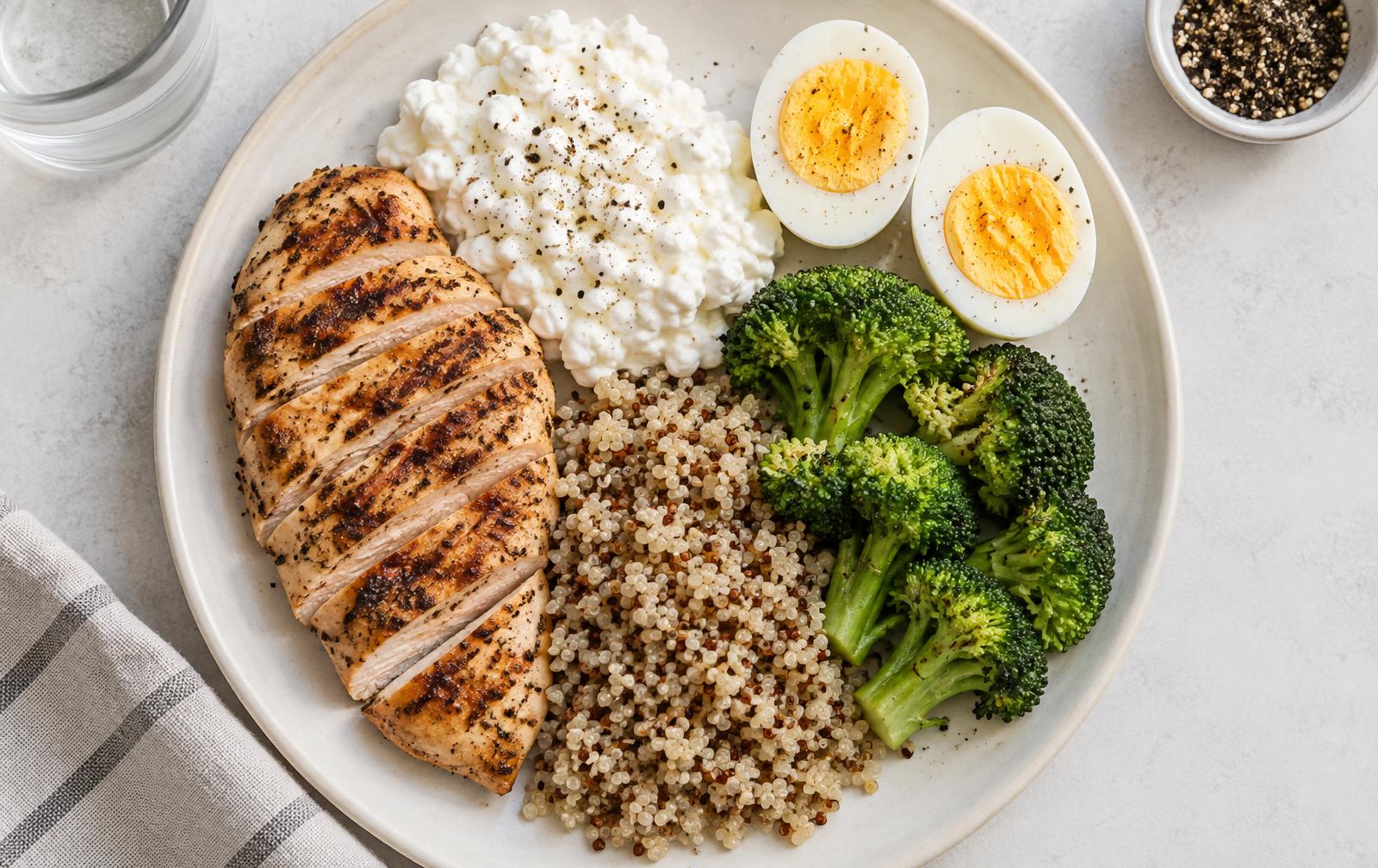
Here's what high-protein eating actually looks like on a normal day, no powders required: a Greek yoghurt bowl at breakfast (28g protein), a chicken and lentil salad at lunch (42g), a cottage cheese and fruit snack (24g), and a salmon or tofu traybake at dinner (38g), plus a small evening snack (13g). That's roughly 145g of protein across five eating occasions, spread out instead of dumped into one giant dinner.
Why 140 to 150 grams, and not some other number
The official U.S. Recommended Dietary Allowance is 0.8g of protein per kilogram of bodyweight, a minimum set to prevent deficiency rather than a target for anyone trying to build or preserve muscle. Research reviews on muscle protein synthesis and body composition, including work summarised by the International Society of Sports Nutrition, have found that active adults trying to build or maintain muscle generally do better in the range of 1.6 to 2.2g per kilogram of bodyweight. For a 75kg (165lb) adult, that works out to roughly 120 to 165g a day, which is where a day like this one is aimed. This is general nutrition information rather than personalised medical advice, and anyone with kidney disease or another condition affecting protein metabolism should check with a doctor or registered dietitian first.
Why spreading protein across the day matters
Muscle protein synthesis responds better to protein spread across three to five meals than to the same total protein eaten in one or two large sittings, since the body can only make efficient use of roughly 30 to 40g of protein for muscle-building purposes at a time. That's part of why this day includes a proper snack rather than skipping straight from lunch to dinner. It also explains why eating most of your calories late at night tends to work against people trying to hit a protein target evenly across the day.
The full day, meal by meal
- 1
Breakfast: Greek yoghurt bowl with berries and two boiled eggs
200g of plain Greek yoghurt (about 20g protein) topped with a handful of berries, a tablespoon of chia seeds, and two boiled eggs on the side (12g protein). Total: roughly 32g protein, 420 calories. The yoghurt's protein is mostly casein, which digests slowly and helps with satiety through the mid-morning.
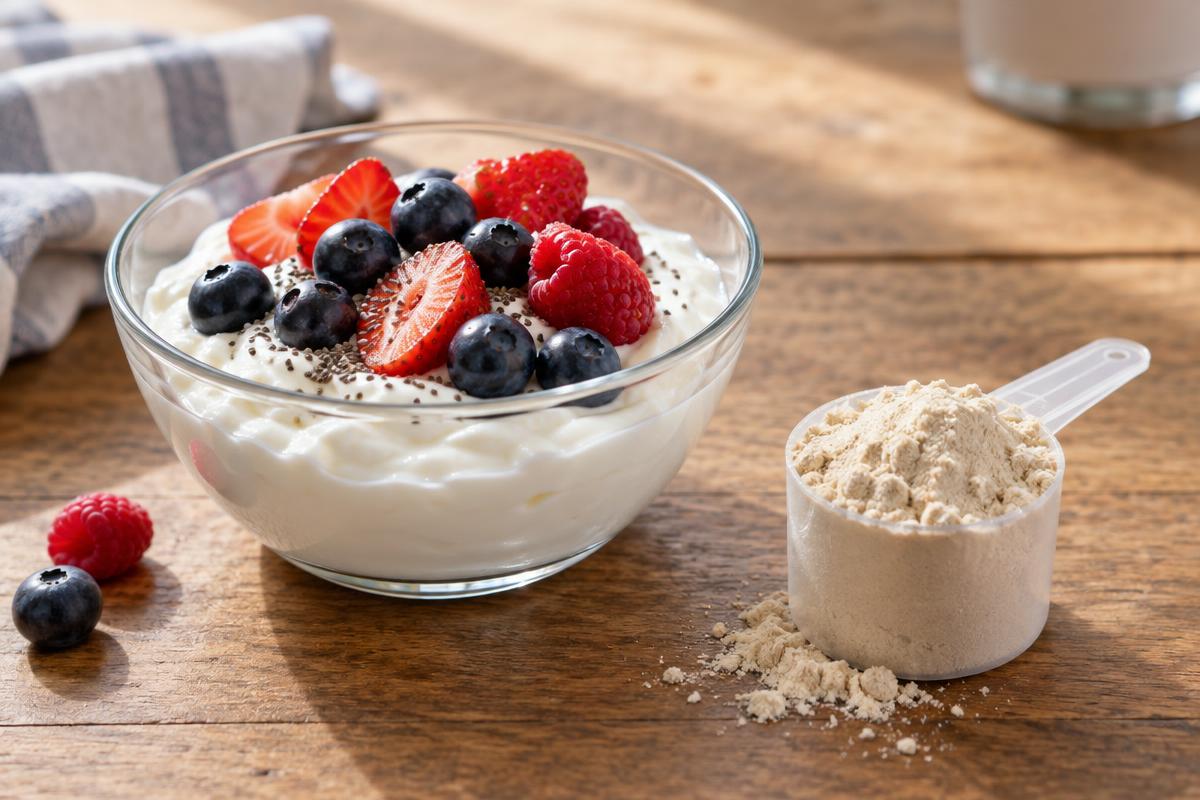
Greek yoghurt and eggs together cover a third of the day's protein target before 9am. - 2
Lunch: grilled chicken and lentil salad
120g of grilled chicken breast (about 37g protein) over 150g cooked green lentils (12g protein), mixed with cucumber, tomato, feta and a lemon-olive oil dressing. Total: roughly 49g protein, 560 calories. Lentils add fibre and a plant-protein base that most chicken-only lunches skip entirely.
- 3
Afternoon snack: cottage cheese with pineapple
150g of low-fat cottage cheese (about 20g protein) with a small cup of chopped pineapple. Total: roughly 20g protein, 190 calories. Cottage cheese is one of the most protein-dense foods per calorie available in a normal supermarket.
- 4
Dinner: sheet-pan salmon (or tofu) with peas and potatoes
150g of baked salmon (about 33g protein) or the tofu-and-lentil version below for a plant-based day, roasted with baby potatoes and peas. Total: roughly 33g protein, 520 calories. This is the meal where fat and carbohydrate should carry more of the calorie load, since protein is already well covered by this point in the day.
- 5
Evening snack: a small handful of edamame or a protein-set yoghurt
100g of steamed edamame (about 11g protein) or a single protein-set yoghurt cup. Total: roughly 11g protein, 120 calories. Small, easy to prepare, and enough to close the gap to the day's target without a large last meal.
| Meal | Protein (g) | Calories |
|---|---|---|
| Breakfast: yoghurt bowl + eggs | 32 | 420 |
| Lunch: chicken & lentil salad | 49 | 560 |
| Afternoon snack: cottage cheese | 20 | 190 |
| Dinner: sheet-pan salmon traybake | 33 | 520 |
| Evening snack: edamame or yoghurt | 11 | 120 |
| Total | 145 | 1,810 |
Protein per meal across the day
grams of protein
No single meal carries more than a third of the day's total, which is the point: even spacing beats one giant protein-heavy dinner.
Watch a dietitian explain how much protein actually matters
A surprising fact about protein and satiety
Protein is consistently rated the most satiating macronutrient per calorie in controlled feeding studies, more so than carbohydrate or fat, which is a big part of why high-protein diets tend to reduce spontaneous snacking without anyone consciously trying to eat less. It's a genuinely useful, low-effort lever, and it's one reason protein-forward breakfasts show up so often in meal planning advice generally, though of course you're already reading that one.
One caveat worth sitting with: none of this requires perfection every single day. Averaging 130 to 150g across a week matters more than hitting an exact number daily, and a day that lands at 110g because lunch ran long is not a failure. If your goals or medical history are more specific, for example managing a very restricted or unusual diet, or you have kidney or liver concerns, talk to a registered dietitian rather than relying on a generic target like this one.
Recipe
Sheet-Pan Lentil and Tofu Traybake (plant-based dinner option)
A plant-based version of the dinner above, built around firm tofu and green lentils, roasted together with vegetables for a dinner that lands around 34g of protein per serving without any meat or fish.
Equipment Large sheet pan, Parchment paper, Mixing bowl
Ingredients
Main
Tap an ingredient to check it off. Tap Swap for substitutions and ratios.
Nutrition
- Calories
- 510 kcal
- Protein
- 34 g
- Carbohydrates
- 48 g
- Fat
- 19 g
- Fibre
- 14 g
Estimated per serving. Total time 45 minutes.
Method
- 1
Preheat the oven to 200°C (400°F) and line a large sheet pan with parchment.
- 2
Toss the potatoes with half the olive oil, salt and pepper, and roast alone for 12 minutes to give them a head start.
- 3
Add the cubed tofu and sliced bell pepper to the pan, toss with the remaining olive oil, paprika and garlic, and roast for another 15 to 18 minutes, until the tofu is golden and the potatoes are tender.
- 4
Warm the cooked lentils separately, either on the stovetop or in the microwave, and season lightly with salt.
- 5
Combine the roasted vegetables and tofu with the warm lentils on a serving plate, squeeze the lemon juice over everything, and finish with chopped parsley.
- 6
Divide into two servings and eat warm; leftovers keep well in the fridge for up to three days.
“The best protein target is the one you can actually eat again tomorrow.”
Frequently asked questions
Sources and further reading
Try tracking one normal day against these numbers, no calculator required, just add up the protein on your plate. Tell us where you landed, and whether it was closer to 90g or 190g.
Filed under
More from Recipes
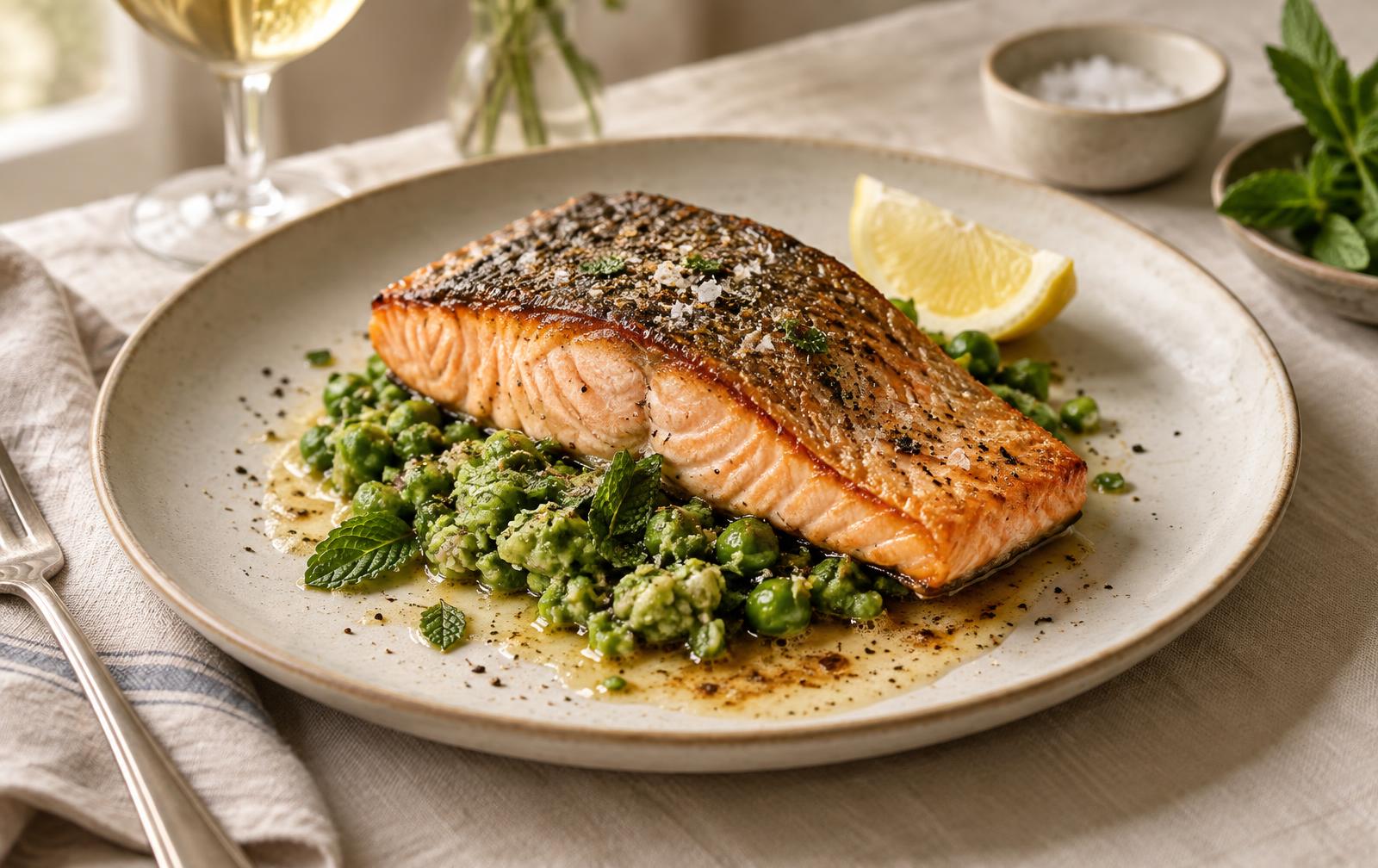
The 20-Minute Dinner That Looks Like You Tried Hard
One hard sear, one fresh raw thing, one pan sauce, one green. That formula is the whole reason a 20-minute dinner can look like a two-hour dinner.
Marcus Feld · · 11 min read