
The Sleepy Girl Mocktail: Does It Actually Help You Sleep?
Tart cherry juice, magnesium powder and something fizzy. The evidence behind each ingredient is real but modest, and the ritual may be doing more work than the chemistry.
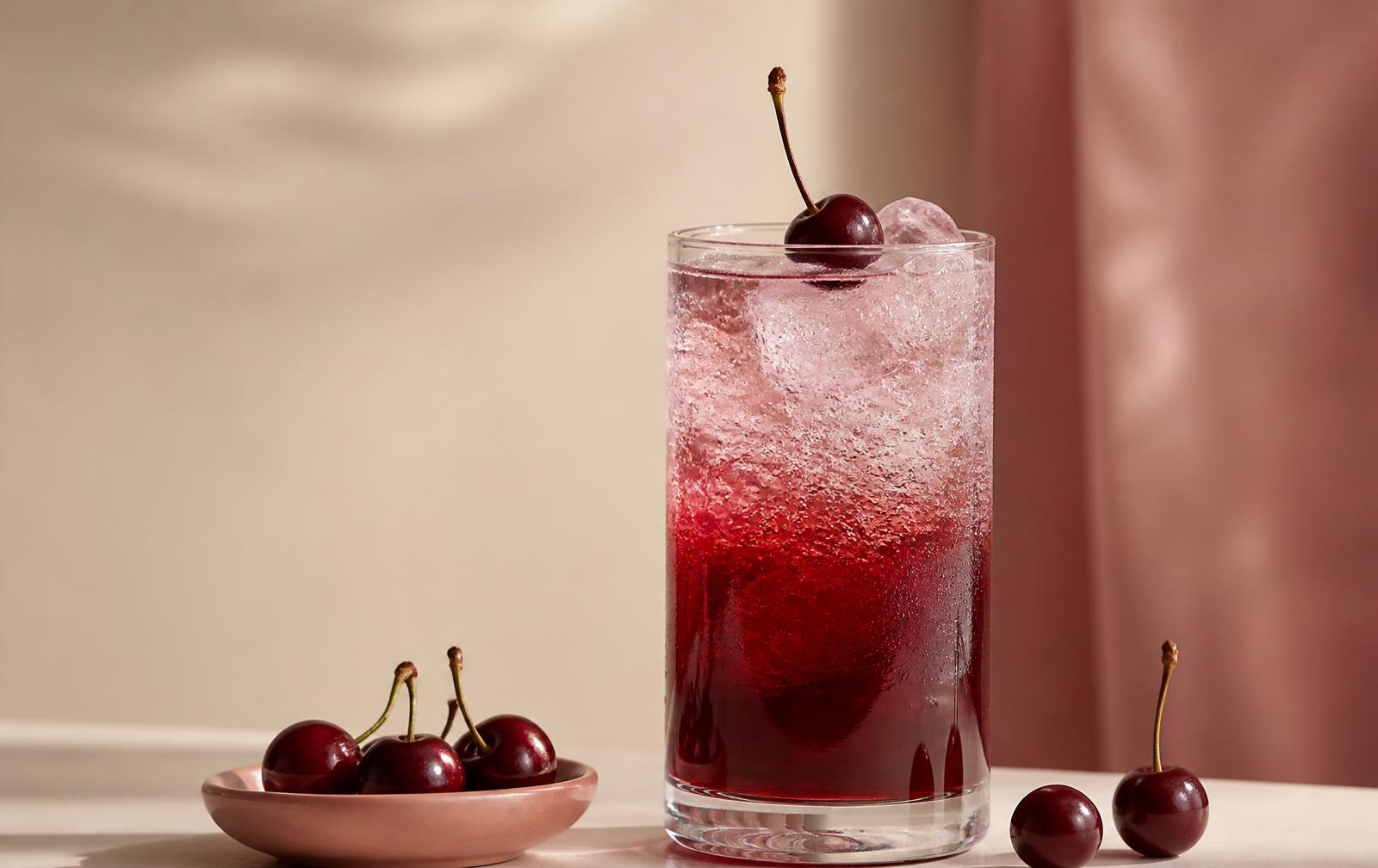
Recipe
The Sleepy Girl Mocktail
The viral three-ingredient bedtime drink: tart cherry juice, magnesium glycinate powder and sparkling water, built over ice in about three minutes. Makes one glass, best sipped 60 to 90 minutes before bed.
Equipment Tall glass or coupe, Long bar spoon, Measuring spoons
Ingredients
For one glass
- 0.5 cup pure tart cherry juice, 100 percent Montmorency juice, not cherry juice cocktail
- 1 tsp magnesium glycinate powder, follow the label dose, which is usually well under a full tablespoon of elemental magnesium
- 0.75 cup sparkling water, plain or lightly flavored; prebiotic soda works too
- 1 cup ice, cold genuinely makes the tartness read as refreshing rather than sharp
- 1 wedge lemon or lime wedge, optional, sharpens the finish (optional)
Tap Swap on any ingredient to see substitutions and ratios.
Nutrition
- Calories
- about 100 kcal
- Sugar
- about 18 g, all from the juice
- Carbohydrates
- about 24 g
- Protein
- under 1 g
- Fat
- 0 g
- Magnesium
- varies by product, check the label dose
Estimated per serving. Total time 3 minutes.
Method
- 1
Measure the tart cherry juice into a tall glass. If you are using concentrate instead, stir 1 tablespoon into 1/2 cup of cold water first so it disperses evenly.
- 2
Add the magnesium powder to the juice, not to the sparkling water, and stir for 20 to 30 seconds until no grit remains at the bottom. Powder dropped into carbonation foams over and dissolves badly.
- 3
Fill the glass with ice, then top with sparkling water and pour it down the side of the glass to keep the bubbles.
- 4
Stir once, gently, from the bottom. Squeeze in the citrus if using, and drink 60 to 90 minutes before you plan to sleep rather than at bedtime.
The honest answer: the sleepy girl mocktail probably helps a little, and much less than social media suggests. Both of its active ingredients have real research behind them. Tart cherry juice contains small natural amounts of melatonin and tryptophan, and magnesium is genuinely involved in the nervous-system machinery that lets you wind down. But the doses in one glass are modest, the studies are small, and sleep is one of the most placebo-responsive things the human body does. Dr. Steven Feinsilver, who directs the Center for Sleep Medicine at Northwell Lenox Hill Hospital, told CBS News the main effect of the drink is likely placebo, while adding that there is no harm in it at reasonable doses [1]. That is roughly where the science sits.
What is in a sleepy girl mocktail, exactly
There is no official recipe, which is part of why the claims float around so freely. The version that spread across TikTok in late 2023 and through 2024 is three ingredients: roughly half a cup of 100 percent tart cherry juice, one tablespoon of magnesium powder, and a splash of sparkling water or a prebiotic soda. Cleveland Clinic published its own breakdown of that exact formula, calling it plausible but not a cure for insomnia [2].
The name came from the creators who popularized it rather than from anything physiological. The drink behaves identically regardless of who drinks it, a point Cleveland Clinic's dietitian Devon Peart makes explicitly. What made it spread was not novelty so much as aesthetics: it is deep red, it fizzes, it photographs beautifully in a coupe glass, and it slots neatly into the wider cultural shift away from evening alcohol.
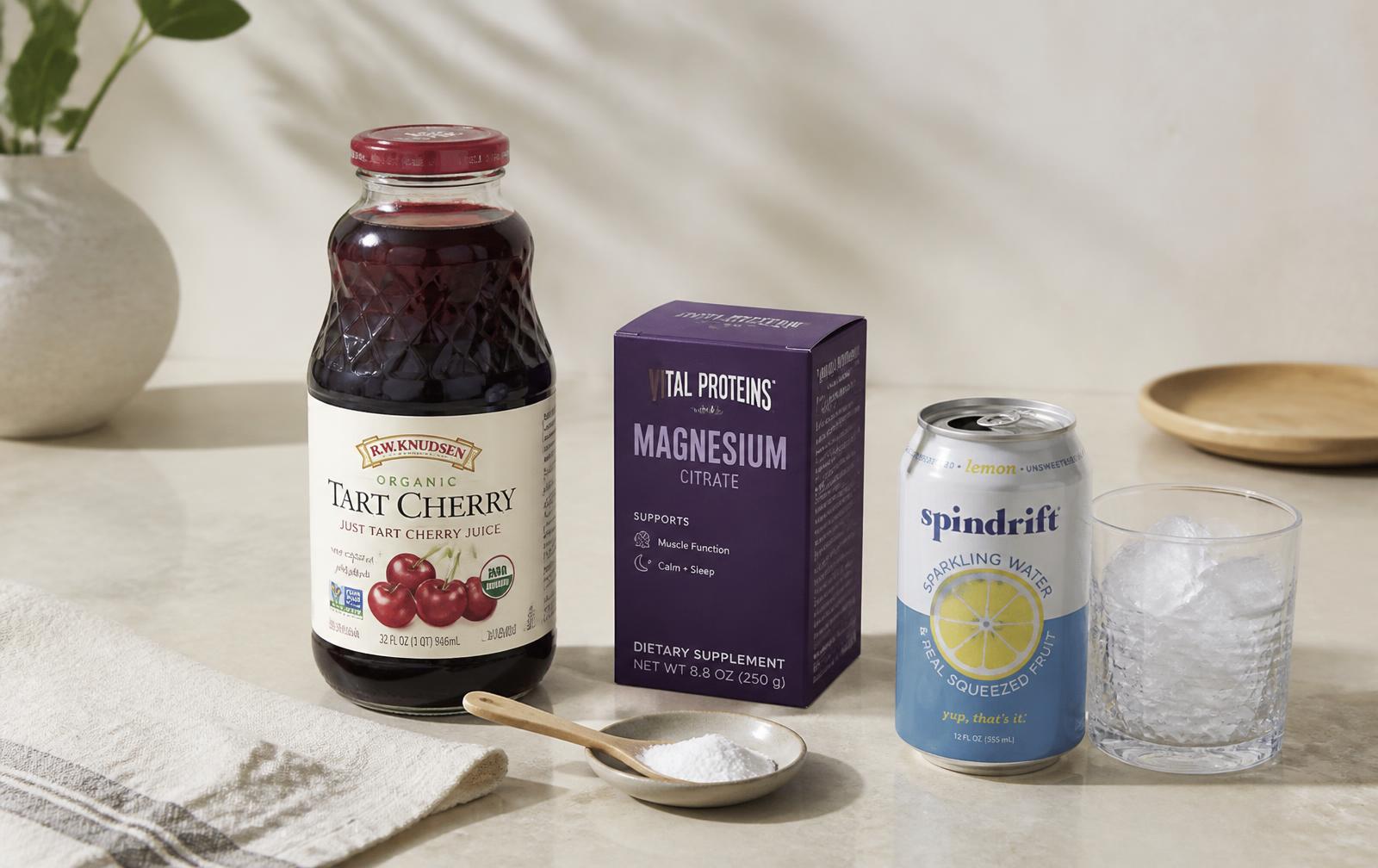
Tart cherry juice: the strongest evidence in the glass
Montmorency tart cherries are one of the few foods that contain measurable melatonin, along with tryptophan and procyanidins that may slow the breakdown of tryptophan in the body. The most cited human work is small: a 2018 pilot trial in American Journal of Therapeutics gave adults over 50 with chronic insomnia tart cherry juice twice daily for two weeks and reported an average increase in sleep time of roughly 84 minutes compared with placebo [3]. That number gets quoted constantly online, almost always without the caveats: eight participants, a specific older population with diagnosed insomnia, and a dose of two eight-ounce servings a day.
An earlier crossover study in European Journal of Nutrition found that tart cherry concentrate raised urinary melatonin and modestly improved sleep time and efficiency in healthy adults [4]. So this is not nothing. It is a real, replicated-in-direction, small-sample effect, and it is fair to call it promising rather than established.
Here is the part that gets lost. The melatonin in a glass of tart cherry juice is a fraction of a milligram, while the melatonin supplements sold beside it in the pharmacy commonly deliver 3 to 10 milligrams. Feinsilver put it plainly: the amount in cherry juice appears to be much less than an over-the-counter dose [1]. If melatonin were the whole mechanism, the drink should barely register. Something else, whether tryptophan, anti-inflammatory effects, or the routine itself, is likely doing part of the work.
Magnesium: helpful if you are short on it, unremarkable if you are not
Magnesium is a cofactor in hundreds of enzymatic reactions, and relevantly here, it supports GABA activity, the main calming neurotransmitter system in the brain, and helps regulate the nervous system's shift out of alert mode. That mechanism is real. What is thinner is the evidence that adding magnesium improves sleep in people who already have enough of it.
A 2021 systematic review of magnesium supplementation and sleep quality concluded that the existing trials are few, small and of low quality, and that the evidence is insufficient to recommend magnesium as a sleep aid with confidence [5]. Meanwhile the National Institutes of Health notes that many adults in the United States consume less magnesium than recommended, with an RDA of 400 to 420 mg for adult men and 310 to 320 mg for adult women [6]. Both things are true at once: supplementation is unproven for sleep, and plenty of people are running low anyway.
The form matters more than most videos mention. Magnesium glycinate is generally better absorbed and gentler on the gut, which is why it is the usual recommendation for a bedtime drink. Magnesium citrate is absorbed reasonably well but has a laxative effect at higher doses, and magnesium oxide is poorly absorbed and the most likely to send you to the bathroom at 2 a.m., which is a memorable way to ruin the exact thing you were trying to improve.
| Ingredient | Proposed mechanism | Strength of evidence | Honest takeaway |
|---|---|---|---|
| Tart cherry juice | Small natural melatonin content, tryptophan, procyanidins | Promising, small trials | The most defensible ingredient, though studies used two servings daily |
| Magnesium glycinate | Supports GABA signaling and nervous-system downshift | Insufficient, low-quality trials | Likely helps if your intake is low, little effect if it is adequate |
| Sparkling water | None, it is the mixer | None needed | Purely for texture, though carbonation can worsen reflux at bedtime |
| Prebiotic soda | Gut-microbiome effects on sleep, early research | Preliminary and indirect | Interesting area, not a reason to expect better sleep tonight |
| The ritual itself | Wind-down cue, replaces an alcoholic nightcap | Well established as sleep hygiene | Quite possibly the most effective component in the glass |
The surprising part: the placebo is not a knock on it
Sleep is unusually responsive to expectation. In sleep research this is well documented enough to have its own name, insomnia identity, describing how strongly beliefs about your own sleep shape measured sleep outcomes. Studies have found that simply telling people they slept well can improve their next-day cognitive performance, regardless of what the equipment recorded overnight.
Which means a nightly ritual that makes you expect to sleep well can genuinely improve your sleep, even if the chemistry contributes almost nothing. That is not a debunking, it is the mechanism. If your evening currently ends with a phone in bed at midnight, swapping in a cold red drink, dim lights and twenty minutes of reading is a real intervention. The magnesium is arguably along for the ride.
The same logic runs through a lot of food beliefs that turn out to be more contextual than absolute, which is why we keep coming back to it, as in our look at whether breakfast is really the most important meal of the day.
Who should think twice before drinking one
This is general food information rather than personalized medical advice, and this drink is one of the rare wellness trends where a specific medical caution genuinely applies. Magnesium clears through the kidneys, so anyone with reduced kidney function can accumulate it to dangerous levels. The NIH notes that supplemental magnesium can interact with certain antibiotics, bisphosphonates and diuretics, and that excessive intake causes diarrhea, nausea and cramping [6].
- Kidney disease of any stage: talk to your clinician before adding supplemental magnesium at all.
- On antibiotics, thyroid medication, bisphosphonates or diuretics: magnesium can interfere with absorption, so timing and dose matter.
- Managing blood sugar or diabetes: half a cup of pure tart cherry juice carries roughly 15 to 20 grams of sugar with almost no fiber to slow it.
- Prone to acid reflux: an acidic, carbonated drink shortly before lying down is a predictable way to make heartburn worse.
- Pregnant or breastfeeding: melatonin-containing products and supplement doses are worth clearing with a provider first.
- Anyone with insomnia lasting more than three months: that is a clinical pattern, and cognitive behavioral therapy for insomnia has far stronger evidence than any drink.
How to make one that actually tastes good
Most disappointing versions come down to the juice. Buy 100 percent tart cherry juice or Montmorency concentrate, not cherry juice cocktail, which is mostly apple juice and added sugar and contains very little of the compound you are after. Concentrate is more economical: one to two tablespoons diluted equals a serving of juice, and a bottle lasts weeks in the fridge.
Timing is the other lever. Melatonin, whether from a cherry or a tablet, works as a timing signal rather than a sedative, so it makes sense taken 60 to 90 minutes before bed rather than as you climb into bed. Drink it early enough that you are not waking up at 3 a.m. needing the bathroom, which is the single most common way this trend backfires.
Things that beat it, if better sleep is the actual goal
If you want the ranked, unglamorous version: consistent wake time, morning daylight, a cool dark room, and no alcohol within three hours of bed all outperform any bedtime beverage by a wide margin. Cognitive behavioral therapy for insomnia is the first-line treatment recommended by the American Academy of Sleep Medicine for chronic insomnia, ahead of medication, let alone juice.
What the mocktail does well is replace something worse. Alcohol is genuinely bad for sleep architecture: it shortens the time it takes to fall asleep, then fragments the second half of the night and suppresses REM. Trading a glass of wine for a glass of tart cherry juice is a real upgrade regardless of what the magnesium is doing, and it fits the same non-alcoholic drinking shift we wrote about in our guide to what to drink with spicy food.
It also helps to be skeptical of any food framed as a switch you can flip. Tryptophan is the classic example, blamed every November for post-dinner drowsiness that has far more to do with portion size and wine, a story we untangled in the history of why turkey ended up on the Thanksgiving table. For something equally viral and equally worth interrogating, see why people are queuing for hours for jacket potatoes.
So, does the sleepy girl mocktail actually help you sleep?
Our verdict: yes, slightly, and mostly for reasons that are not the ones on TikTok. Tart cherry juice carries the only ingredient-level evidence worth respecting, and even that comes from small trials using twice the amount most people drink. Magnesium is a reasonable bet if your intake is low and close to irrelevant if it is not. The ritual is the sleeper hit, and it deserves the credit it never gets.
Try it for two weeks, keep the timing at 90 minutes before bed, and pay attention to whether you fall asleep faster or simply feel calmer at 10 p.m. Then tell us: did the drink change anything, or did the wind-down around it do the work? If you think we underrated the magnesium, make the case. We would genuinely like to hear from anyone who tracked it properly.
Sleepy girl mocktail questions people actually ask
Sources and further reading
- CBS News, Can tart cherry juice, magnesium really help you sleep? Doctors weigh in
- Cleveland Clinic, Sleepy Girl Mocktail: What's in It and Does It Really Make You Sleep Better?
- American Journal of Therapeutics, pilot trial of tart cherry juice in older adults with insomnia
- European Journal of Nutrition, tart cherry concentrate, urinary melatonin and sleep quality
- Systematic review via PMC, magnesium supplementation and subjective sleep quality
- NIH Office of Dietary Supplements, Magnesium fact sheet for health professionals
Filed under
More from Health
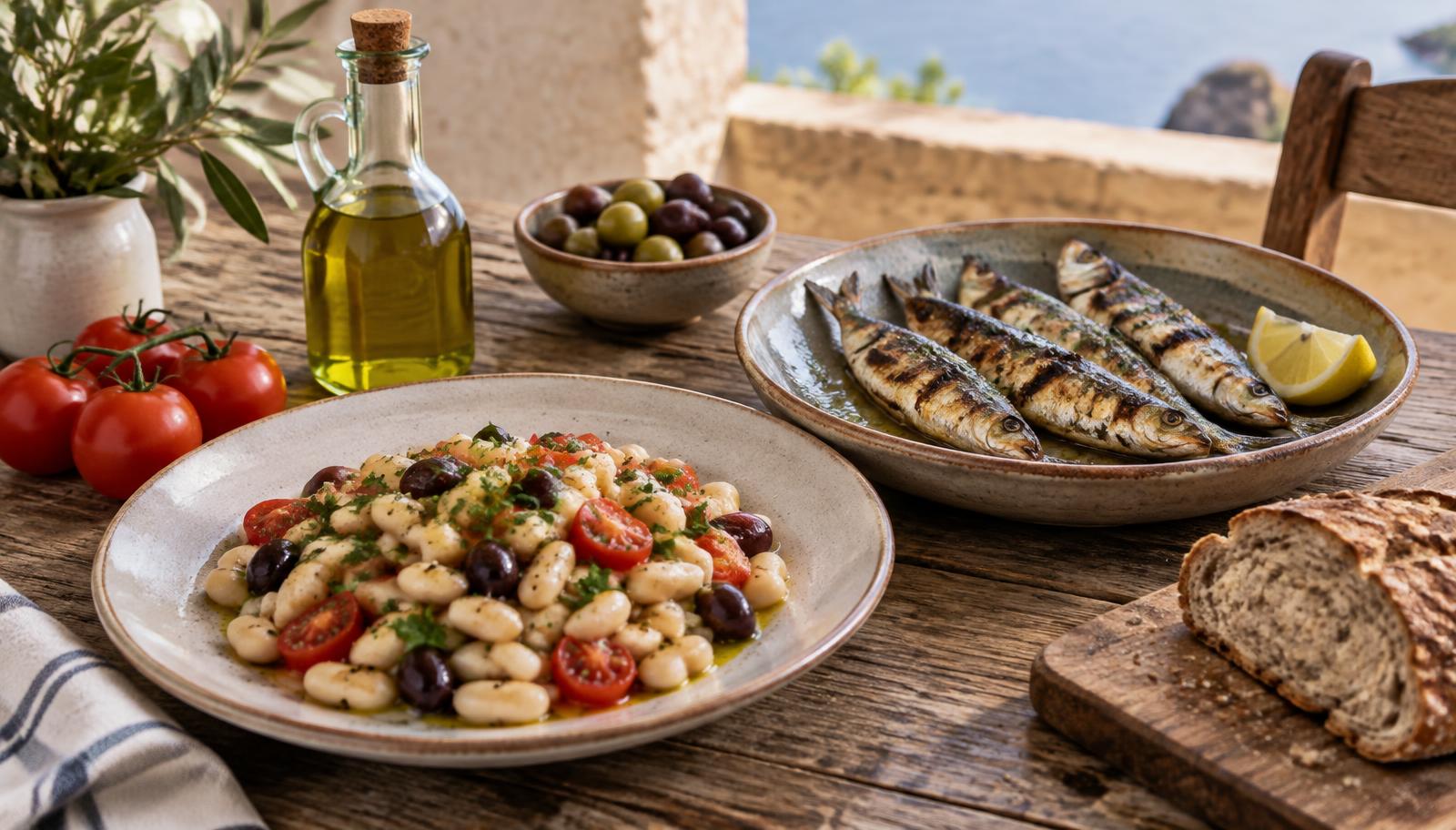
Is the Mediterranean Diet Actually Worth the Hype?
It is the most studied eating pattern in modern nutrition. It is also widely misunderstood, oversold in supermarket aisles, and stranger in origin than you would guess.
Priya Raman · · 11 min read
Is Breakfast Really the Most Important Meal of the Day?
The phrase is marketing, not physiology. What the research says is more useful, and more interesting, than either side of the argument admits.
Priya Raman · · 11 min read
Does Eating Late at Night Really Make You Gain Weight?
The claim gets repeated everywhere, but the honest answer is more interesting than a flat yes or no.
Priya Raman · · 9 min read