
Does Eating Late at Night Really Make You Gain Weight?
The claim gets repeated everywhere, but the honest answer is more interesting than a flat yes or no.
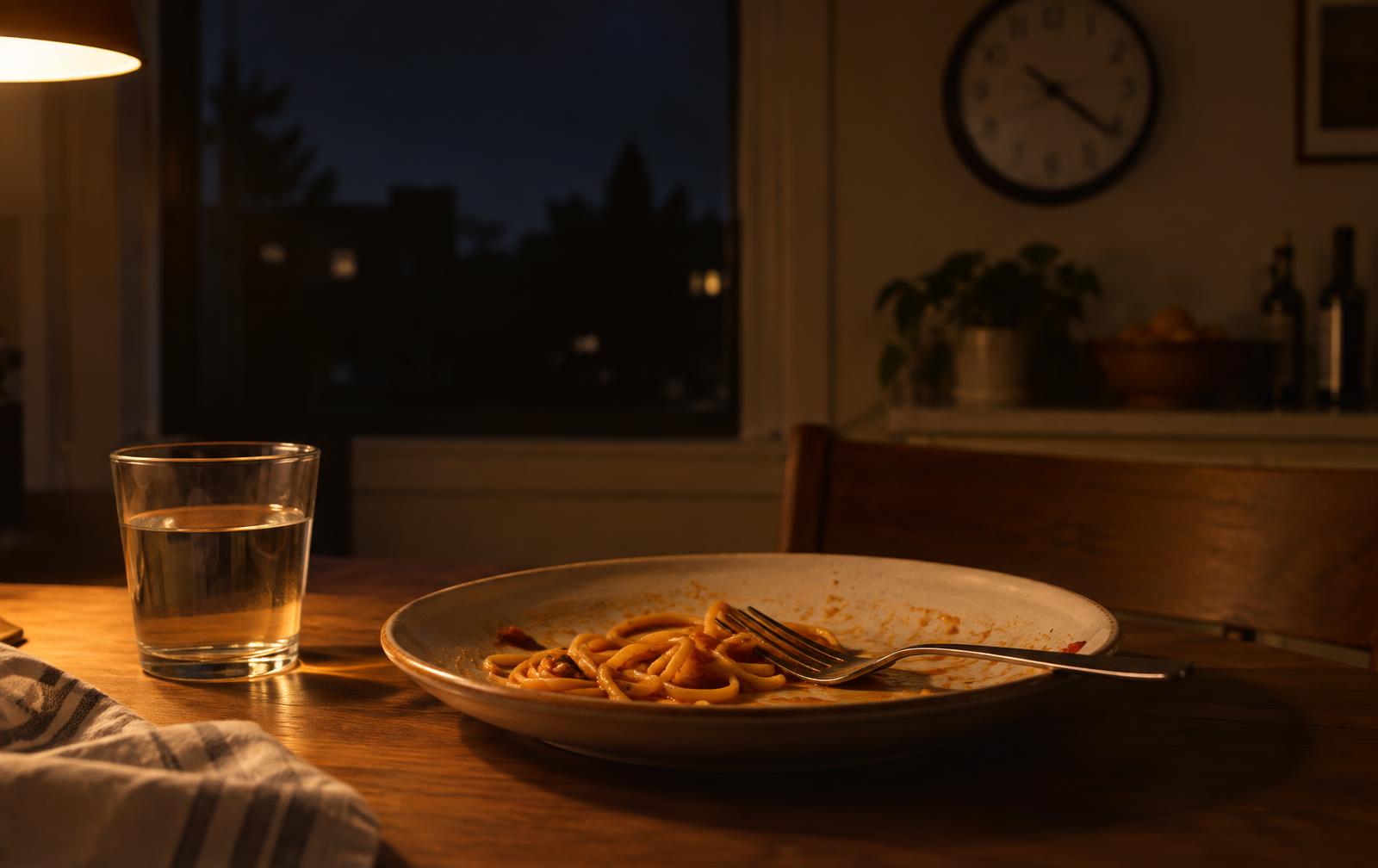
Eating late at night doesn't automatically pack on pounds the way headlines suggest. What actually drives weight gain is total energy intake versus what you burn over days and weeks, and timing is a smaller, murkier piece of that picture. But it's not nothing either, and the details are worth untangling.
The claim versus the calorie math
The popular version of this myth treats 8pm as some kind of metabolic cutoff, as if the same slice of cake becomes fat only after sunset. Body weight change over time is governed by energy balance, calories in against calories out, and a calorie logged at 11pm counts the same as one logged at noon. If a late dinner replaces a meal you'd have eaten earlier, and your daily total stays the same, timing alone isn't the culprit.
Where it gets more nuanced is that eating late rarely happens in isolation. It tends to show up alongside habits that do affect the math: extra snacking, less structured meals, and less physical activity in the hours before bed. That's the practical, boring, and mostly accurate explanation for why late eaters often do gain more weight over time.
What circadian research actually found
There is a more rigorous scientific thread here, from the field sometimes called chrononutrition. A controlled crossover study from Brigham and Women's Hospital had the same participants eat identical meals, once on an early schedule and once about four hours later, and found that the late schedule increased hunger, lowered levels of the fullness hormone leptin, and slightly reduced how many calories participants burned at rest afterward [1](https://doi.org/10.1016/j.cmet.2022.09.007). That's a genuinely striking result, but it's one well-controlled trial in a specific population, not a settled fact about everyone's metabolism.
Separately, researchers at Northwestern have been mapping how the body's internal circadian clock, not just the outside light or your alarm, seems to independently shape how efficiently your body burns calories after a meal, sometimes called diet-induced thermogenesis [5](https://sciencesources.eurekalert.org/news-releases/1133313). Read together, these findings suggest that when you eat may nudge appetite and energy expenditure in a modest way. They do not establish that eating a sandwich at 10pm will make you gain weight if your week's calories are unchanged.
The behavioural reality: late eating usually means extra eating
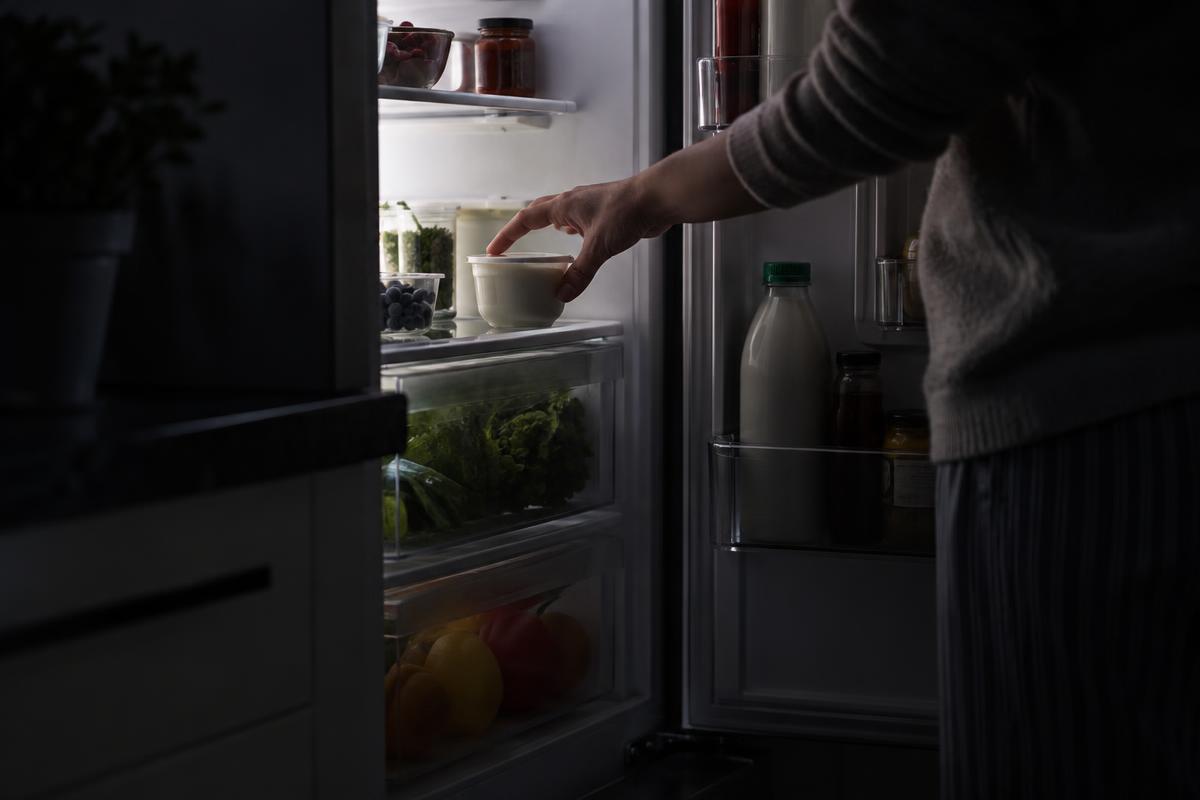
Ask most people what a 'late night snack' looks like and it's rarely a modest, planned meal. It's chips in front of the television, a second dessert nobody counted, or the entire leftover container because portioning felt pointless at midnight. This is where the myth earns its reputation: not because the clock changed the chemistry of the food, but because late-night eating is disproportionately unplanned, distracted, and additive rather than a swap for an earlier meal.
If you're trying to manage your weight, the more useful question isn't 'is it too late to eat' but 'is this food on top of what I've already had, and am I paying attention while I eat it.' That reframing does more good than any clock-watching rule, and it pairs well with broader eating patterns like the ones in our high-protein day of eating guide, which naturally reduces late-hour hunger by keeping you fuller earlier.
Sleep quality and reflux: the other late-night tax
Large or rich meals eaten close to bedtime can worsen acid reflux for people prone to it, since lying down soon after eating gives stomach contents an easier path upward. Reflux and general digestive discomfort can also fragment sleep, and poor sleep is separately and fairly robustly linked to increased hunger hormones and harder-to-control appetite the next day. That's an indirect but real mechanism: not the timing itself, but what a heavy late meal does to your night and, in turn, your next day's food choices.
Shift workers: a genuinely different case
Everything above assumes a person whose body clock and eating schedule are roughly aligned. Shift workers, who eat and sleep against their internal circadian rhythm for months or years at a time, are a different population, and research has established that shift work is associated with higher rates of obesity, type 2 diabetes, and metabolic syndrome. That's a much stronger and more consistent evidence base than the general late-night-snacking question, because it involves chronic circadian misalignment rather than an occasional late dinner.
What's established, what's suggested, and what isn't supported
| Claim | Status |
|---|---|
| Total daily calorie balance is the main driver of weight change | Established |
| Chronic circadian misalignment (shift work) raises metabolic disease risk | Established |
| A late identical meal can modestly reduce overnight calorie burn and raise hunger | Suggested by controlled trials |
| Heavy late meals can worsen reflux and disrupt sleep in susceptible people | Suggested, well supported anecdotally and clinically |
| Food eaten after a specific clock time (e.g. 8pm) is stored as fat differently | Not supported |
| Skipping dinner entirely always leads to weight loss | Not supported |
How many calories are actually in that midnight snack
Typical calories in common late-night snacks
kcal per serving
The snack itself is rarely the problem; eating it on top of an already-complete day usually is.
None of these numbers are dramatic on their own. Stacked nightly on top of an already sufficient day, though, an extra 200 to 300 kcal adds up to real weight gain over months, which loops back to the core point: it's the addition, not the hour on the clock.
So, does it depend?
Yes, honestly, it does. For most people with a fairly regular schedule, occasional late meals are not a meaningful weight risk by themselves. For people who consistently snack late on top of full daily intake, who eat heavy meals right before bed, or who work rotating night shifts, the picture changes and the risks become more concrete. Much of this overlaps with broader questions about mindless eating and food environment that we've touched on elsewhere, including how visual cues shape appetite even when we're not actually hungry.
This article is general information based on published research, not personalised medical or dietary advice; anyone with reflux, diabetes, or a specific health condition should talk to a clinician or registered dietitian about their own eating schedule.
Frequently asked questions
Sources and further reading
Curious where your own late-night habits actually fall on this spectrum? Track one honest week of what and when you eat before bed, no judgement, and the pattern usually tells you more than any rule ever could.