
The 10 Dishes You Have to Eat in Mexico at Least Once
Ten Mexican dishes worth planning a trip around, with where each one is actually eaten, at what hour, and how likely you are to find a good version.
The dishes to eat in Mexico at least once are tacos al pastor in Mexico City, cochinita pibil in Mérida, mole poblano in Puebla, birria in Jalisco, a tlayuda in Oaxaca, pozole on a Thursday night, chiles en nogada in late summer, aguachile on the Sinaloa coast, carnitas in Michoacán, and esquites from a cart on any street corner. Nine of those ten cost less than a cheap sandwich back home, and eight of them are best eaten standing up or in a plastic chair. Mexican food is not one cuisine, it is roughly 32 of them, and this list is built to show you that as fast as possible.
How this list was built
Four filters: the dish has to be regionally meaningful rather than pan-touristic, locals have to actually eat it in normal life, a visitor has to be able to find a genuinely good version without connections, and it has to taste like nothing else in the world. That rules out plenty of good food (queso fundido, anything drowned in yellow cheese) and rules in several dishes most first-time visitors never order. Mexican cuisine has been on the UNESCO Intangible Cultural Heritage list since 2010, specifically for the traditional Michoacán model of milpa farming, nixtamalized corn, and communal cooking, which is a useful reminder that the corn tortilla is the technology at the center of all of this.
The 10 dishes to eat in Mexico, in the order I would eat them
- 1
1. Tacos al pastor (Mexico City)
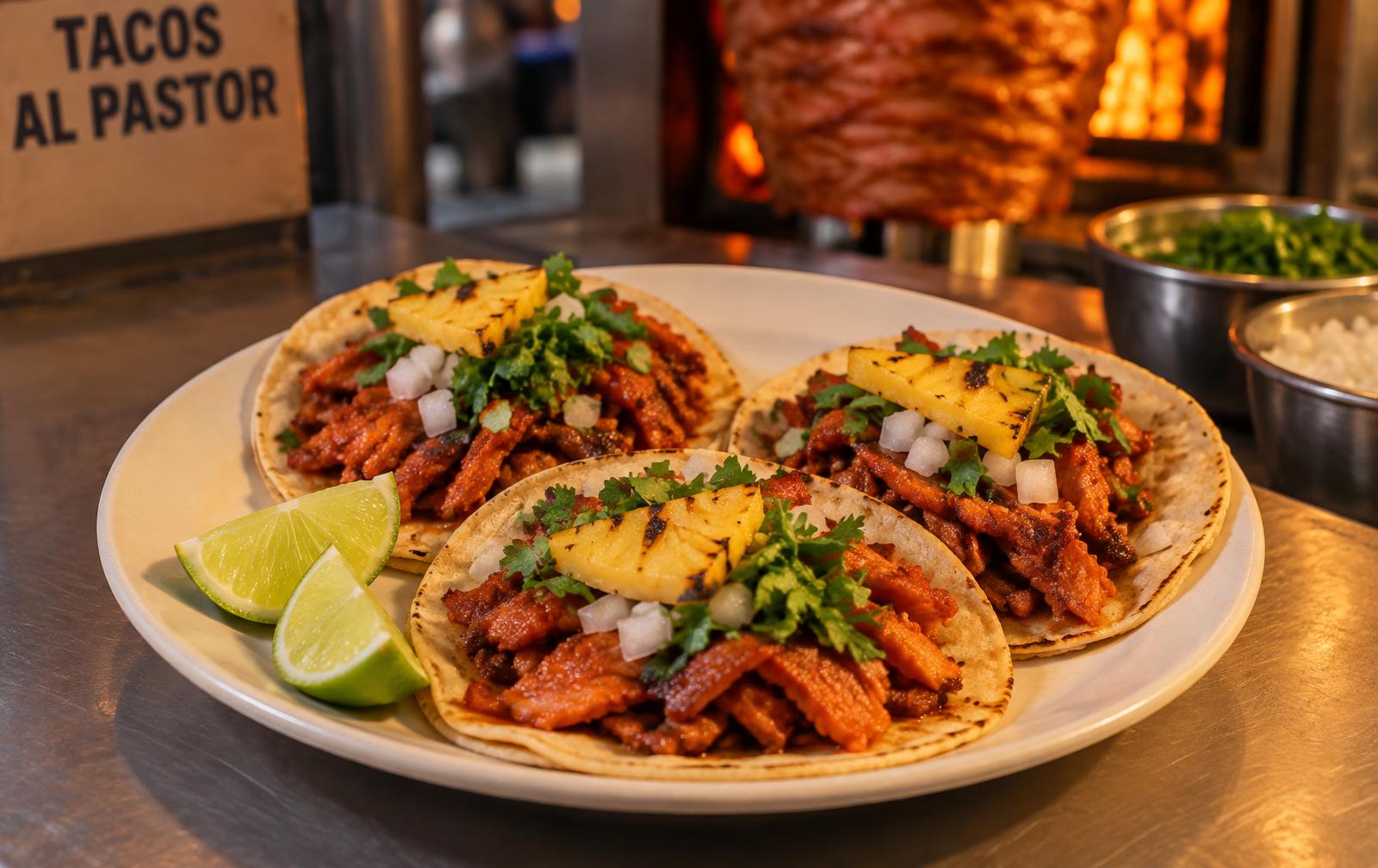
Pork marinated in dried chiles, achiote and spices, stacked onto a vertical spit called a trompo, roasted against an open flame, then shaved onto two small corn tortillas with onion, cilantro, salsa, and a sliver of pineapple flicked off the top of the spit by the taquero. It tastes smoky, faintly sweet, slightly sour, and much lighter than it looks. Pronounced ahl pahs-TOR. This is Mexico City food above all, and it is night food: most trompos do not start turning until the late afternoon, and the best moment is between 10pm and 2am. The technique came from Lebanese immigrants who arrived in Puebla in the early 20th century with shawarma, which is why the world's most Mexican taco is cooked on a Middle Eastern spit. Easy to find, and the crowded stall is always the correct stall.
- 2
2. Cochinita pibil (Yucatán)
Pork marinated in sour orange juice and achiote paste, wrapped in banana leaves, and traditionally buried in a pit oven (a píib, hence pibil) to cook overnight until it collapses. It tastes earthy and citrusy rather than spicy, and comes with pickled red onion and habanero salsa that you add yourself. This is Mérida and the wider Yucatán Peninsula, and locals eat it for breakfast and mid-morning, often piled into tortas or panuchos. By 2pm the good places have sold out. Say koh-chee-NEE-tah pee-BEEL. Extremely findable in Mérida markets like Lucas de Gálvez, and increasingly common in Mexico City too.
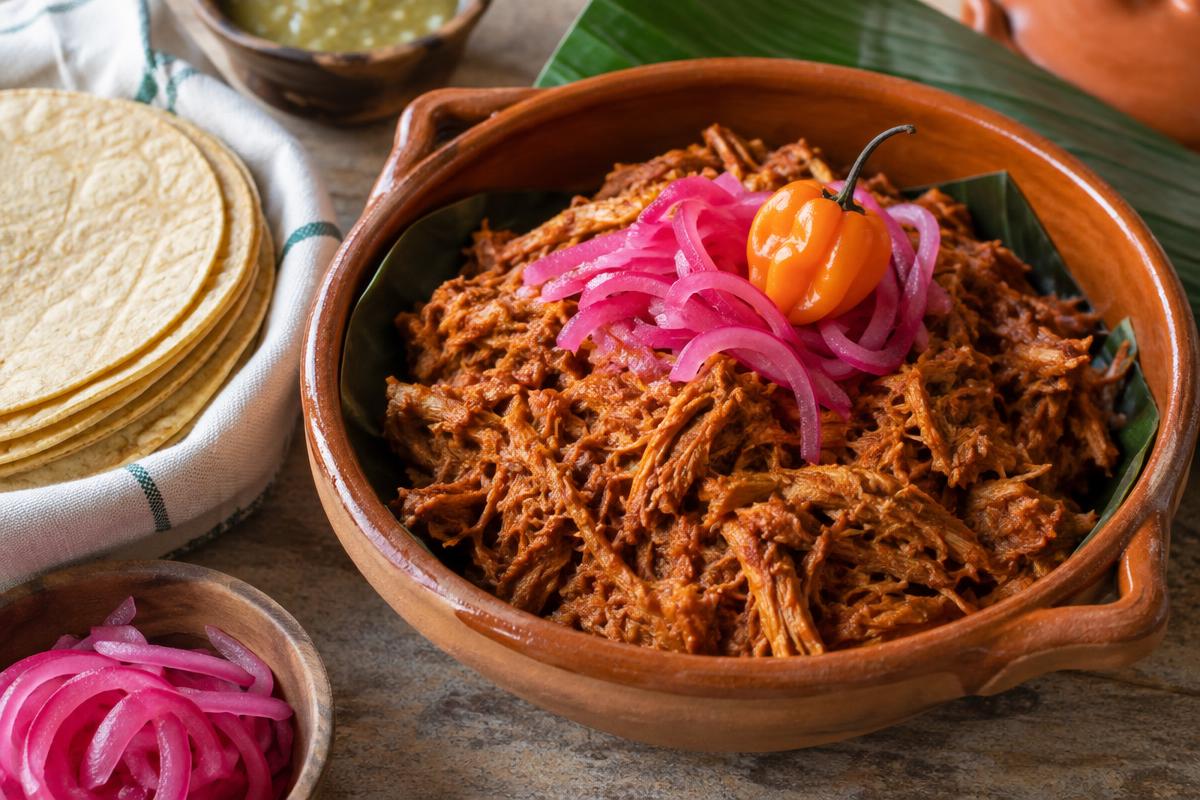
Cochinita pibil is a Yucatán breakfast dish, sold out by early afternoon in Mérida. - 3
3. Mole poblano (Puebla)
A sauce of dried chiles (mulato, ancho, pasilla), nuts, seeds, spices, bread or tortilla, dried fruit, and a small amount of chocolate, toasted and ground and simmered for hours, then ladled over turkey or chicken with sesame seeds and white rice. It does not taste like chocolate. It tastes dark, layered, faintly bitter, gently sweet, with heat arriving late. Puebla and Oaxaca both claim mole, and the origin story involving nuns at the Convento de Santa Rosa improvising for a visiting archbishop is a legend rather than documented history, so treat it as folklore. Locals eat it at weddings, baptisms and Sunday lunch, not on a weeknight. Findable year round in Puebla; ask for mole made in-house.
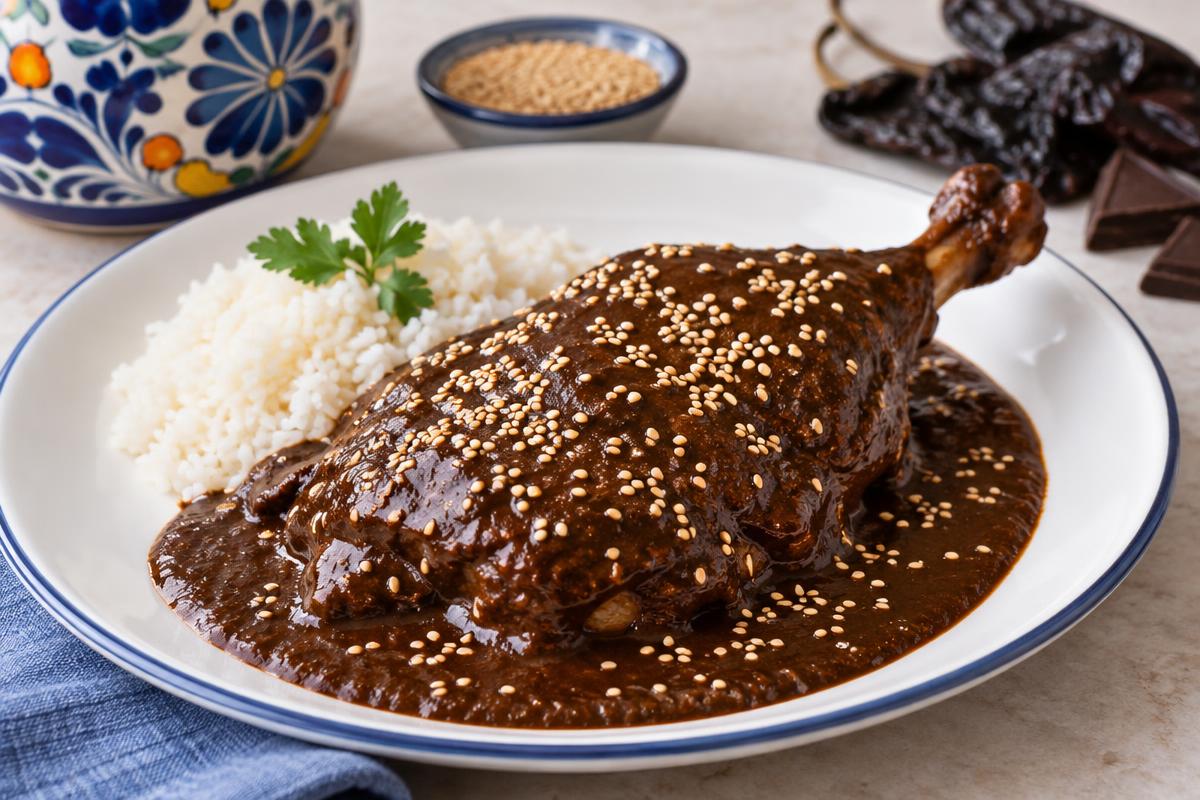
Mole poblano can carry more than 20 ingredients, and only a little of it is chocolate. - 4
4. Birria (Jalisco)
Meat, traditionally goat, slow-cooked in a chile adobo until it falls apart, served as a stew with its own consommé, lime, onion and tortillas. It tastes rich, sour-spicy and deeply savory, with goat giving a mineral edge that beef does not. Cocula and Guadalajara in Jalisco are the heartland. Locals eat birria in the morning, especially on weekends, and it has a long-standing reputation as a hangover cure. The cheese-stuffed, red-dipped birria taco that took over social media is a Tijuana-adjacent northern beef variant, and it is delicious, but it is not what a Jalisco birriería will hand you. Easy to find; go before 11am.
- 5
5. Tlayuda (Oaxaca)
A large, thin, semi-dried corn tortilla, crisped over coals, spread with asiento (unrefined pork lard) and bean paste, covered with shredded quesillo, cabbage, avocado and grilled meat like tasajo or chorizo, then folded or cut into wedges. It tastes toasty and smoky, and the texture is the point: leathery in places, snapping in others. Say tlah-YOO-dah. Oaxaca City, and it is squarely late-night food, sold from coal-fired stalls around 20 de Noviembre market and Llano park. Very findable and very cheap.
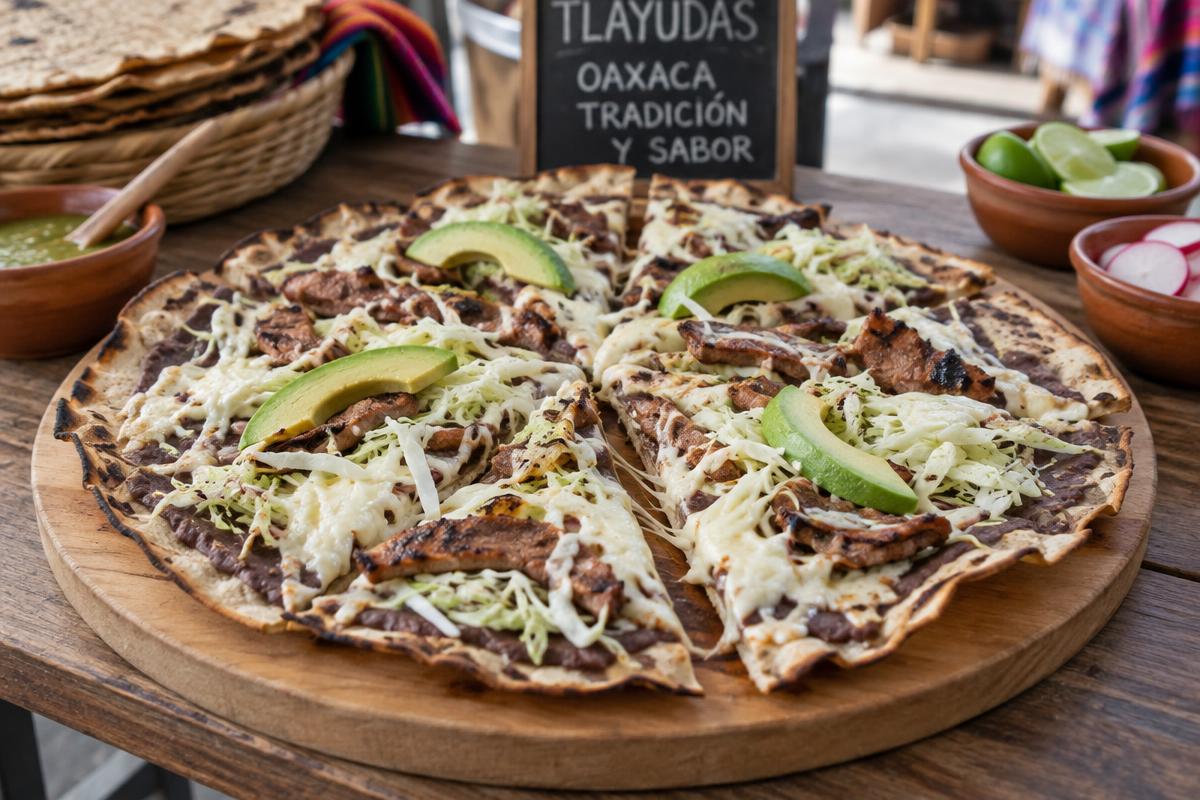
A tlayuda is grilled over coals until the tortilla snaps, which is why it is late-night Oaxaca food. - 6
6. Pozole (Guerrero and Jalisco)
A hominy soup, the corn treated with lime (calcium hydroxide) in the nixtamal process until the kernels bloom open, simmered with pork or chicken, and finished at the table with shredded lettuce or cabbage, radish, onion, oregano, lime and chile. Guerrero does a green version with pumpkin seed and tomatillo, Jalisco a red one with guajillo, Michoacán a clear white one. It tastes clean and corn-sweet under the toppings. Thursday is traditionally pozole night in much of the country, and it is also a September independence celebration dish. Findable everywhere, best in a dedicated pozolería.
- 7
7. Chiles en nogada (Puebla, August to September only)
A roasted poblano stuffed with picadillo of pork, fruit and nuts, coated in a cold walnut cream sauce, scattered with pomegranate seeds and parsley. Sweet, savory, cold-and-warm at once, and unlike anything else on this list. The green, white and red are read as the Mexican flag, which is why it dominates menus around Independence Day on September 16. The seasonality is not a marketing gimmick: it depends on fresh walnuts and Puebla's criollo pomegranates, so a version served in March is made with substitutes. If you are in Puebla in late summer, order it before anything else.
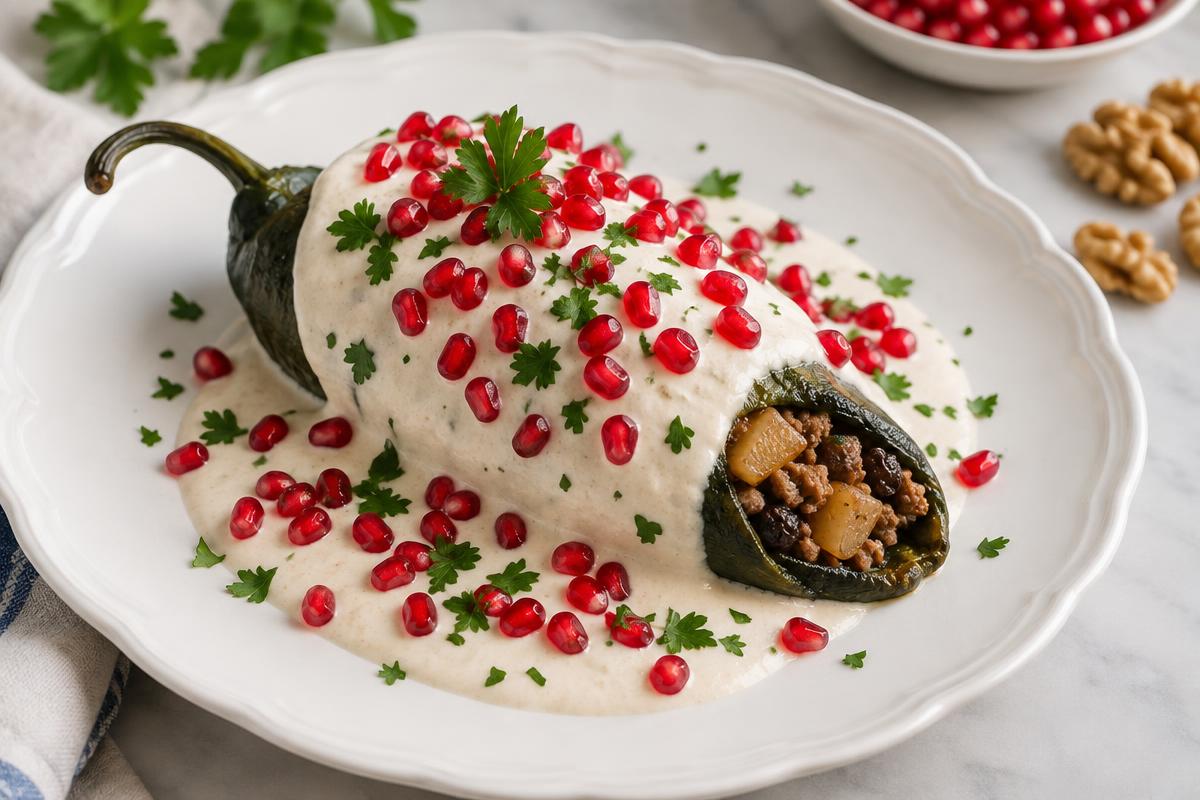
Chiles en nogada appear for roughly six weeks a year, when fresh walnuts and pomegranates overlap. - 8
8. Aguachile (Sinaloa and Nayarit)
Raw shrimp butterflied and dropped into a fierce mixture of lime juice, chiltepín or serrano chile, salt, cucumber and red onion, eaten within minutes rather than left to cure like a Peruvian ceviche. It tastes bracingly sour and genuinely hot, and it is the most electric bite in Mexican cooking. Mazatlán, Culiacán and the Nayarit coast are the places for it, eaten at lunch with cold beer and tostadas. Say ah-gwah-CHEE-leh. Findable in any coastal marisquería, and increasingly in Mexico City. Raw seafood carries the usual risks, so choose busy places with high turnover, and this is general guidance rather than medical advice.
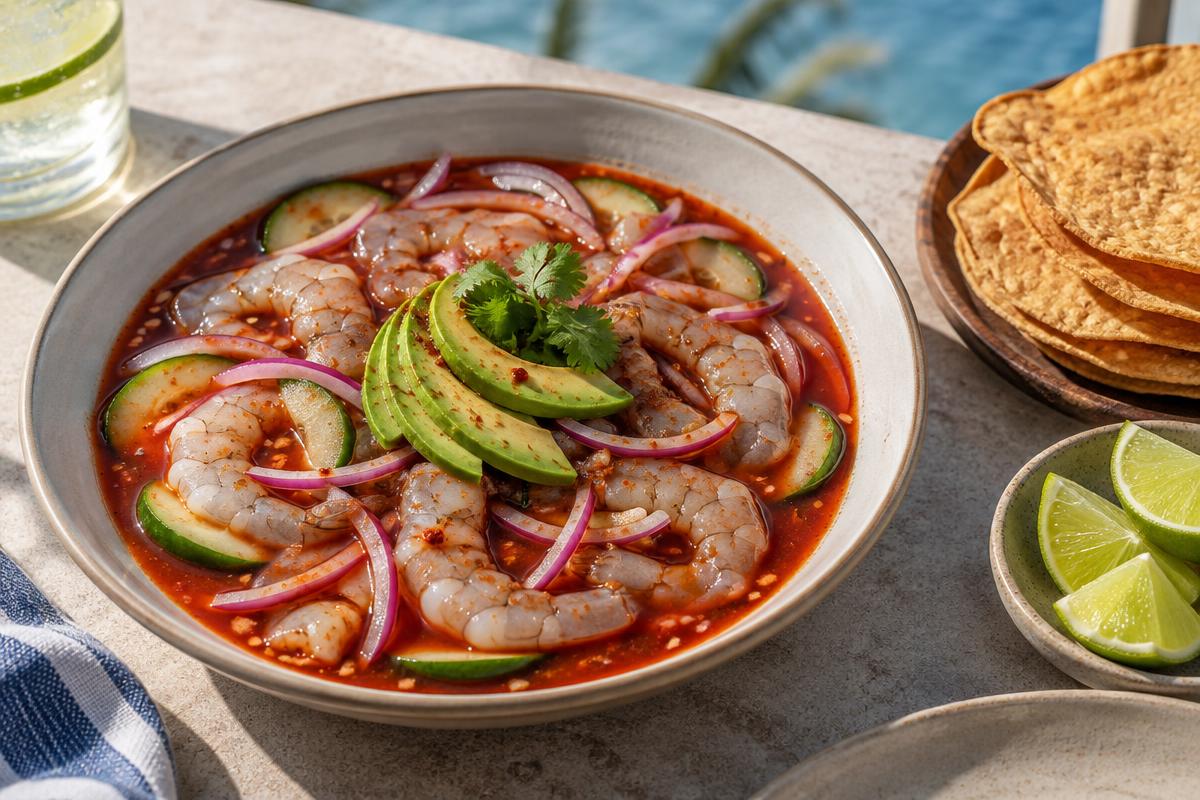
Aguachile is assembled and eaten within minutes, which is why it tastes so sharp. - 9
9. Carnitas (Michoacán)
Pork simmered slowly in its own fat in a huge copper cazo until the outside caramelizes and the inside stays juicy, then chopped to order and served on tortillas with salsa verde, onion and cilantro. It tastes clean, porky and rich without being greasy, and the different cuts matter: maciza (lean), costilla (rib), buche, cuerito. Quiroga and Santa Clara del Cobre in Michoacán are famous for it, partly because Santa Clara makes the copper pots. Weekend mornings, sold by weight, and often gone by early afternoon. Order surtida if you want a mix.
- 10
10. Esquites and elote (nationwide)
Corn either shaved into a cup (esquites) or served on the cob (elote), dressed with mayonnaise or crema, powdered dried cheese, lime, chile powder and sometimes epazote in the cooking liquid. It tastes sweet, salty, sour and hot all at once, which is the whole flavor logic of Mexican street food in a single cup. Sold from carts and bicycles everywhere, mostly late afternoon into the evening. It is the cheapest thing on this list and one of the most memorable, and if lime and chile on fruit is new to you, the same treatment on mango or jicama is worth trying too.
| Dish | Best region | When locals eat it | Typical price | How easy to find |
|---|---|---|---|---|
| Tacos al pastor | Mexico City | Late night | MX$15–25 per taco | Very easy |
| Cochinita pibil | Mérida, Yucatán | Breakfast to noon | MX$60–120 plate | Easy before 2pm |
| Mole poblano | Puebla | Sunday lunch, celebrations | MX$150–250 | Easy year round |
| Birria | Cocula and Guadalajara | Weekend mornings | MX$100–180 | Easy before 11am |
| Tlayuda | Oaxaca City | Late night | MX$70–140 | Very easy |
| Pozole | Guerrero and Jalisco | Thursday nights, September | MX$90–160 | Easy |
| Chiles en nogada | Puebla | August to September | MX$250–450 | Seasonal only |
| Aguachile | Sinaloa and Nayarit | Lunch | MX$150–280 | Easy on the coast |
| Carnitas | Quiroga, Michoacán | Weekend mornings | MX$180–260 per kilo | Easy on weekends |
| Esquites | Nationwide | Late afternoon onward | MX$20–40 cup | Everywhere |
Roughly what one serving costs, in Mexican pesos
MX$ (midpoint of typical range)
A cup of esquites and a plate of chiles en nogada differ by more than tenfold, which is why a single day of eating in Mexico can swing from street cart to celebration dish.
Watch a trompo being built before you order al pastor
The surprising part: the tortilla is the invention, not the filling
Corn on its own is a nutritionally incomplete staple, because its niacin (vitamin B3) is chemically bound and largely unavailable to us. Soaking and cooking the kernels in an alkaline solution of slaked lime, a process called nixtamalization that dates back thousands of years in Mesoamerica, releases that niacin, adds calcium, and makes the corn grindable into masa. Cultures that adopted corn without the lime treatment, notably in parts of 19th-century Europe and the American South, suffered pellagra outbreaks. So the tortilla is not the plain part of the meal, it is the single most sophisticated piece of food technology on your plate. If you like that sort of thing, our piece on what the ancient Romans really put on their food covers a similar gap between what people assume is ancient and what actually is.
Chile heat, and how to order around it
Heat in Mexican food comes from capsaicin binding to the TRPV1 receptor, the same nerve receptor that responds to physical heat, which is why your brain reads a habanero as a burn rather than a flavor. Think of it as a false fire alarm: nothing is actually damaging your mouth, the wiring is just being triggered. Fat and dairy help because capsaicin is fat-soluble, so crema, avocado or cheese genuinely dull the burn while water does not. Ask for salsa on the side rather than none at all, and remember that the cilantro on top divides people genetically, so it is fine to ask for sin cilantro. For a stranger corner of taste perception, see what happens when miracle berry rewires your sense of sour.
When to eat what, on a normal Mexican day
- Breakfast, 8am to 11am: cochinita pibil tortas in Yucatán, birria in Jalisco, carnitas in Michoacán. The heavy meat dishes are morning food, which surprises most visitors.
- Comida, 2pm to 4pm: the main meal of the day. Mole, pozole, aguachile and sit-down food belong here.
- Late afternoon: esquites, elote, fruit with chile and lime from carts, plus tamales in some cities.
- Evening, 9pm onward: tacos al pastor and tlayudas, both cooked over live fire and both better the later it gets.
- Celebrations: mole for weddings and baptisms, pozole for September 15 and 16, chiles en nogada for late summer.
“If a taco stand has a line of people who clearly work nearby, get in it. If it has a laminated English menu and no line, keep walking.”
How to plan a trip around this list
Mexico City gives you al pastor, pozole, esquites, carnitas and a decent mole in a single week, and it is the most efficient base if you only have seven days. Oaxaca is the single best eating city in the country for its size, and a tlayuda plus a mole tasting there covers a lot of ground. Add Mérida for cochinita pibil and Mazatlán or San Blas for aguachile if you have two weeks. Geography does the work here in the same way it does with American regional pizza styles: the dish exists because of a specific place, and it usually stops being itself when it travels. One warning about the famous places: a few Mexico City taquerías and Oaxacan stalls have become social media destinations with hour-long lines, and as we found looking at why people now line up for hours for food, the wait rarely buys you better flavor than the stall two streets over.
Frequently asked questions about eating in Mexico
Sources and further reading
Now the argument: I left tamales, chilaquiles and cabrito off this list on purpose, and someone from Monterrey is going to be furious about the last one. Tell us which dish you would throw out to make room, and where in Mexico you would send us to prove it.
Filed under
More from World Food
The 10 Dishes You Have to Eat in Japan at Least Once
Ten dishes that explain Japan better than any guidebook, chosen for flavour, regional pride, and whether a traveller can actually find them.
Hana Yoshida · · 12 min read
Why People Are Lining Up for Hours for Potatoes and Frozen Yogurt
The queue is the product now. The food is almost beside the point.
Hana Yoshida · · 8 min read