
The 10 Dishes You Have to Eat in Japan at Least Once
Ten dishes that explain Japan better than any guidebook, chosen for flavour, regional pride, and whether a traveller can actually find them.
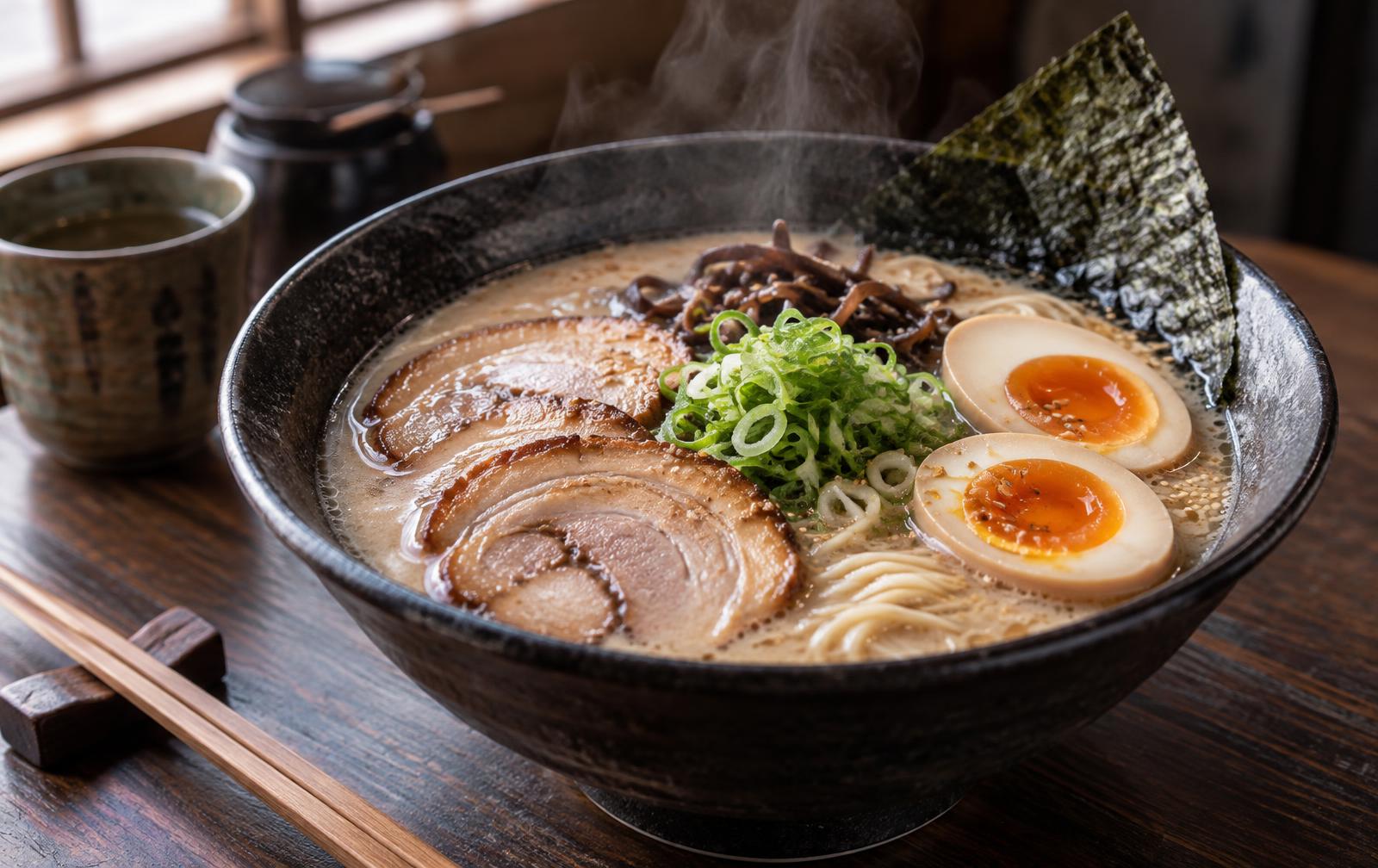
If you only have a week in Japan, these are the dishes to eat in Japan before you worry about anything else: shoyu ramen, okonomiyaki, cold soba, katsu curry, takoyaki, sushi at a standing counter, yakitori under the tracks, tonkatsu, oden in winter, and a proper kaiseki meal if your budget allows it. Each one tells you something different about the country, and none of them require a reservation you can't get as a visitor.
How this list was built
This isn't a ranking of the fanciest food in Japan. It's a shortlist of dishes to eat in Japan that are widely available, regionally meaningful, and worth planning a meal around, whether that meal costs 400 yen at a train station or 15,000 yen at a counter in Ginza. If you want the wider context of how food shows up in Japanese daily life and pop culture, it's worth reading about how food is animated in Studio Ghibli films too, since so much of Japan's food culture is about small, unhurried rituals.
- 1
1. Shoyu ramen (醤油ラーメン)
A soy-sauce-based broth over springy wheat noodles, usually with chashu pork, a marinated egg, bamboo shoots and scallions. It tastes savoury and clean rather than heavy, closer to a good chicken soup than the tonkotsu style most Westerners picture. Tokyo is its spiritual home, though every region has a variation. Locals eat it any time of day, including breakfast after a long night, and you will find a good bowl within walking distance of almost any train station. Reservations are never needed; queueing sometimes is.
- 2
2. Okonomiyaki (お好み焼き)
A savoury cabbage pancake grilled on a hot iron plate, bound with egg and flour batter, topped with pork or seafood, and finished with a sweet-savoury sauce, mayonnaise, and bonito flakes that curl in the heat. It tastes rich and smoky, somewhere between a frittata and a pancake. Osaka and Hiroshima both claim it, with Hiroshima layering in noodles. Locals eat it as a casual dinner, often cooked at the table themselves. It is easy to find in any city with a teppan grill built into the counter.
Okonomiyaki is cooked tableside on an iron plate, often by the diners themselves. - 3
3. Zaru soba (ざるそば)
Cold buckwheat noodles served on a bamboo tray, dipped into a cold soy-and-dashi sauce with scallions and wasabi. The flavour is nutty and earthy from the buckwheat, cut by the salty dipping sauce. It's a summer dish, eaten at lunch when the heat makes hot ramen unappealing. Soba shops are everywhere, from station kiosks to centuries-old family restaurants, so finding a decent bowl is never the hard part.
- 4
4. Katsu curry (カツカレー)
A breaded, deep-fried pork or chicken cutlet served over rice and smothered in a thick, mildly sweet curry sauce that owes more to British naval curry than to Indian curry. It tastes comforting and mild, the kind of dish Japanese families eat on a weeknight. It's sold everywhere from convenience stores to specialist curry chains, and it is one of the easiest dishes for a first-time visitor to order without any Japanese.
- 5
5. Takoyaki (たこ焼き)
Ball-shaped batter fritters cooked in a special moulded pan, each with a chunk of octopus inside, brushed with the same sweet sauce as okonomiyaki, mayonnaise, and dancing bonito flakes. The outside is crisp, the inside molten. Osaka is the undisputed home of takoyaki, sold from street stalls and night markets. Locals treat it as a snack to eat standing up, not a meal, and it is sold almost anywhere tourists gather in Osaka's Dotonbori district.
- 6
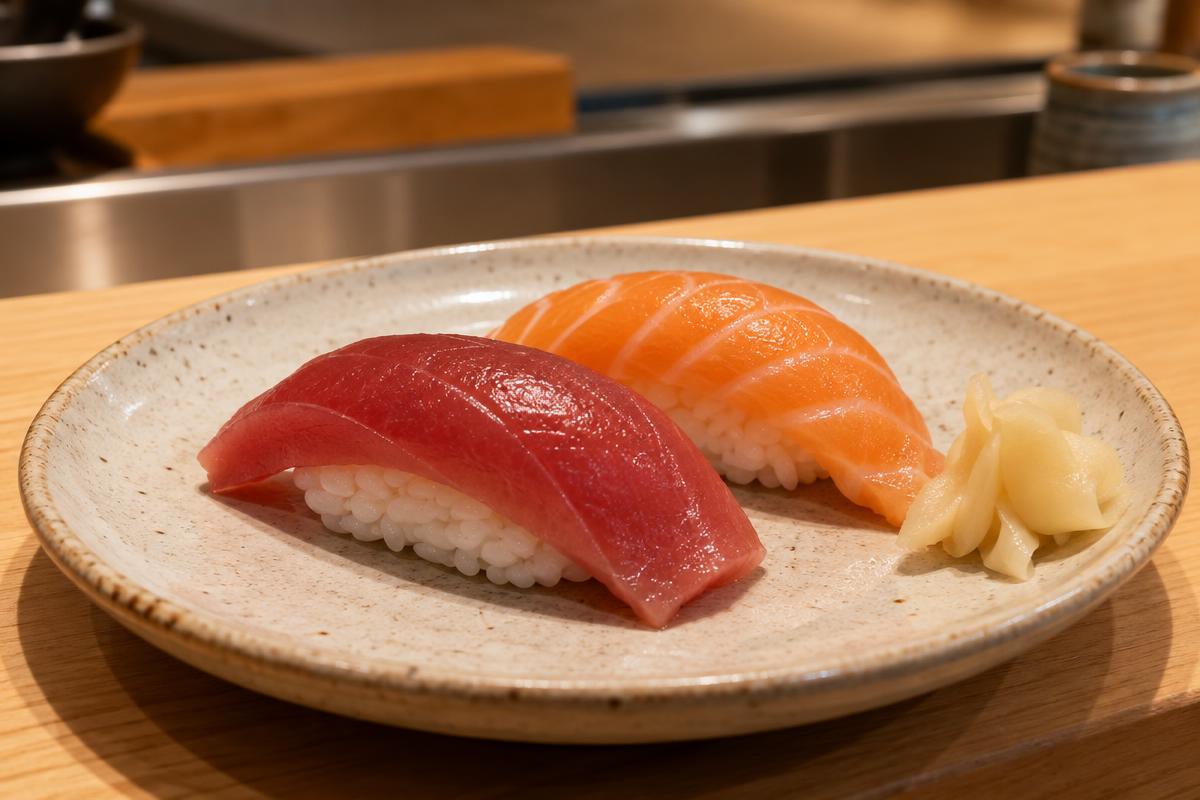
6. Sushi at a standing counter
Vinegared rice topped or wrapped with raw fish, the freshness and rice temperature mattering more than the fanciness of the fish itself. A good conveyor-belt or standing-counter sushi bar tastes clean, slightly sweet from the rice, and briny rather than fishy. Tokyo's Tsukiji outer market area and countless neighbourhood counters make this achievable on almost any budget, no reservation required for the casual versions.
- 7
7. Yakitori (焼き鳥)
Skewered, grilled chicken, usually cooked over charcoal and seasoned with either salt or a sweet soy tare glaze. It tastes smoky and savoury, with different skewers offering completely different textures, from crisp skin to tender thigh. Locals eat it in the evening at small alley bars, often standing, often after work. Tokyo neighbourhoods like Yurakucho, under the train tracks, are full of yakitori stalls that welcome walk-ins.
- 8
8. Tonkatsu (とんかつ)
A thick, breaded, deep-fried pork cutlet served with shredded cabbage, rice, miso soup, and a tangy brown sauce. It tastes crisp outside and juicy inside, less greasy than it sounds because the breading is light panko rather than a heavy batter. It's a lunch or dinner dish nationwide, and dedicated tonkatsu restaurants are common enough that finding one is rarely an issue, even outside major cities.
- 9
9. Oden (おでん)
A winter hot pot of ingredients like daikon, boiled eggs, fish cakes and konjac, simmered slowly in a light dashi broth. It tastes mild and warming, the broth doing most of the talking rather than any single ingredient. Locals genuinely buy this from convenience store hot cases in winter, which makes it one of the few dishes on this list you can eat well without ever entering a restaurant.
- 10
10. Kaiseki (懐石料理)
A multi-course seasonal tasting meal built around balance, presentation and the calendar, moving from delicate raw dishes through grilled, simmered and steamed courses. It tastes restrained and precise rather than bold, designed to showcase ingredients at their exact seasonal peak. Kyoto is considered its heartland. It requires more planning and money than anything else on this list, and reservations are often necessary weeks in advance, but it's worth the one splurge on a longer trip.
| Dish | Best region | Typical price band | Where to find it |
|---|---|---|---|
| Shoyu ramen | Tokyo | ¥800–1,200 | Ramen shops near any station |
| Okonomiyaki | Osaka / Hiroshima | ¥900–1,500 | Teppan-grill restaurants |
| Zaru soba | Nagano / nationwide | ¥600–1,000 | Soba shops, station kiosks |
| Katsu curry | Nationwide | ¥700–1,100 | Curry chains, convenience stores |
| Takoyaki | Osaka | ¥400–700 | Street stalls, Dotonbori |
| Sushi (standing counter) | Tokyo | ¥1,000–3,000 | Counter sushi bars |
| Yakitori | Tokyo | ¥100–300 per skewer | Alley izakaya, under-track stalls |
| Tonkatsu | Nationwide | ¥1,000–1,800 | Dedicated tonkatsu restaurants |
| Oden | Nationwide, winter | ¥300–800 | Convenience store hot cases |
| Kaiseki | Kyoto | ¥8,000–25,000+ | Reservation-only kaiseki restaurants |
Typical price for one serving, in yen
¥ (midpoint of typical range)
Street food and convenience-store dishes cost a fraction of a formal kaiseki meal, which is why most travellers eat both in the same week.
Watch okonomiyaki being made before you go
A surprising fact about ramen
Ramen is often assumed to be an ancient Japanese dish, but its broth-and-noodle format was popularised from Chinese wheat noodle soups in the late 19th and early 20th centuries, and it only became a genuinely nationwide obsession after instant ramen was invented in Osaka in 1958. What reads as timeless comfort food is, historically, quite young. If you enjoy that kind of food history rabbit hole, what ancient Romans actually ate is a good companion read, since it shows how much of what feels 'traditional' in any cuisine is more recent than people assume.
When to eat what
- Breakfast: convenience store rice balls, miso soup, or leftover ramen from the night before.
- Lunch: soba or a set-menu tonkatsu, both quick and cheap near offices and stations.
- Evening: yakitori and okonomiyaki, both social dishes meant to be shared over drinks.
- Late night: oden from a convenience store hot case, a genuinely common after-work habit.
- Special occasion: kaiseki, booked well ahead, usually for a birthday or a visiting client.
One more thing worth knowing before you go: portion sizes in Japan are often smaller than in the US, and it's completely normal to order two or three small dishes rather than one large one, especially at an izakaya. This is general travel and cultural context rather than dietary advice, so adjust based on your own appetite and needs.
“You don't understand a country's food until you've eaten standing up in it at least once.”
Getting the most out of a short trip
If your itinerary is tight, prioritise Osaka for okonomiyaki and takoyaki, Tokyo for ramen, sushi and yakitori, and Kyoto if kaiseki or a formal seasonal meal is on your list. Trying to do all ten dishes in one city is possible but rushed; spreading them across a Tokyo-Kyoto-Osaka route matches how the dishes are actually distributed. It's the same logic behind ranking regional pizza styles in the US: geography explains taste more than any single recipe does.
Frequently asked questions
Sources and further reading
Which of these dishes would you build a trip around? Tell us the one you'd fly for, and we'll build the next Japan list around whatever comes up most.
Filed under
More from World Food
The 10 Dishes You Have to Eat in Mexico at Least Once
Ten Mexican dishes worth planning a trip around, with where each one is actually eaten, at what hour, and how likely you are to find a good version.
Ana Belmonte · · 13 min read
Why People Are Lining Up for Hours for Potatoes and Frozen Yogurt
The queue is the product now. The food is almost beside the point.
Hana Yoshida · · 8 min read