
The 10 Dishes You Have to Eat in Thailand at Least Once
Ten Thai dishes worth building a trip around, from a Bangkok basil stir-fry at midnight to khao soi in Chiang Mai, with where to find each one and how to order it.
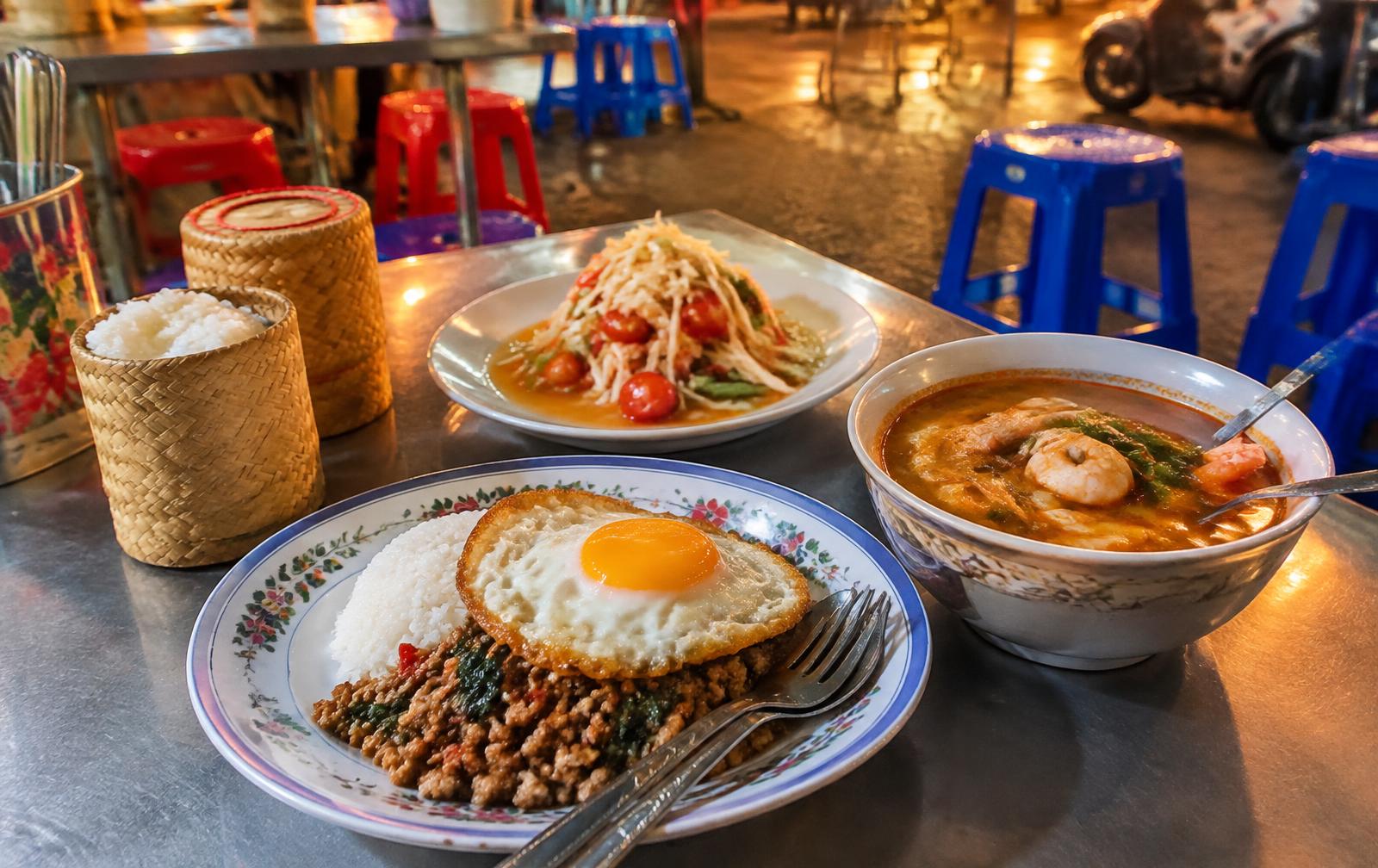
The 10 dishes you have to eat in Thailand at least once are som tam (green papaya salad), pad kra pao (holy basil stir-fry with a fried egg), tom yum goong, khao soi in Chiang Mai, green curry, khao man gai, moo ping with sticky rice, larb, pad thai, and mango sticky rice. Almost all of them are street or shophouse food, most cost less than a coffee back home, and together they cover the four big regional kitchens: central Thailand around Bangkok, the northeast (Isan), the north, and the south. The real lesson of Thai food is balance. Nearly every dish is built to hit sour, salty, sweet, and spicy at once, and the table condiments exist so you can adjust that balance yourself.
How this list was built
Three filters. Locals have to eat it in normal life, not just serve it to tourists. A visitor has to be able to find a good version without a guide. And it has to teach you something about how Thai food works. That knocks out plenty of great dishes (massaman curry, boat noodles, and the whole world of southern curries deserve their own list) and keeps a few that first-timers skip because they sound too simple. If you've read our guides to the dishes to eat in Mexico and Japan, the logic is the same: regional, everyday, and unmistakable.
The 10 dishes to eat in Thailand, in the order I'd eat them
- 1
1. Som tam (green papaya salad)
Pronounced som TAHM, it means roughly "pounded sour." Shredded unripe papaya is bruised in a clay mortar with garlic, bird's eye chilies, lime, fish sauce, palm sugar, tomatoes, long beans, and dried shrimp or peanuts. It's crunchy, sharp, and far hotter than it looks. Som tam comes from Isan, the northeast, and shares roots with Lao cooking. The version most visitors get is som tam Thai, sweeter and made with peanuts. Ask for som tam poo pla ra if you want the funky Isan original with salted crab and fermented fish sauce. Order it <em>pet noi</em> (a little spicy) the first time. "Thai spicy" at an Isan stall is a real thing, and the vendor pounds the chilies in to order, so what you ask for is what you get.
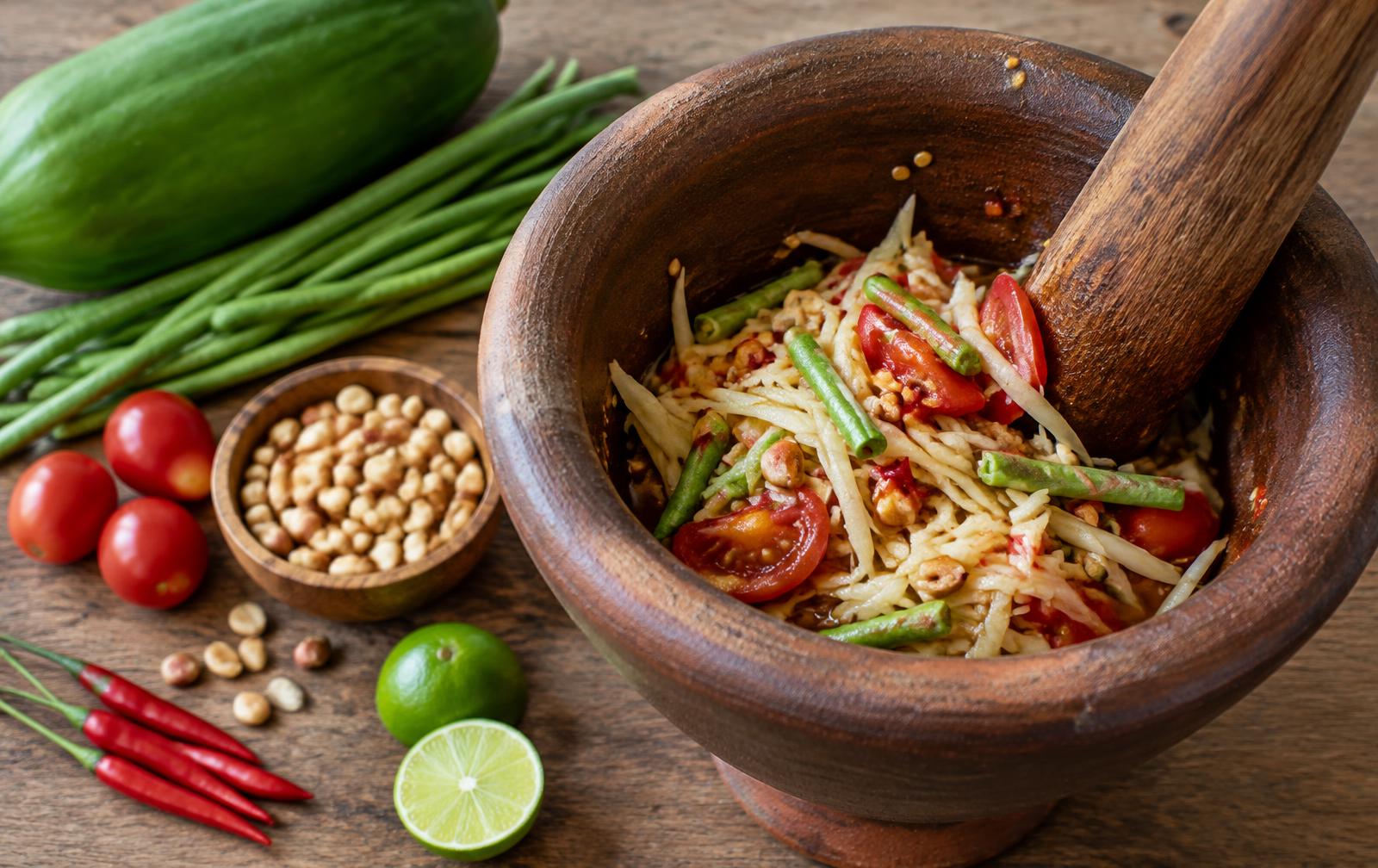
Som tam is pounded to order, so you control the heat by how many chilies go into the mortar. - 2
2. Pad kra pao (holy basil stir-fry)
If Thailand has a default lunch, this is it. Minced pork or chicken is flash-fried with garlic, chilies, and a fistful of holy basil (kra pao), which is peppery and clove-like and nothing like the sweet Thai basil in most Western restaurants. It's served over jasmine rice with a <em>kai dao</em>, a fried egg with a crisp, lacy edge and a runny yolk. Say "kra pao moo, kai dao" at almost any made-to-order stall (look for a wok and a pile of raw ingredients) and you'll have it in three minutes. The small bowl of fish sauce with sliced chilies, prik nam pla, is on the table for a reason. Spoon a little over the egg.
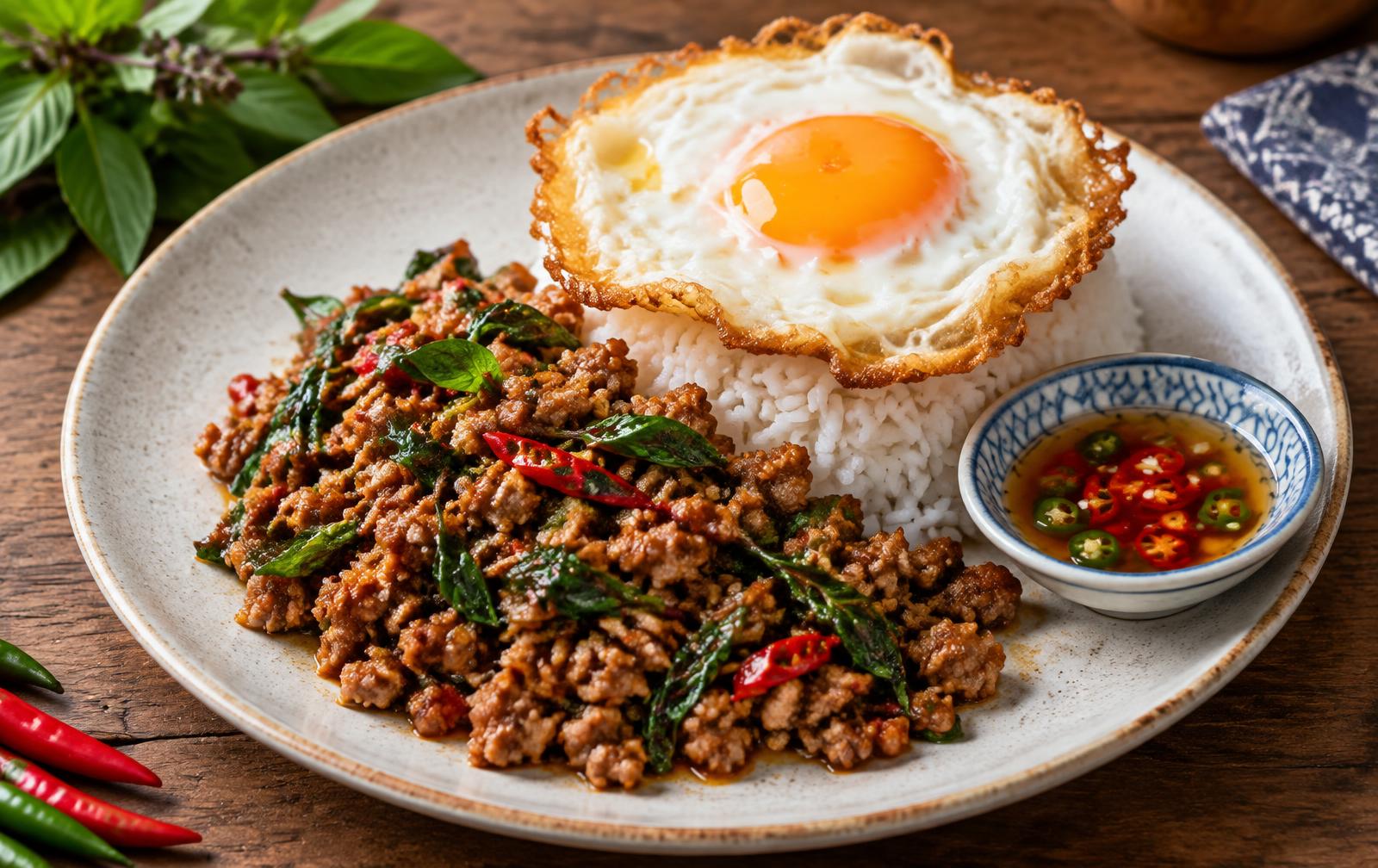
Pad kra pao with a crisp fried egg: Thailand's everyday lunch, ready in about three minutes. - 3
3. Tom yum goong
The hot and sour shrimp soup was added to UNESCO's Representative List of the Intangible Cultural Heritage of Humanity in December 2024, and one spoonful explains why. The broth is built on lemongrass, galangal, and makrut lime leaves, sharpened with lime juice and chilies, and deepened with fish sauce and often nam prik pao, a roasted chili paste. There are two styles. <em>Nam sai</em> is clear and bright. <em>Nam khon</em> is creamy with evaporated milk or coconut milk and is what most visitors picture. Try both. And don't eat the lemongrass or galangal pieces, which are there for flavor, not chewing.
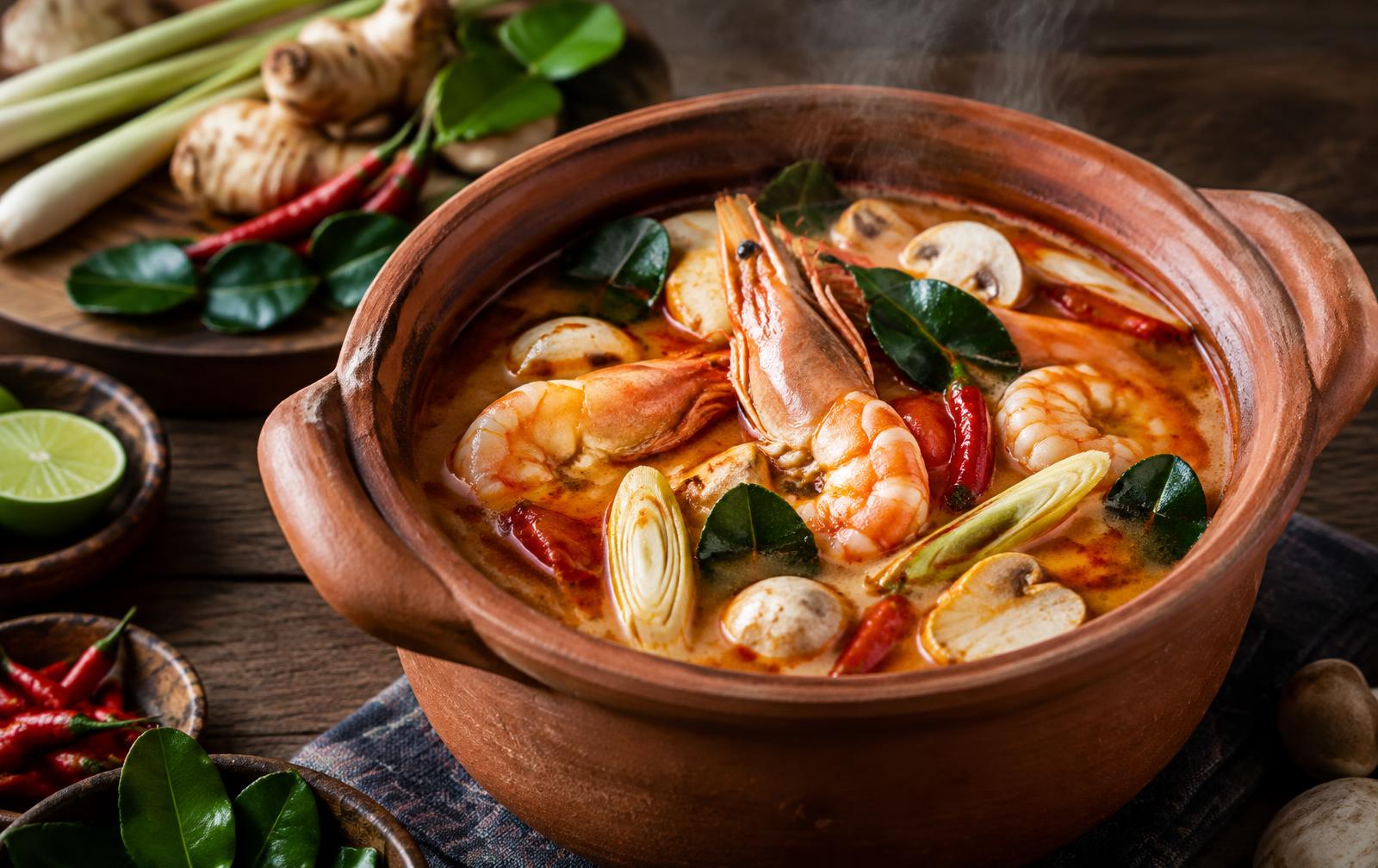
Tom yum goong: lemongrass, galangal and lime leaf are there to flavor the broth, not to be eaten. - 4
4. Khao soi (Chiang Mai)
This is the dish that makes the overnight train north worth it. Egg noodles swim in a rich, mildly spiced coconut curry broth, usually with a braised chicken drumstick, and are topped with a nest of the same noodles deep-fried until crunchy. On the side: pickled mustard greens, raw shallots, lime, and roasted chili paste, all of which you're meant to add. Khao soi reflects the north's links to Burma and to Chinese Muslim (Chin Haw) traders, and it's hard to find a great version outside the region. In Chiang Mai it's a morning and lunchtime dish, and many of the best shops close by mid-afternoon, so go early. Khao Soi Lam Duan Fah Ham, near the Ping River, is one of the city's long-running names.
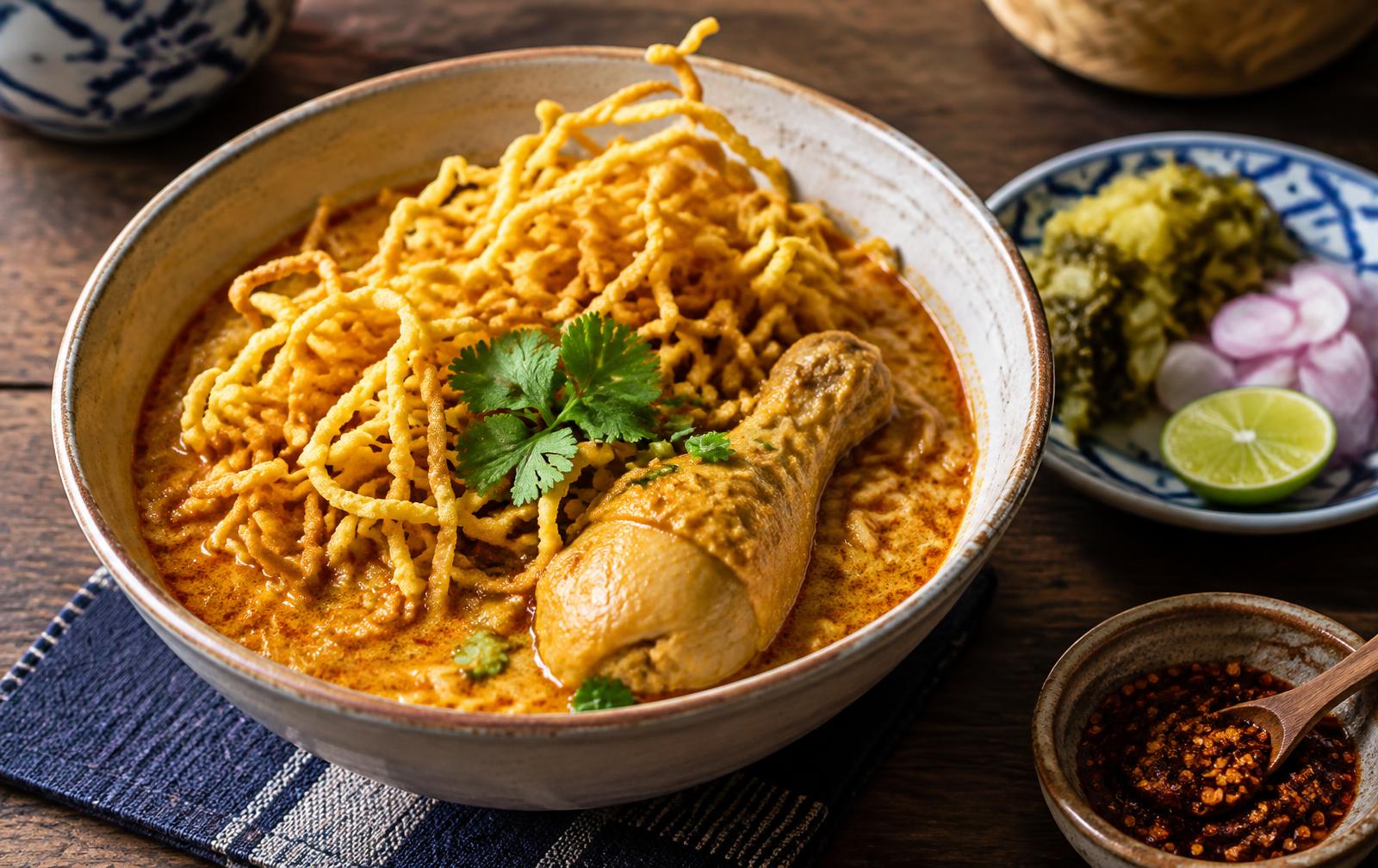
Khao soi: soft noodles below, crispy noodles on top, and the condiments are part of the recipe. - 5
5. Green curry (gaeng keow wan)
The name means "sweet green curry," and it's the only major Thai curry with "sweet" in the name, which refers to the soft green color, not a sugary taste. Fresh green chilies pounded with lemongrass, galangal, shallot, and shrimp paste give it its color and a sharp, grassy heat that's often hotter than red curry. It's simmered with coconut milk, Thai eggplant, and sweet basil. In Bangkok look for it at <em>khao gaeng</em> shops, rice-and-curry places with a row of pots at the front, where you point at what you want over rice. It's one of the cheapest good meals in the city.
- 6
6. Khao man gai (Thai chicken rice)
A Thai take on Hainanese chicken rice, brought over by Chinese immigrants. Poached chicken sits on rice cooked in chicken fat and stock, served with a bowl of clear broth and, most importantly, a sauce of fermented soybean, ginger, garlic, and chili that makes the whole dish. It looks plain. It isn't. In Bangkok, Go-Ang Pratunam Chicken Rice (the shop known for its staff in pink shirts) is famous enough to have long lines, but good khao man gai is everywhere, usually at a stall with whole poached chickens hanging in the window.
- 7
7. Moo ping with sticky rice
Thailand's best breakfast is sold on a stick. Pork shoulder is marinated in garlic, coriander root, white pepper, fish sauce, palm sugar, and often coconut milk, then grilled slowly over charcoal until sticky and caramelized. Buy a few skewers and a small bag of <em>khao niao</em> (sticky rice) from carts that set up early in the morning, and eat it walking. Sticky rice is eaten with your right hand, rolled into a small ball. The fat from the pork is the point, so don't pick the leanest skewer.
- 8
8. Larb
A warm minced meat salad from Isan (also a national dish of Laos) that shows how different Thai food can be from the coconut curries most people know. Minced pork, chicken, or duck is dressed with lime, fish sauce, dried chili, shallots, mint, and the key ingredient, <em>khao khua</em>: toasted ground sticky rice that adds a nutty crunch. It's eaten with sticky rice, raw cabbage, and long beans. Order it next to som tam and grilled chicken (gai yang), and you have the classic Isan meal.
- 9
9. Pad thai
Yes, the tourist dish belongs here, and knowing its history makes it more interesting. Pad thai was actively promoted in the late 1930s and 1940s under Prime Minister Plaek Phibunsongkhram as part of a nationalist campaign that also changed the country's name from Siam to Thailand. It's younger than your grandparents. A good version is lightly smoky from a hot wok, tangy from tamarind, with rice noodles, egg, dried shrimp, tofu, chives, and bean sprouts. It comes with lime, crushed peanuts, sugar, and chili on the side for you to add. Thip Samai on Maha Chai Road in Bangkok is the famous address. If you want to cook it at home, our <a href="/recipes/easy-weeknight-pad-thai">weeknight pad thai</a> is a good start.
- 10
10. Mango sticky rice (khao niao mamuang)
Sticky rice steamed and then soaked in sweetened, lightly salted coconut milk, served with ripe mango, more coconut cream, and sometimes crunchy fried mung beans on top. The salt is the secret, because it makes the coconut taste richer and the mango sweeter. The classic mango is the fragrant nam dok mai variety. It's sold year-round now, but it's at its best in the hot season, roughly March through May, when mangoes are at their peak and vendors pile them high. It's the right way to end any meal on this list.
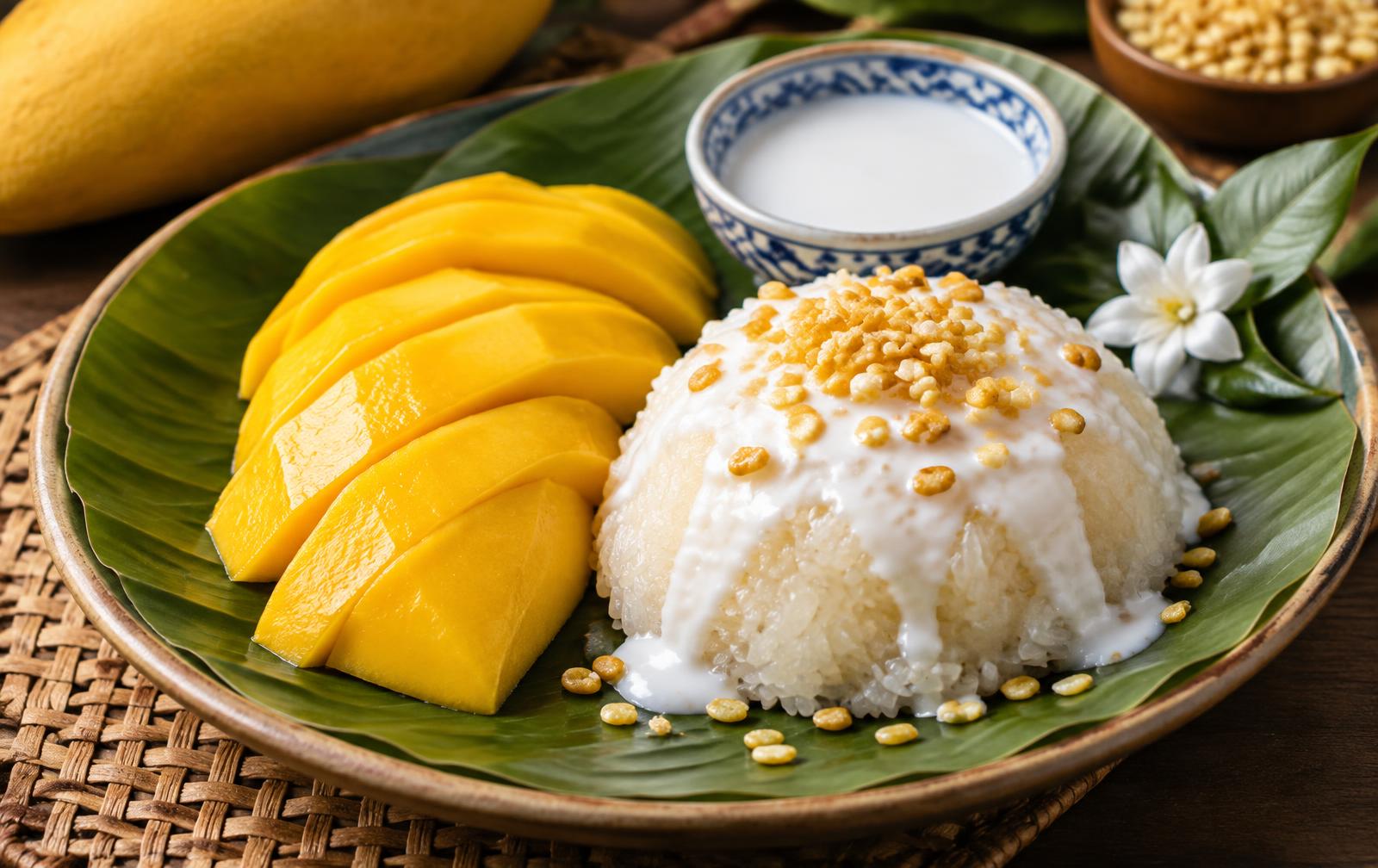
Mango sticky rice is sold year-round, but it's best in the March to May mango season.
| Dish | Region | Best time to eat | Heat level | How to order |
|---|---|---|---|---|
| Som tam | Isan (northeast) | Lunch | Hot, adjustable | "Som tam, pet noi" |
| Pad kra pao | Central, everywhere | Lunch or late night | Hot | "Kra pao moo, kai dao" |
| Tom yum goong | Central | Dinner, shared | Hot and sour | Ask for nam sai or nam khon |
| Khao soi | North (Chiang Mai) | Breakfast to lunch | Mild to medium | Add the condiments yourself |
| Green curry | Central | Lunch | Hot | Point at the pot, over rice |
| Khao man gai | Central, Chinese-Thai | Breakfast or lunch | Mild, sauce is spicy | Ask for extra sauce |
| Moo ping | Everywhere | Early morning | Mild | Skewers plus a bag of sticky rice |
| Larb | Isan (northeast) | Lunch or dinner | Medium to hot | With sticky rice and raw vegetables |
| Pad thai | Central | Evening | Mild | Season it yourself at the table |
| Mango sticky rice | Central, everywhere | Dessert, March to May | None | Ask for extra coconut cream |
How to eat your way through Thailand like a local
- <strong>Use the condiment caddy.</strong> Most noodle shops set out four jars: sugar, fish sauce, dried chili, and chilies in vinegar. Seasoning your own bowl is expected, not rude.
- <strong>Spoon, not chopsticks.</strong> Rice dishes are eaten with a spoon in the right hand and a fork in the left to push food onto it. Chopsticks are for noodles.
- <strong>Share.</strong> A Thai meal is several dishes placed in the middle with rice for everyone. Order one per person plus rice, rather than one plate each.
- <strong>Follow the timing.</strong> Moo ping and jok (rice porridge) are morning foods, khao soi shops close early, and the best wok stalls get busy after dark.
- <strong>Drink for the heat.</strong> Water spreads chili oil around. Thai iced tea, fresh coconut, or a cold beer help more, as we explain in <a href="/drinks/what-to-drink-with-spicy-food">what to drink with spicy food</a>.
The debate: is pad thai overrated?
Many food writers tell you to skip pad thai as a tourist trap. We disagree. A mediocre pad thai from a banana pancake strip is forgettable, but a smoky one from a busy Bangkok wok is a genuinely great dish. The real mistake isn't ordering pad thai. It's ordering only pad thai. Thailand's everyday food, the kra pao, the som tam, and the larb, is sharper, hotter, and more surprising, and it's where you'll figure out what Thai food actually tastes like. It's a bit like the flavor split we covered in why cilantro tastes like soap: two people can eat the same plate and have completely different experiences.
Frequently asked questions
Your move
Our arguable call: if you only have one day in Thailand, skip the famous restaurants and eat pad kra pao for lunch, som tam and larb in the afternoon, and mango sticky rice after dark. Think massaman curry or boat noodles deserve a place on this list? Tell us which dish you'd swap in, and find more guides like this in World Food.
Sources and further reading
Filed under
More from World Food
The 10 Dishes You Have to Eat in Mexico at Least Once
Ten Mexican dishes worth planning a trip around, with where each one is actually eaten, at what hour, and how likely you are to find a good version.
Ana Belmonte · · 13 min read
The 10 Dishes You Have to Eat in Japan at Least Once
Ten dishes that explain Japan better than any guidebook, chosen for flavour, regional pride, and whether a traveller can actually find them.
Hana Yoshida · · 12 min read
Why People Are Lining Up for Hours for Potatoes and Frozen Yogurt
The queue is the product now. The food is almost beside the point.
Hana Yoshida · · 8 min read