
The Trick Stylists Use to Make Pancakes Look Perfect
The famous motor oil story is mostly a myth. The real trick is a waterproofed top pancake, thickened syrup that refuses to soak in, and a stack held up by cardboard.
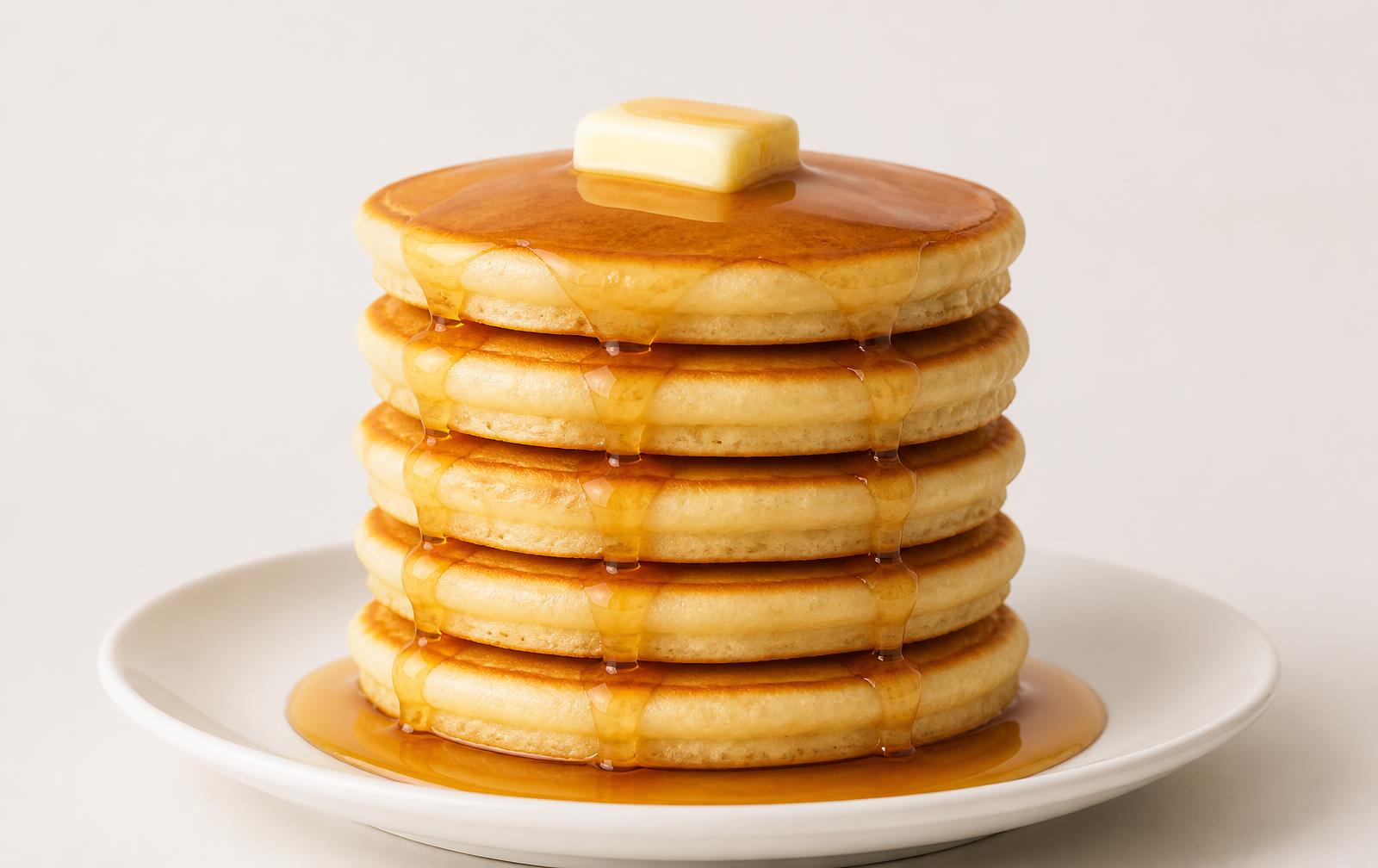
The trick stylists use to make pancakes look perfect is to stop the syrup from soaking in. Everything else follows from that one problem. Real maple syrup disappears into a warm pancake in seconds through simple capillary action, so a stylist waterproofs the top pancake (fabric protector spray or a thin brushed layer of oil), then pours a thickened, non-absorbing stand-in so the syrup sits on the surface in a glossy ribbon. Around that they hide cardboard or acetate discs between the layers for height, drive skewers down the middle for stability, brush on color where browning came out patchy, and choose one hero pancake out of dozens. Motor oil, the detail everyone repeats, is mostly a myth.
The real problem: pancakes are sponges
A pancake is a foam. Baking soda or baking powder releases carbon dioxide into a loose batter, steam expands those bubbles during cooking, and the starch and egg proteins set around them. What you end up with is a network of open, interconnected pores, which is great for eating and catastrophic for photography.
Pour maple syrup onto that and the liquid wicks straight in. Maple syrup is roughly two thirds sugar and one third water, and it is far thinner than it looks in a bottle, closer to warm honey diluted by half. Under studio lights, which are hot even in the LED era, it thins further. Within a minute the pancake goes from glossy to soggy and dull, and the shot is dead.
So the stylist's job is not to make the pancake look tasty. The pancake already looks tasty. The job is to make it hold that look for the twenty or forty minutes it takes to light, focus, tether, and shoot the thing.
Trick one: waterproof the surface
The most quietly effective move in pancake styling is treating the top surface so liquid beads instead of absorbing. Stylists use fabric or upholstery protector spray, the same product sold for sofas, or in gentler versions a brushed film of neutral oil. The sprayed pancake behaves like a raincoat: syrup pools and slides rather than sinking.
This is also the moment the food stops being food. A pancake that has been sprayed with upholstery protector is a prop, and no one on set will eat it. That distinction matters more than it sounds, because it is the line that advertising rules actually care about.
The motor oil story, honestly
Motor oil is the detail everyone knows and it is the shakiest claim in the whole genre. Working commercial food photographers have been publicly pushing back on viral styling-hack videos for years, including the food photographer Scott Choucino of Tin House Studio, whose debunkings have been covered by PetaPixel. Their point is consistent: it is far easier to reach for corn syrup, glucose syrup, or real maple syrup thickened with a little cornstarch or gum, all of which photograph better and are not a hazardous fluid you now have to handle on set.
The myth almost certainly comes from an older, looser era of advertising and got flattened into a fun fact. Treat it the way we treated the mashed-potato claim in the story of ice cream that never melts: a real historical technique, wildly over-reported as current standard practice.
Trick two: the syrup is not the syrup
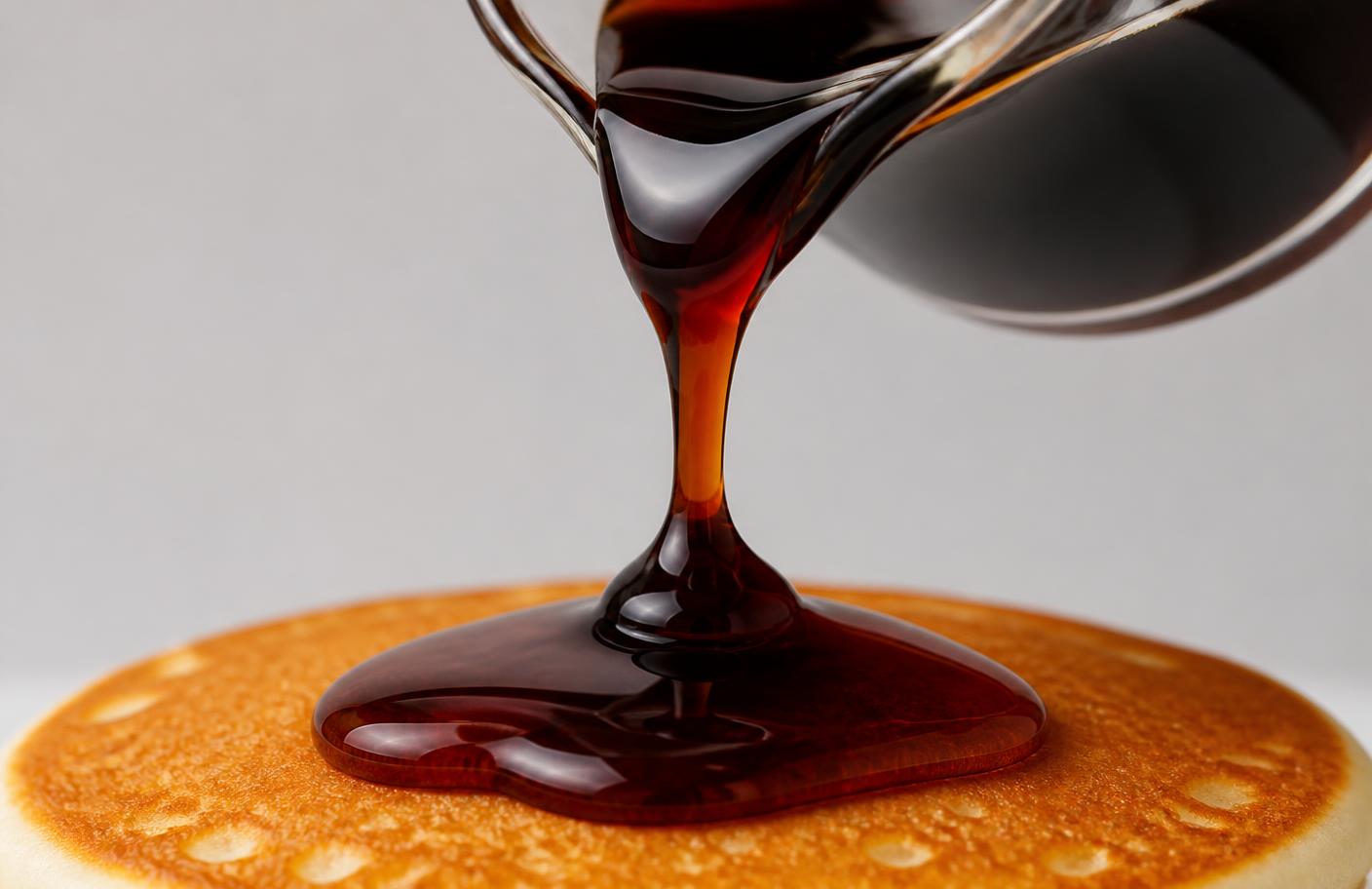
Once the surface repels, the pour still has to look right. Thin liquids run off the edge and puddle on the plate. Very thick ones sit in a blob and read as gel. What stylists want is a syrup with high enough viscosity to hold a ribbon on the way down and a slow, deliberate flow on camera.
- Corn syrup or glucose syrup: clear, very viscous, tinted with caramel color to the exact shade the client's brand guide specifies.
- Real maple syrup reduced or thickened: reduced on the stove or stiffened slightly with cornstarch or xanthan gum. Still edible, which matters for product shots.
- Chocolate-tinted glucose for darker brands: reads richer under warm light, where thin syrup can photograph orange.
- A single warmed drizzle applied with a squeeze bottle rather than a jug, so the stylist controls exactly which layer the ribbon crosses.
The mechanical reason a thicker syrup wins is straightforward. Absorption speed depends on how easily liquid moves through the pancake's pores, and viscosity works directly against that flow, so a thicker syrup travels a fraction of the distance in the same amount of time. Add a repellent surface and it barely travels at all.
| What is poured | Looks like | Holds up for | Edible | Used for |
|---|---|---|---|---|
| Real table maple syrup | Beautiful for 30 seconds, then absorbed | Under a minute | Yes | Fast editorial and social shoots |
| Maple syrup thickened with starch or gum | Glossy ribbon, natural amber | Several minutes | Yes | Brand product shots where the syrup is the product |
| Corn or glucose syrup with caramel color | Perfectly controllable shade and drip | Most of a shoot day | Technically yes, unpleasantly | Non-product hero shots and packaging |
| Motor oil | Dark, non-absorbing, oddly flat | Indefinitely | No | Mostly myth, rarely if ever current practice |
Trick three: the stack is engineered, not cooked
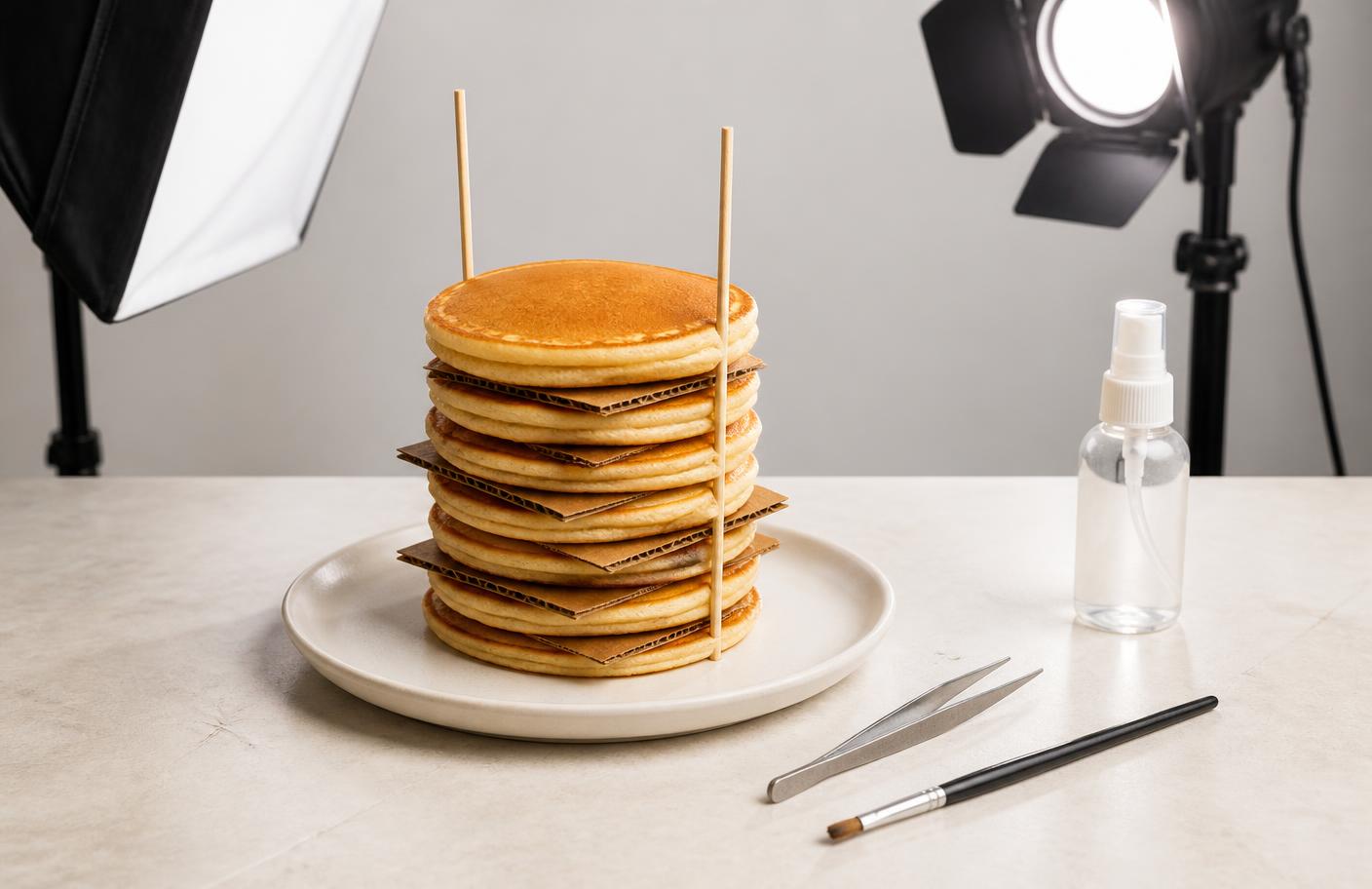
The stack you see in a hero image is a construction. Corrugated cardboard or acetate discs slightly smaller than the pancakes go between the layers to add height and keep each pancake flat, because a real stack compresses under its own weight and the edges start to slump. Wooden skewers or long pins run vertically through the middle so nothing shifts when the table gets bumped.
Some stylists go further and cook the pancakes in ring molds or crumpet rings so the sides come out vertical rather than tapered, which makes the layered edge read cleanly from the side. Then the whole stack gets rotated on the plate until the best-looking edges face the lens, the way a florist turns a bouquet.
Trick four: undercook, then paint the color on
This is the counterintuitive one. Left to a hot pan, pancakes brown unevenly. The Maillard reaction (amino acids plus reducing sugars under heat) plus a little sugar caramelization produces those blotches, rings, and dark rims that look homemade in a nice way and terrible in an advertisement.
So stylists deliberately undercook: a cooler pan, a shorter time, sometimes a nonstick surface wiped almost dry, which yields a pale and evenly set pancake. Color then goes on deliberately, with a heat gun or small torch for controlled toasting, or with a soft brush and a diluted browning liquid or gravy browner. Think of it as priming a canvas rather than hoping the paint lands correctly.
The number worth repeating at brunch: a stylist will typically cook a batch of thirty or more for a single shot and use one. The rest are stand-ins for lighting, casualties of the spray, or simply the wrong shape. This is the same volume logic behind the plating and pan-sauce shortcuts in the fast dinners that look like real effort, just taken to a commercial extreme.
Trick five: butter, steam, and the little things
The pat of butter on top is often not butter, or not only butter. Real butter melts within seconds under lights, so stylists carve a chilled block into a crisp cube and swap it repeatedly between takes, or they build a mock pat from shortening tinted with yellow food color, which holds its edges almost indefinitely.
- Steam: a handheld garment steamer just out of frame, or a small piece of soaked cotton microwaved and hidden behind the plate. The famous tampon version is real, and it exists purely because it holds a lot of water in a tidy shape.
- Sheen: a light mist of neutral oil from a spray bottle, applied with the plate tilted so the mist lands only on the top face.
- Blueberries and fruit: placed dry with tweezers, then glossed individually with a brush of glycerin or oil so each one has a highlight.
- Crumbs: added last, on purpose, in a pattern. Deliberate imperfection is a style, not an accident.
- Plate edges: cleaned with a cotton swab between every single frame.
Where the line is: what advertisers are actually allowed to fake
There is a legal boundary here that most people miss. In the United States, the Federal Trade Commission requires advertising to be truthful and not misleading about the product being sold. In practice that means an ad for pancake syrup cannot show a substitute standing in for the syrup, and an ad for a frozen pancake has to show that pancake.
Props are treated differently. If the ad is selling the syrup, the pancake underneath is set dressing and can be sprayed, propped, and painted. If the ad is selling the pancake, the pancake has to be the real thing and the syrup can be the fake. That inversion is why briefs from agencies tend to specify, in writing, which item on the plate is the hero.
Editorial photography, meaning magazines, cookbooks, and food sites, sits outside advertising law and works to a professional norm instead. Most recipe photographers now shoot food they actually cooked and would eat, partly because readers punish images that do not match what the recipe produces at home.
How to make your own pancakes photograph well, honestly
You can get most of the way there without a single inedible trick. Cook slightly smaller pancakes so the stack looks taller in proportion. Use a ladle or measuring cup for identical rounds. Keep the pan at a steady medium so browning is even, and wipe it between batches, since the film of burnt butter is what causes blotches.
- Stack from the ugliest pancake at the bottom to the best-looking on top, edges rotated outward.
- Warm your syrup slightly and pour it right as you shoot, not before, so it is still glossy in the first frame.
- Reduce a quarter cup of maple syrup by about a third on the stove for a thicker, edible drizzle that holds its shape.
- Light from the side or slightly behind so the syrup catches a highlight. Front lighting flattens the gloss completely.
- Shoot within the first thirty seconds. Speed is the real professional trick.
One nutrition note, since pancake photography and pancake eating are not the same activity: the styled shot tells you nothing about what is on your plate, and this is general information rather than personalized dietary advice.
Frequently asked questions
Try it on Sunday and tell us what happened
Next time you make pancakes, cook them a shade paler than you normally would, reduce a little syrup on the stove first, and shoot within thirty seconds with the light coming from the side. Then send us the before and after. If your phone photo suddenly looks like a menu board, the trick was never the motor oil.
And if you want more of this genre, our breakdown of how animated ramen compares with the real bowl and the very glossy crumb shots in our fudgy brownie recipe both come down to the same handful of lighting and timing decisions.
Sources and further reading
Filed under
More from Science
Chocolate and Cheese: The Pairing That Shouldn't Work but Does
Aged cheese and dark chocolate share more flavor chemistry than almost any other pair on the board. Once you taste it, the cracker starts to feel unnecessary.
Priya Raman · · 10 min read
Why Lemon and Cinnamon Together Taste Like Cola
It is not a coincidence and it is not magic. Lemon and cinnamon taste like cola because cola was built from citrus oils and warm spice in the first place.
Tomás Reyes · · 10 min read
What Miracle Berry Actually Does to Your Taste Buds
Miracle berry doesn't numb your tongue or trick your brain. A single glycoprotein hijacks your sweet taste receptor and turns acid into its trigger.
Tomás Reyes · · 10 min read