
The 20-Minute Dinner That Looks Like You Tried Hard
One hard sear, one fresh raw thing, one pan sauce, one green. That formula is the whole reason a 20-minute dinner can look like a two-hour dinner.
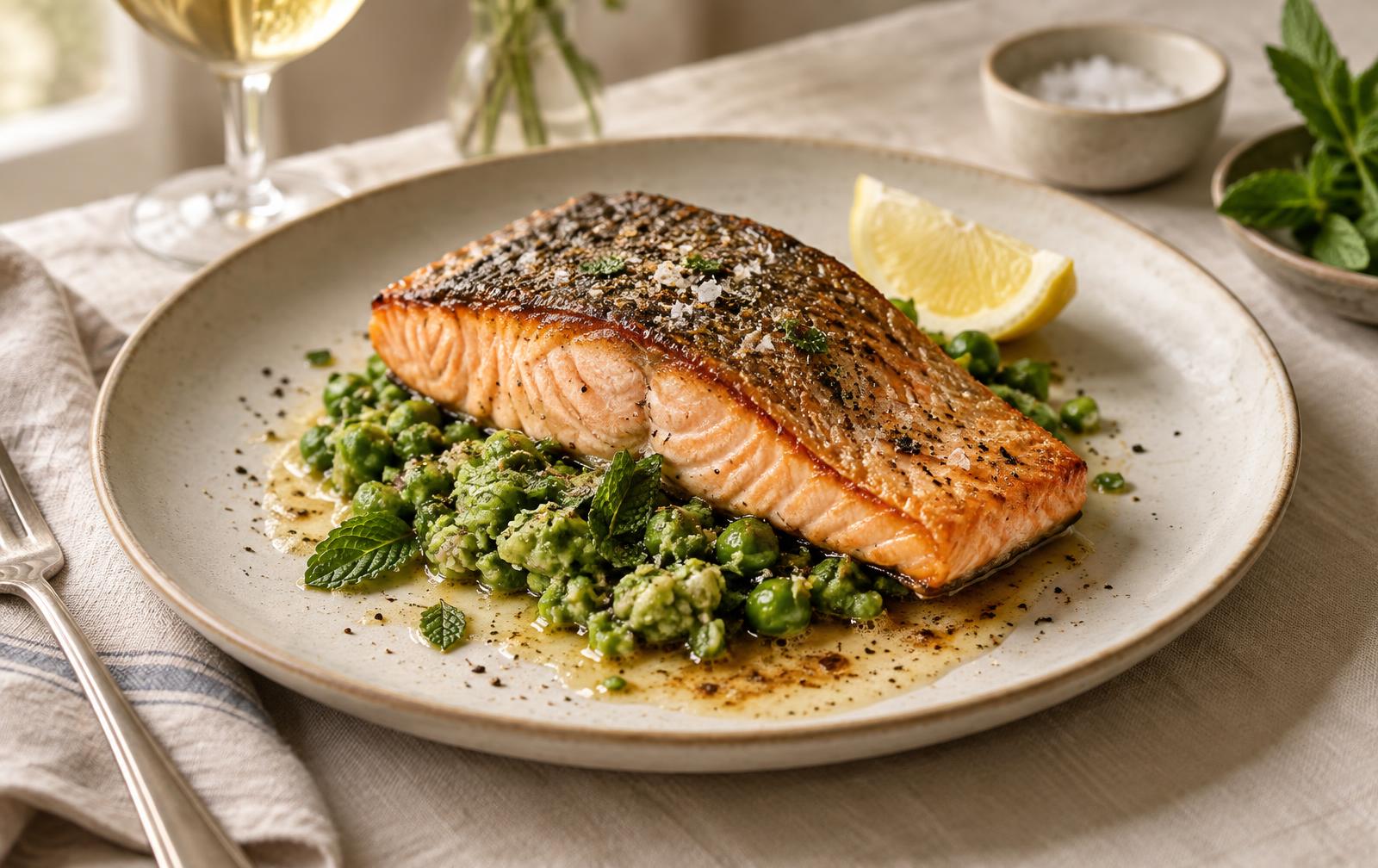
The 20-minute dinner that looks like you tried hard is not a specific recipe, it is a shape: one protein seared hard in a hot pan, one bright or raw element for contrast, one sauce made in that same pan while the protein rests, and one green thing on the plate. Follow that shape and you can put out seared salmon with brown butter and crushed peas, steak tagliata under a pile of arugula, or garlic butter shrimp with white beans in less time than delivery takes to arrive. The trick is not speed cooking. It is picking foods that hit their best version in under ten minutes of actual heat.
Why a 20-minute dinner can look like a restaurant plate
Restaurant food tastes and looks the way it does mostly because of browning, fat, acid and contrast, and none of those need time. Browning is the Maillard reaction, a cascade between amino acids and reducing sugars that gets going quickly above roughly 285°F (140°C) on a dry surface. A screaming hot skillet gets you there in 90 seconds. A slow braise, by contrast, spends two hours doing something completely different: breaking down collagen.
So the honest split is this. Long cooking buys you tenderness in tough cuts and depth in stews. Short cooking buys you crust, and crust is what reads as effort on a plate. Anything already tender, a shrimp, a scallop, a salmon fillet, a skirt steak, a chicken cutlet pounded thin, is being actively harmed by extra time in the pan.
The four rules I use before picking a weeknight recipe
- Nothing thicker than about an inch. Thickness, not weight, is what sets cooking time.
- One pan for the protein, and that pan becomes the sauce. Every extra pot adds five minutes of washing and one more thing to time.
- Buy one thing that does the flavor work for you: good anchovies, miso, a jar of harissa, Parmesan, a decent olive oil. These are concentrated glutamates and fat, which is exactly what long cooking would have built.
- Add the acid last, off the heat. Lemon juice and vinegar lose their brightness fast when they boil.
Seven 20-minute dinners that look like you tried hard
- 1
Garlic butter shrimp with white beans, chile and lemon (12 minutes, easy)
The fastest genuinely impressive dinner in this list. Shrimp cook in about two minutes a side, then a can of drained cannellini beans goes into the garlicky butter to soak up everything the shrimp left behind. Roughly 34g of protein per serving and one pan. Full recipe is further down the page. It looks like a bistro plate because of the sauce, which is nothing but butter, garlic, chile, lemon and starch from the beans.
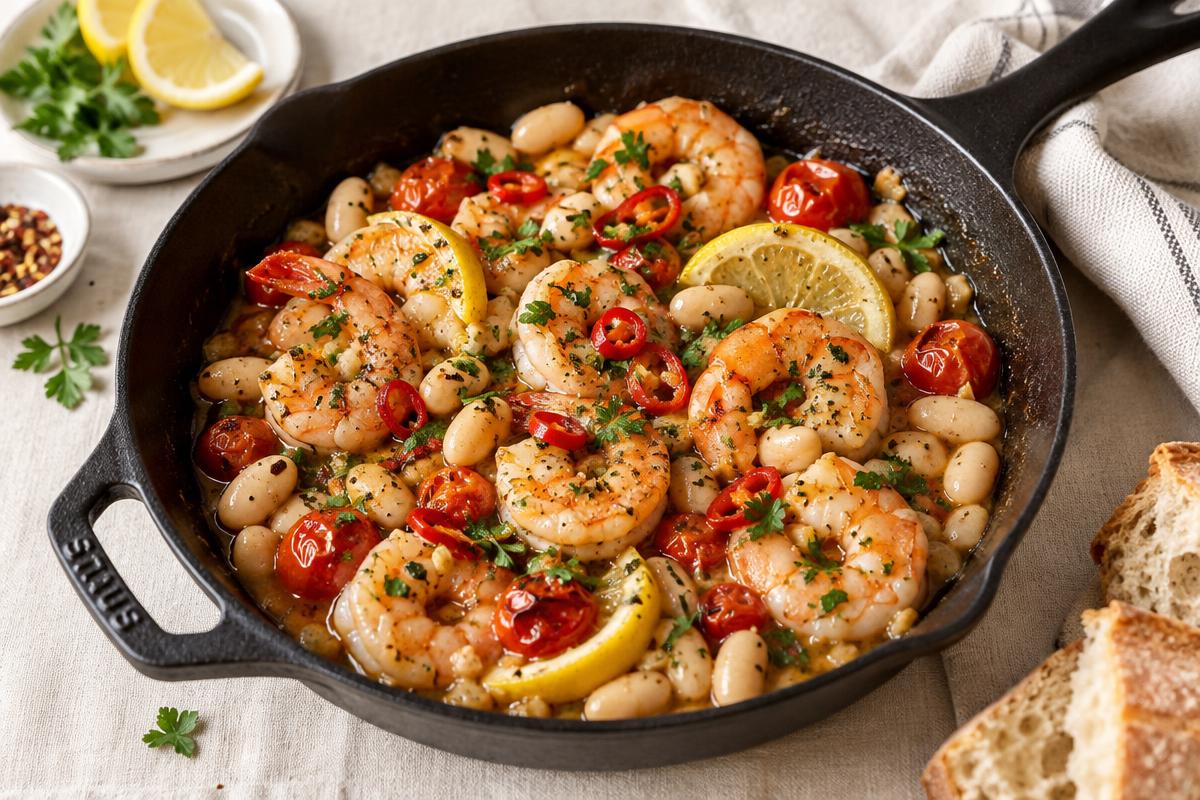
Shrimp and canned white beans in one skillet: 12 minutes, and the beans quietly thicken the butter into a sauce. - 2
Steak tagliata with arugula and Parmesan (20 minutes, easy)
Tagliata just means sliced. Sear a flank, skirt or sirloin steak hard, rest it for five minutes, slice it against the grain, then bury it in arugula, shaved Parmesan, olive oil, lemon and flaky salt. The visual effect of fanned pink slices under greens is disproportionate to the effort. This is a Tuscan restaurant standard, and the sliced presentation exists partly because it makes a cheaper, chewier cut eat like a tender one.
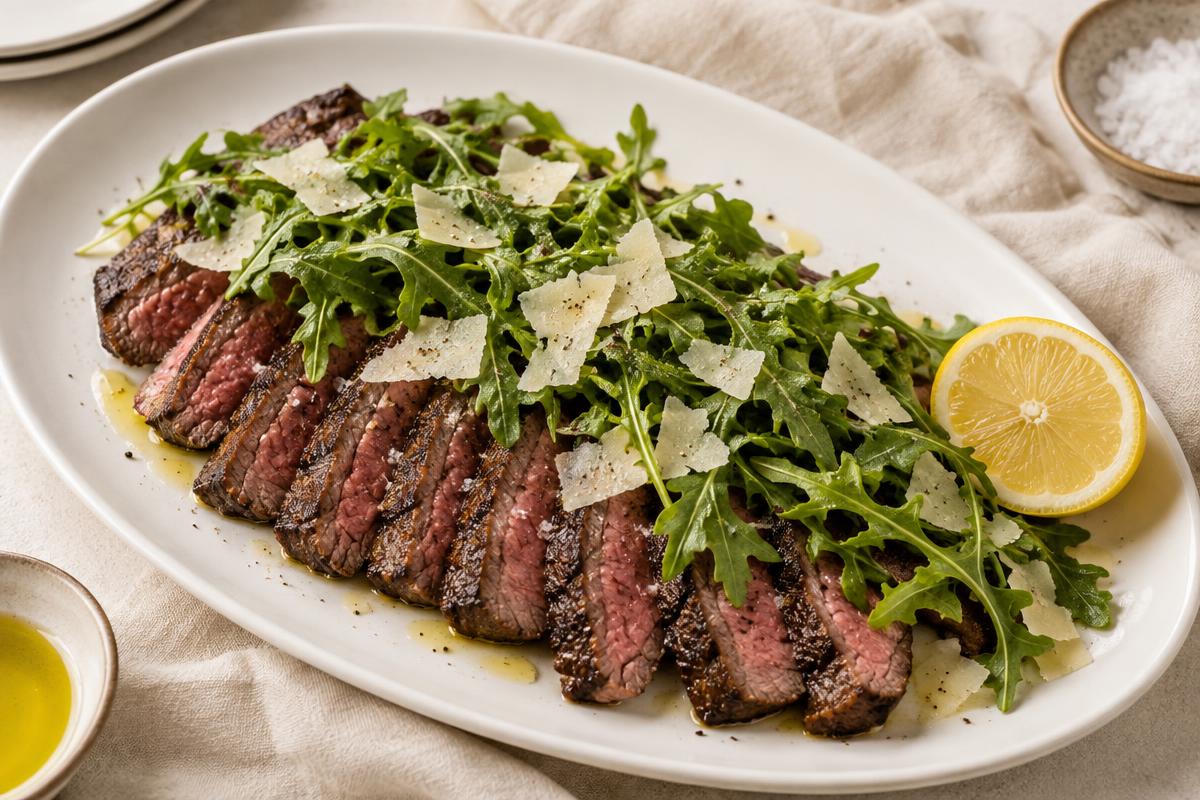
Steak tagliata: slicing against the grain does more for tenderness than any cut upgrade you could buy. - 3
Pan-seared salmon with brown butter and crushed peas (18 minutes, easy)
Skin-side down in a dry hot pan, pressed flat for the first 30 seconds so the skin does not curl, then left alone for five or six minutes until the skin releases on its own. Meanwhile frozen peas go in a pan with butter, mint and a splash of water, then get crushed with a fork. Brown the butter in the salmon pan afterward and pour it over. The nutty flavor of brown butter comes from Maillard browning of the milk proteins and lactose in the butter, not the fat.
- 4
Crispy chicken cutlets with lemon caper pan sauce (22 minutes, moderate)
Slice chicken breasts horizontally, pound them to about a third of an inch, salt them, flour them, and fry two to three minutes a side. Then the pan sauce: shallot, white wine or stock, capers, a squeeze of lemon, and cold butter swirled in off the heat so it emulsifies rather than splits. This is the classic scaloppine move, and it is the single most transferable technique in the whole article.
- 5
Crisped gnocchi with burst tomatoes and burrata (20 minutes, easy)
Skip the boiling water entirely. Shelf-stable gnocchi go straight into a hot oiled skillet and crisp like tiny dumplings in about eight minutes, which is a texture most people have never had from gnocchi. Add cherry tomatoes and let them burst and collapse into a rough sauce, then tear burrata over the top and let it slump. Cheap, vegetarian, and it photographs like something from a menu.
- 6
Miso butter mushrooms on toast with a jammy egg (18 minutes, easy)
Mushrooms roasted hard or seared in a dry pan first, then finished with a spoon of white miso mashed into butter. Miso is fermented, so it arrives pre-loaded with free glutamates and the savory depth that a long reduction would otherwise supply. Pile it on grilled sourdough with a six-and-a-half-minute egg split over the top. This is the cheapest dinner here by a wide margin.
- 7
Harissa chickpeas with lemon yogurt and herbs (15 minutes, easy)
Fry a spoon of harissa in olive oil for 30 seconds to bloom the spices, add drained chickpeas and let them get a little blistered and crunchy at the edges, then spoon them over yogurt whisked with lemon and salt. The white-and-red contrast is the whole look. It is also the only dinner here you can build entirely from a cupboard.
| Dinner | Active time | Difficulty | Protein per serving | Best for |
|---|---|---|---|---|
| Garlic butter shrimp and white beans | 12 min | Easy | ~34 g | Fastest guest-worthy option |
| Steak tagliata | 20 min | Easy | ~38 g | Looks the most expensive |
| Salmon, brown butter, crushed peas | 18 min | Easy | ~33 g | Date night for two |
| Chicken cutlets, lemon caper sauce | 22 min | Moderate | ~40 g | Learning pan sauces |
| Crisped gnocchi and burrata | 20 min | Easy | ~17 g | Vegetarian crowd-pleaser |
| Miso butter mushrooms on toast | 18 min | Easy | ~16 g | Cheapest per plate |
| Harissa chickpeas, lemon yogurt | 15 min | Easy | ~19 g | Pantry-only night |
How long each dinner actually takes, start to plate
minutes of active cooking
Every option lands inside a single episode of something. The gnocchi and the chickpeas need no timer at all.
The pan sauce is the whole trick, and it takes three minutes
If you learn one thing from this page, learn this sequence: sear, remove the protein, soften a shallot in the fat, deglaze with wine or stock, reduce it by half, then take the pan off the heat and swirl in cold butter until the sauce turns glossy. That last step is an emulsion, and heat is what breaks it, which is why the butter goes in off the burner. Three minutes, and it is the difference between food that looks cooked and food that looks plated.
Plating moves that buy the most credit for the least effort
Never serve the sauce in a separate jug on a weeknight. Spoon it onto the plate first, then set the protein on top, because sauce under food stays glossy while sauce poured over food goes matte within a minute. Slice anything that can be sliced, since a cut surface shows off the interior and doubles the visual interest for free.
Leave one third of the plate empty, use flaky salt and torn (not chopped) herbs at the last second, and wipe the rim. Food stylists build entire careers on tricks like these, and some of them go a lot further than a clean rim, as anyone who has read about the mashed potato standing in for ice cream already knows.
The surprising part: acid does the work you think salt is doing
Here is the detail worth repeating to someone: when a dish tastes flat and you keep adding salt, the missing ingredient is usually acid. A squeeze of lemon or a splash of vinegar raises perceived brightness and makes existing salt read as stronger, which is why professional kitchens keep lemons at every station and why nearly every recipe above finishes with one. Taste something before and after a half teaspoon of lemon juice and the shift is much larger than the amount suggests. It is the same category of taste weirdness that makes lemon and cinnamon together read as cola: perception, not chemistry you can taste in isolation.
One practical note on nutrition, since several of these dinners lean protein-heavy. The numbers in the table are approximate values based on standard portion sizes rather than lab analysis, and this is general information rather than personalized dietary advice. If you are tracking intake seriously, the meal-by-meal breakdown in our full day of high-protein eating is a more useful reference point than any single dinner.
Recipe
12-Minute Garlic Butter Shrimp with White Beans, Chile and Lemon
The fastest dinner in this article and the one most likely to make a guest ask what restaurant you got it from. Shrimp sear in two minutes a side, then canned white beans go into the garlic butter and thicken it into a sauce. Serve with grilled bread and nothing else.
Equipment Large skillet, Tongs, Citrus juicer or fork
Ingredients
For the skillet
Tap an ingredient to check it off. Tap Swap for substitutions and ratios.
Nutrition
- Calories
- 520 kcal
- Protein
- 34 g
- Carbohydrates
- 31 g
- Fat
- 27 g
- Fiber
- 9 g
Estimated per serving. Total time 17 minutes.
Method
- 1
Pat the shrimp completely dry and season with the fine salt and black pepper. Dry surfaces are the only way to get color in two minutes.
- 2
Heat the olive oil in a large skillet over high heat until it shimmers. Add the shrimp in a single layer and sear undisturbed for 90 seconds, then flip and cook 60 seconds more. Move them to a plate; they will finish in the sauce.
- 3
Lower the heat to medium. Add the butter, sliced garlic and chile and cook for 45 seconds, until the garlic is fragrant and just turning pale gold. Do not let it brown.
- 4
Add the cherry tomatoes and cook for two minutes, pressing a few with a spoon so they release their juice.
- 5
Pour in the wine or stock, scrape the bottom of the pan, and let it bubble for one minute. Add the drained beans and warm them through for two minutes, mashing a few against the side of the pan to thicken the sauce.
- 6
Return the shrimp and any resting juices to the pan, toss for 30 seconds, then take the pan off the heat. Squeeze in the juice of half the lemon and scatter over the parsley.
- 7
Divide between two warm bowls, finish with flaky salt and a wedge of lemon, and serve with grilled bread for the sauce.
“Fast cooking is not a compromise. It is just a different set of tools, and crust is the one that shows.”
Worth saying plainly: not every impressive dinner compresses. A ragu, a proper birria, a slow-roast shoulder, these are time-dependent, and no technique shortcut replicates them. Speed works for tender proteins and crust-driven plates, which is exactly the category of food that travels well as a plate too, whether that is a bistro classic or one of the dishes worth flying to Japan for.
20-minute dinner questions people actually ask
Sources and further reading
Now argue with me. Which of the seven would you actually cook on a Wednesday, and which one do you think is secretly a 35-minute dinner pretending otherwise? Cook the shrimp this week, time it honestly, and tell us whether you beat 12 minutes.
Filed under
More from Recipes
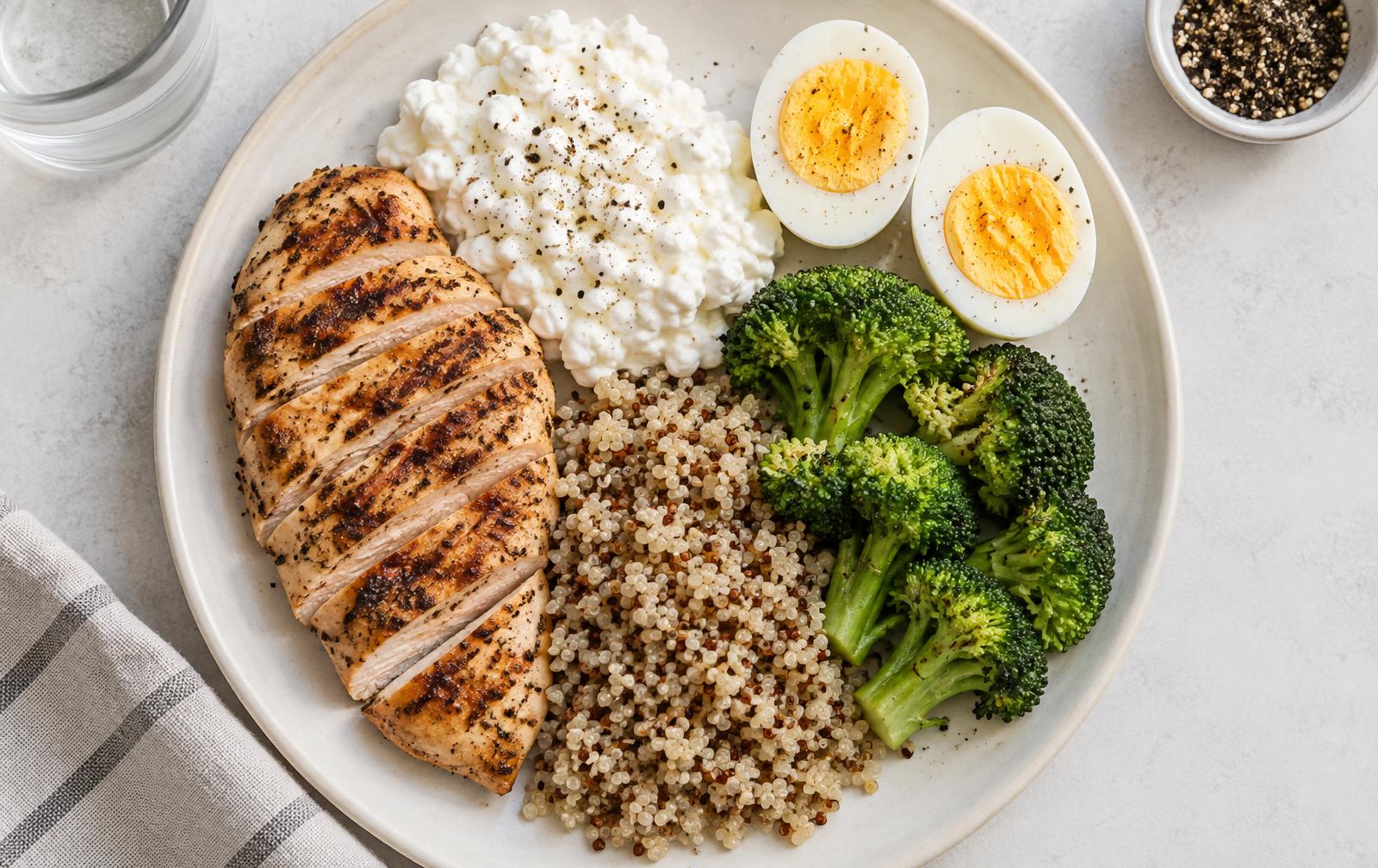
What a Day of High-Protein Eating Actually Looks Like
A full day of meals, gram counts included, that lands around 145g of protein without turning every meal into a bodybuilding chore.
Priya Raman · · 10 min read