
The Real Ramen Behind Every Anime Bowl You've Drooled Over
That glowing bowl with the pink swirl is not fantasy food. It is usually Tokyo-style shoyu ramen, and every topping on it has a name, a region, and a reason.
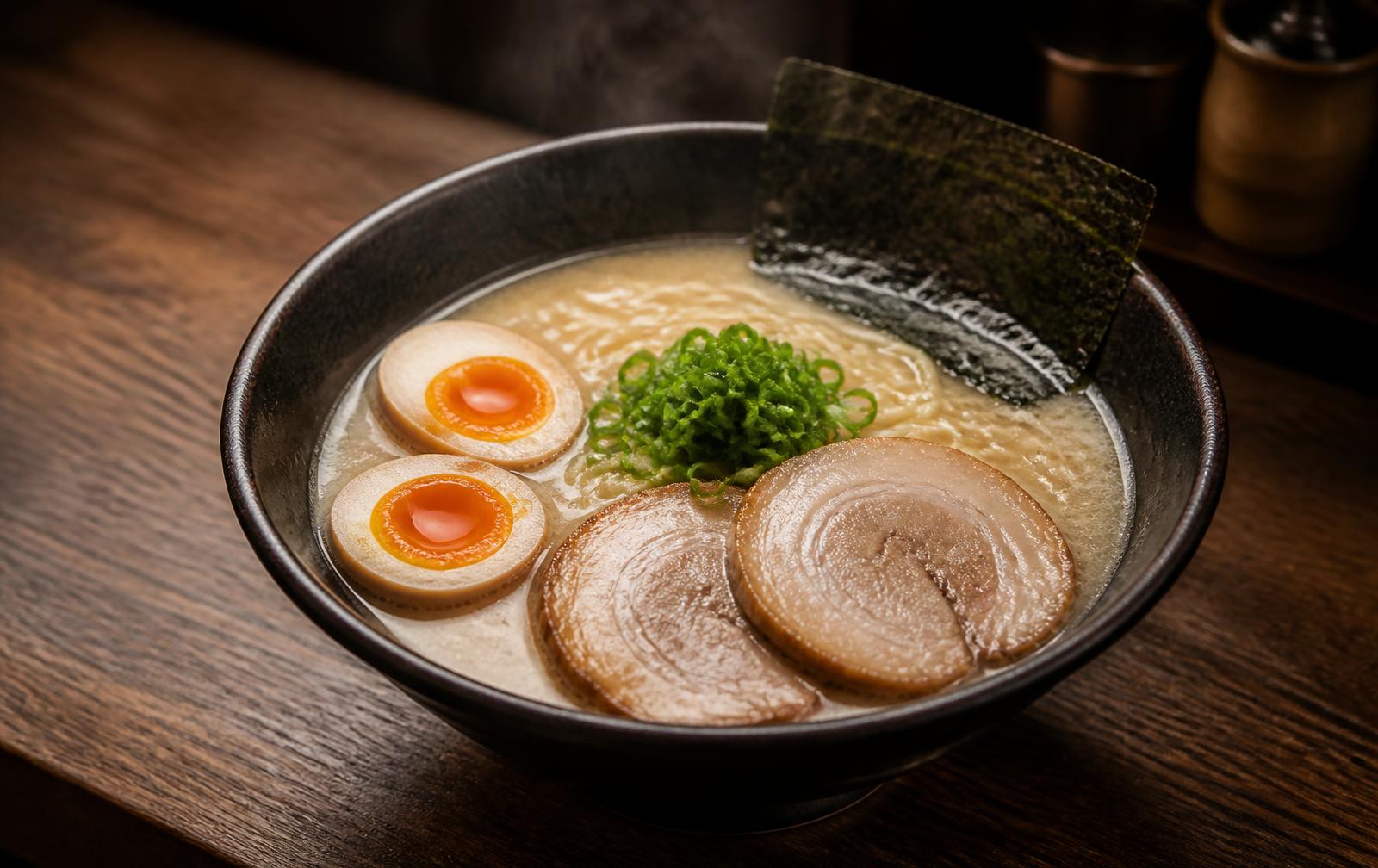
The real ramen behind every anime bowl you have drooled over is almost always Tokyo-style shoyu ramen: a clear brown soy-seasoned chicken and pork broth, springy yellow wheat noodles, sliced braised pork called chashu, a few scallions, a sheet of nori, and that pink and white spiral, which is a steamed fish cake called narutomaki. If the broth in the scene looks cloudy and beige instead, that is Kyushu-style tonkotsu, pork bones boiled hard for many hours until the collagen and fat emulsify. Neither one is invented. You can eat both, this week, from shops that have been making them for decades.
Why anime ramen looks like that
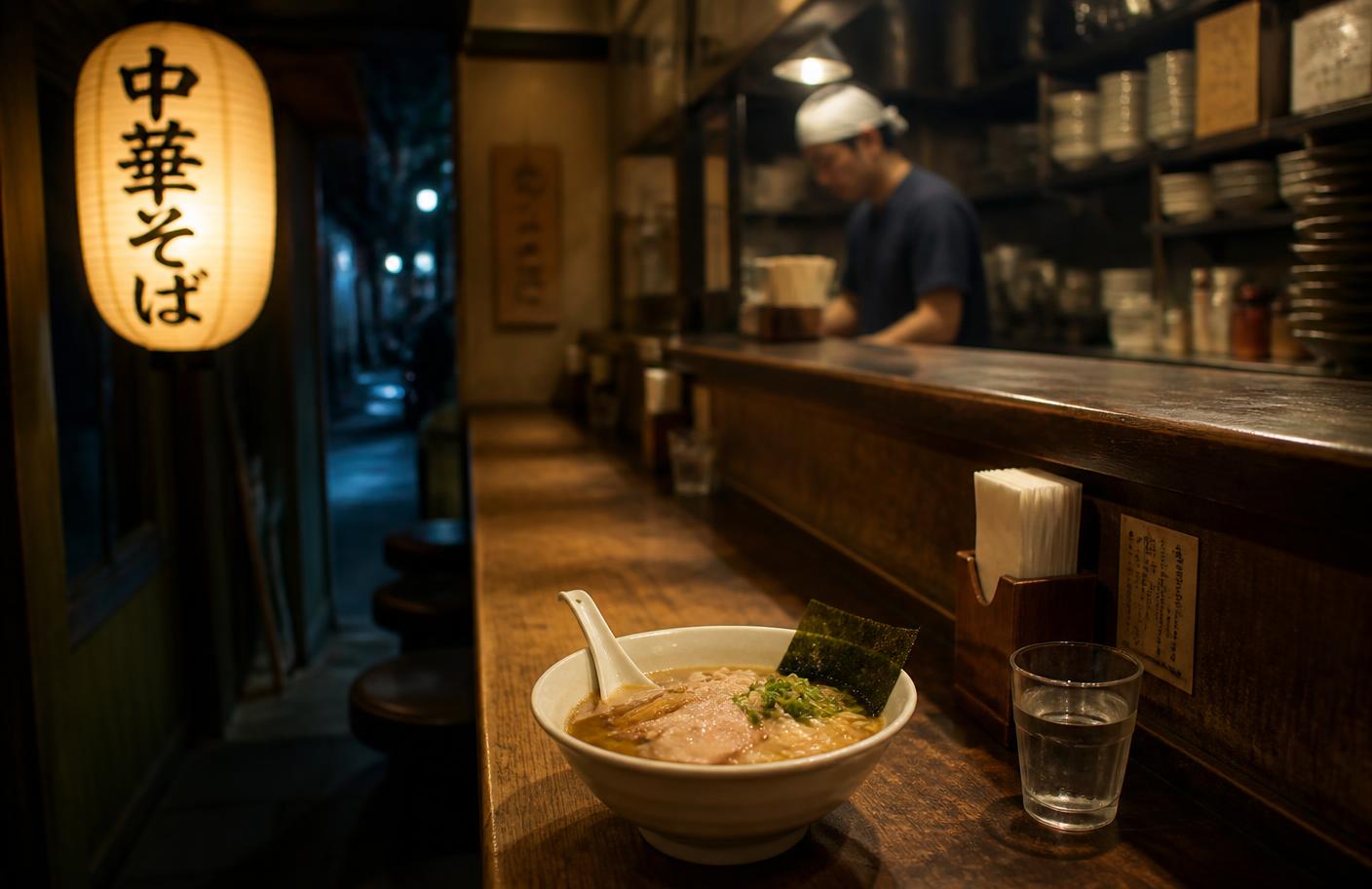
Ramen shows up constantly in anime for a practical reason: it is what ordinary people in Japan actually eat, cheaply and fast, often standing at a counter or sitting elbow to elbow at a six-seat shop. It reads instantly as comfort, as being broke, as being home. Animators lean on shoyu ramen in particular because it is the most visually legible bowl on earth. Clear amber broth, bright yellow noodles, dark green nori, a white and pink spiral. Every element is a different color and a different shape.
That legibility is a styling choice as much as a cultural one, in the same family of tricks we covered in how food photographers keep ice cream from melting. Real shoyu ramen rarely has quite that much steam rising in a perfect column, and real narutomaki is paler than the hot pink you see on screen. Everything else is accurate.
The pink swirl has a name, and it is not a decoration
Narutomaki is kamaboko, a cured fish paste made mostly from white fish surimi, rolled with a pink-tinted layer so each slice shows a spiral. It is named after the Naruto whirlpools in the Naruto Strait between Shikoku and Awaji Island. Its flavor is mild and faintly sweet, its texture bouncy, and honestly it contributes far more visually than it does to taste. The famous orange-clad ninja shares that name, which is why the fish cake became shorthand for anime ramen in the first place.
What is actually in the bowl, part by part
A ramen bowl is built from four components, and Japanese ramen cooks talk about them separately: broth (the base liquid), tare (the concentrated seasoning that decides whether the bowl is shoyu, shio, or miso), noodles, and toppings. Most people assume the broth carries the salt. It does not. The tare does, and swapping the tare while keeping the same broth turns one soup into a different bowl entirely.
- Noodles: wheat flour, water, salt, and kansui, an alkaline solution of sodium and potassium carbonate. The alkalinity firms the gluten into that distinct springy snap and turns the dough yellow without any egg in it.
- Chashu: pork belly or shoulder, usually rolled, tied, and simmered in soy, sake, mirin, and sugar. The name comes from Chinese char siu, but the Japanese method is braised rather than roasted.
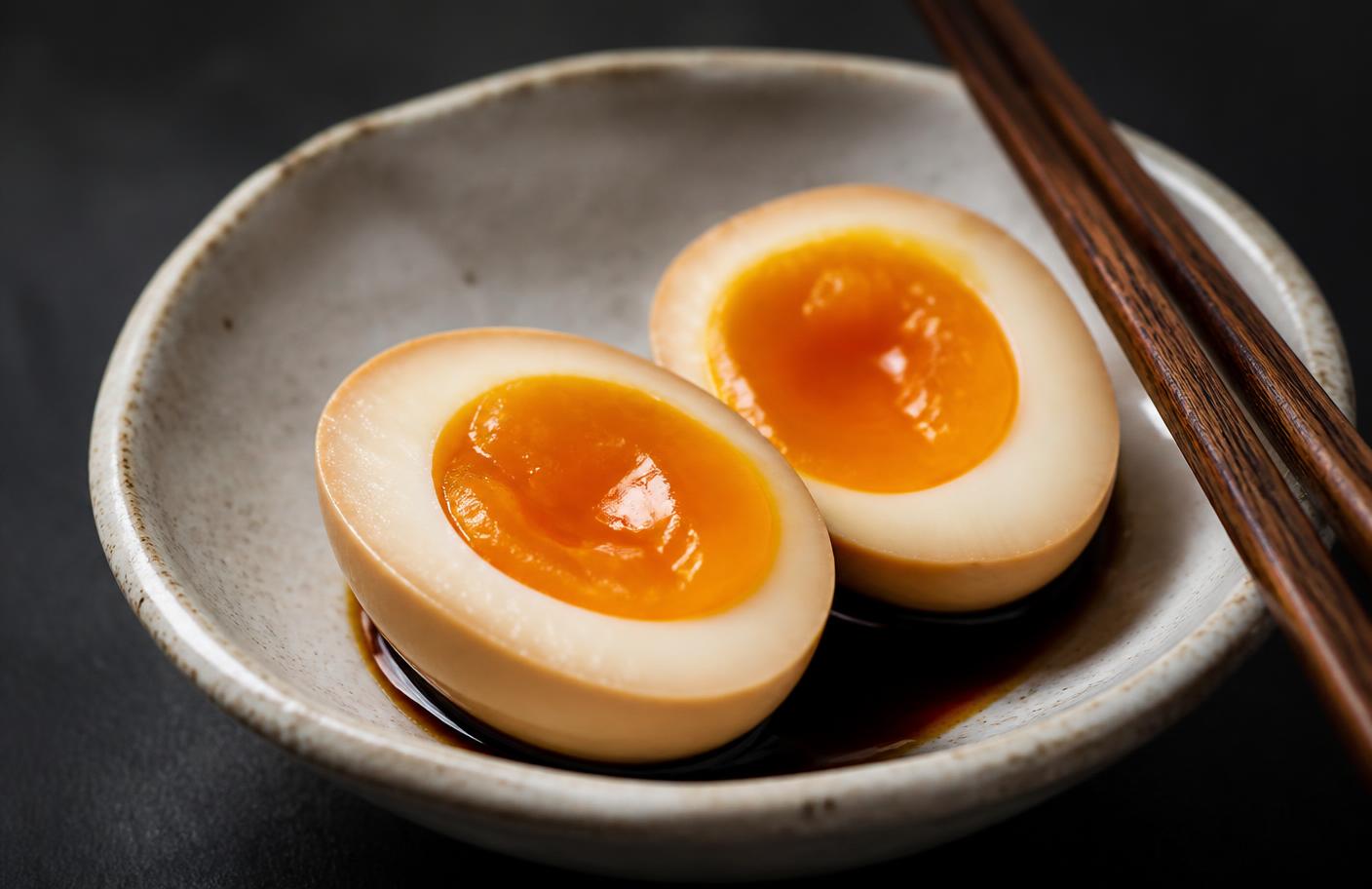
- Ajitama: a soft-boiled egg, typically around six and a half minutes, chilled and then steeped for hours in a soy and mirin marinade. The white takes on color, the yolk stays jammy.
- Menma: fermented bamboo shoots, tangy and crunchy, the topping most Western newcomers cannot identify.
- Nori: a sheet of dried seaweed laid against the rim. It is meant to be dipped and eaten early, before it goes slack.
- Negi: scallion or long onion, sliced thin, there to cut the fat.
The surprising part for most people is the noodle chemistry. Kansui is not a flavoring, it is a pH tool. Raising the dough's pH makes the gluten proteins tighten and slows starch swelling, so the noodle stays chewy in hot soup instead of going soft the way Italian pasta would. It also shifts naturally occurring flavonoid pigments in wheat flour toward yellow, which is why ramen noodles look egg-rich when there is no egg in them at all.
The four broth styles, and which anime bowl is which
Japanese ramen is regional in a way anime rarely spells out. A bowl in Sapporo and a bowl in Fukuoka are not variations on a theme, they are different dishes with different noodles. Here is how the main styles map onto what you have seen on screen.
| Style | Seasoning base | Home region | Looks like | Order it if |
|---|---|---|---|---|
| Shoyu | Soy sauce tare | Tokyo | Clear brown broth, curly yellow noodles, nori and narutomaki | You want the archetypal anime bowl |
| Tonkotsu | Pork bone broth, usually with shio or shoyu tare | Kurume and Hakata, Fukuoka | Opaque milky beige soup, thin straight noodles | You want the richest, most mouth-coating version |
| Miso | Fermented soybean paste tare | Sapporo, Hokkaido | Thick brown-orange soup, often with corn, butter, ground pork | It is cold and you want the heaviest bowl on the menu |
| Shio | Salt tare | Hakodate, Hokkaido | Pale gold, almost translucent | You want to actually taste the chicken or seafood stock |
| Tsukemen | Concentrated dipping broth served separately | Tokyo | Cold noodles beside a small bowl of intense soup | You care more about noodle texture than soup |
One more style worth knowing: tsukemen, dipping ramen, which is generally credited to Kazuo Yamagishi at Higashi-Ikebukuro Taishoken in Tokyo. The noodles arrive chilled and firm, the broth arrives thick and salty, and you dip. It is the ramen a noodle obsessive orders, and it almost never appears in animation because a bowl of plain noodles does not photograph as warmly.
Where ramen actually came from, and where the story gets contested
Ramen is Japanese now, but it began as Chinese wheat noodle soup, which is why it was called shina soba and later chuka soba, both meaning Chinese noodles. Yokohama's Chinatown, established after the port opened to foreign trade in 1859, is where most historians place the earliest sustained sales of the dish in Japan. The shop most often named as the first dedicated ramen restaurant is Rairaiken, which opened in Asakusa, Tokyo, in 1910 with Chinese cooks in the kitchen. Treat that as the standard account rather than settled fact, since ramen origin claims are competitive and the Shin-Yokohama Ramen Museum, which opened in 1994, presents the lineage as a gradual Chinese-to-Japanese adaptation rather than one founding moment.
The bigger turning point was after 1945. Japan faced severe food shortages, and large volumes of American wheat entered the country, which made wheat noodles cheap at exactly the moment rice was scarce. Historian George Solt has argued in The Untold History of Ramen that this postwar wheat economy, not ancient tradition, is what made ramen a national staple. Contested origin stories are half the fun in food history, as we found tracing what Roman kitchens really produced.
Tonkotsu has its own well-worn origin tale: that a cook in Kurume, Fukuoka, in the late 1930s left a pork bone pot boiling too hard and discovered the emulsified white broth by accident. It is repeated widely, including by shops in the region, and it may well be true, but it is a story passed down rather than a documented event. Miso ramen has a firmer paper trail, generally credited to Aji no Sanpei in Sapporo in the mid-1950s.
Instant ramen is a different food, and that is fine
The packet in your cupboard descends from the same dish but is engineered rather than cooked. Momofuku Ando launched Chikin Ramen for Nissin in 1958, flash-frying the noodles so they dried porous and rehydrated in hot water, and followed it with Cup Noodles in 1971. That flash-frying is why standard instant noodles carry noticeably more fat than fresh ramen noodles, and why the texture is looser and the flavor more uniform.
Anime is fair to instant ramen, incidentally. When a character eats from a cup with a fork on a rooftop at midnight, that is the accurate depiction of instant, and it is a genuinely different eating experience from a shop bowl. If late-night noodles are your habit, our look at whether eating late actually causes weight gain is the more useful read than any single ingredient panel. This is general information rather than personalized dietary advice.
How to order the anime bowl in real life
Most ramen shops in Japan take your order at a vending machine by the door. You put in cash, press the button for your bowl, and hand the ticket to the cook. Many machines have a photo of the house bowl, usually the top-left button, and ordering that is almost always the right call for a first visit.
| What you want | What to say or press | Notes |
|---|---|---|
| The house special | Top-left button on the machine | It is what the shop is best at |
| Firmer noodles | Katame | Standard in Hakata tonkotsu shops |
| Softer noodles | Yawame | Ask before the noodles go in, not after |
| Extra marinated egg | Ajitama | Often 100 to 150 yen extra |
| A second helping of noodles | Kaedama | Tonkotsu shops only, ask while soup remains |
| Less fat in the broth | Abura sukuname | Useful in heavy tonkotsu bowls |
Eat fast. Ramen is not a lingering meal, and the noodles are engineered to be at their best for a few minutes. Slurping is genuinely functional, since pulling air across hot noodles cools them and carries aroma up into your nose. If you are planning a trip around food, our guide to the dishes worth eating at least once in Japan covers what to put around your ramen days.
The anime bowls worth chasing, and what they really are
- 1
The classic shonen shop bowl
Clear soy broth, curly noodles, chashu, nori, narutomaki. This is Tokyo shoyu ramen, and any old-school chuka soba shop serves it.
- 2
The white, heavy, silent-respect bowl
Hakata tonkotsu. Thin straight noodles, opaque pork broth, minimal toppings. Expect to finish it in under ten minutes.
- 3
The winter bowl with corn and butter
Sapporo miso ramen, thick and sweet-savory, with a slick of fat on top that keeps the soup scalding to the last spoonful.
- 4
The cup on a rooftop
Instant ramen, and it is the honest depiction. Nissin has sold it since 1958, and it is its own comfort food, not a lesser version of the shop bowl.
“The bowl in the show is not stylized food. It is a real regional dish with a specific soy tare, a specific noodle chemistry, and a fish cake named after a whirlpool.”
Ramen also gave film one of its great food scenes. Juzo Itami's 1985 movie Tampopo is built entirely around a woman trying to perfect a ramen shop, and its opening lesson on how to properly greet a bowl of noodles is still quoted by cooks. Pop culture and food feeding each other is a pattern we followed in the meals Studio Ghibli made you desperate to eat.
Ramen questions people actually search
Now go argue with us
Our position: shoyu is the bowl anime taught you to want, but tonkotsu is the better dinner, and miso ramen with corn and butter beats both of them in February. If you think the correct answer is tsukemen, or that a Sapporo miso bowl is too heavy to be great ramen, tell us which shop converted you and we will go eat there.
Sources and further reading
Filed under
More from Culture & Holidays
Why Italians Eat Seven Fishes on Christmas Eve
The Feast of the Seven Fishes comes from a Catholic rule about meat, not from a rule about seven. Here is where the number came from, and what is actually on the table.
Clara Bennett · · 11 min read
Why We Eat Turkey at Thanksgiving and When It Started
The 1621 harvest meal probably featured venison and wild fowl, not a roast turkey. The bird got its seat at the table more than two centuries later.
Clara Bennett · · 10 min read
Is the Mediterranean Diet Actually Worth the Hype?
It is the most studied eating pattern in modern nutrition. It is also widely misunderstood, oversold in supermarket aisles, and stranger in origin than you would guess.
Priya Raman · · 11 min read