
Why Pineapple Makes Your Mouth Tingle and Burn
Fresh pineapple is quietly trying to digest you. Bromelain breaks down proteins on your tongue, needle-shaped crystals make tiny scratches, and acid stings the damage. Here is how it works and how to eat pineapple without the burn.
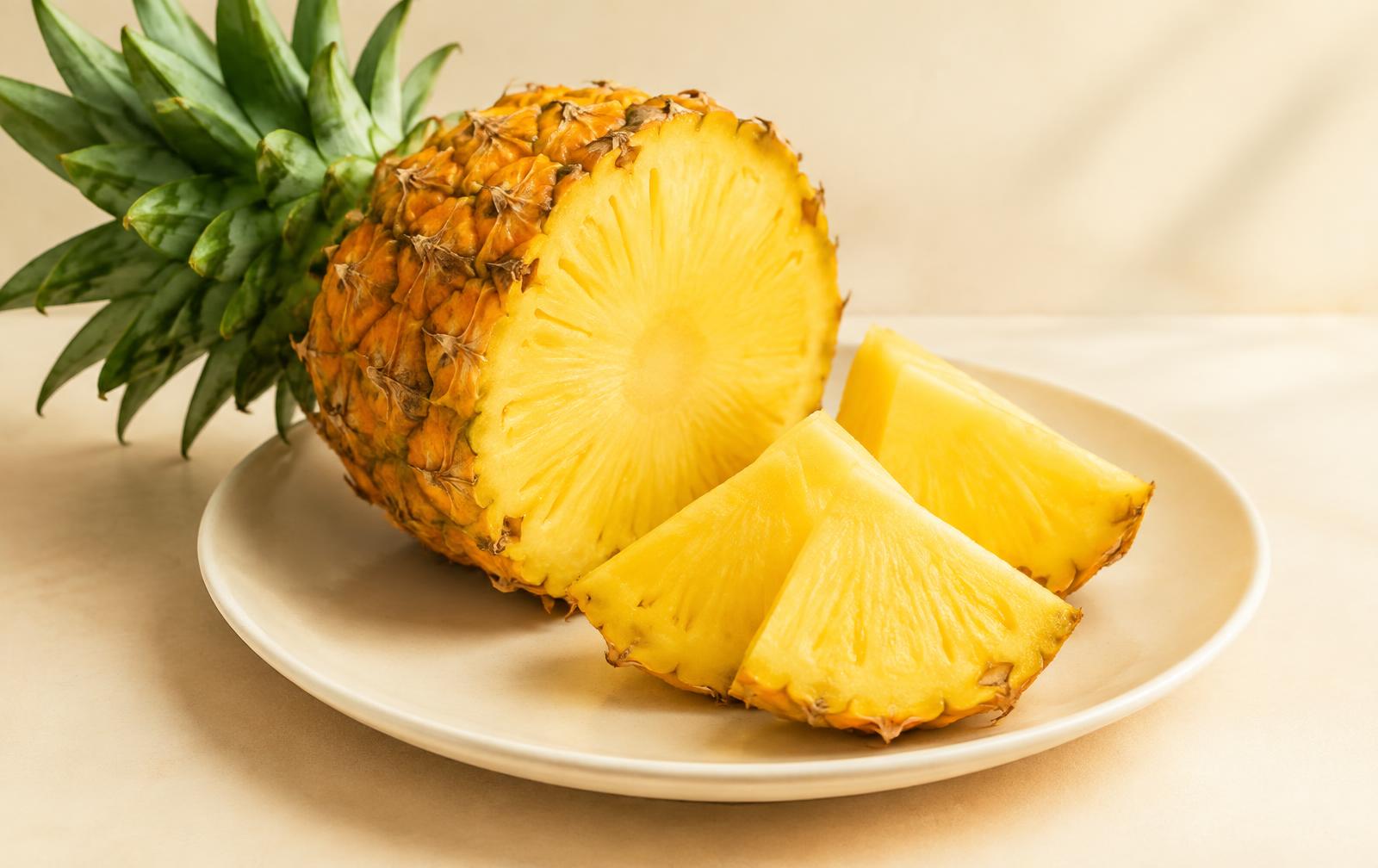
Pineapple makes your mouth tingle and burn because it's digesting you, just a little. Fresh pineapple contains bromelain, a group of protein-dissolving enzymes that start breaking down the protective proteins on your tongue, cheeks, and lips as you chew. Pineapple also contains tiny needle-shaped crystals of calcium oxalate called raphides that make microscopic scratches, and the fruit's high acidity stings whatever the first two have exposed. Together they produce the raw, prickly feeling that shows up after a few big bites. The fix is simple: heat destroys bromelain, which is why canned and grilled pineapple rarely burn.
One quick note before the chemistry: this is general information, not medical advice. A mild tingle is normal, but swelling of the lips, tongue, or throat, hives, or trouble breathing are signs of an allergy and need medical care right away.
Bromelain: the enzyme that makes pineapple burn
Bromelain isn't one molecule. It's a family of cysteine proteases, enzymes that cut the bonds holding proteins together. The pineapple plant makes them in both the fruit and the stem. Commercial bromelain, the kind sold as a supplement and used as a meat tenderizer, is mostly extracted from the stem.
Here's the analogy. Your mouth is lined with a moist mucous layer, a bit like a protective coat of paint over the cells underneath. That layer is full of proteins, including the mucins that make saliva slippery. Bromelain works like a paint stripper. Each molecule grabs a protein chain, snips it, lets go, and moves on to the next one. Because enzymes aren't used up by the reaction, a small amount keeps working as long as you keep chewing.
Strip away enough of that coating and the nerve endings underneath get more exposed than usual. That's the tender, raw feeling, the one people describe as pineapple "eating them back." It builds with quantity, which is why one slice feels fine and half a pineapple leaves your tongue feeling sanded.
You can watch the same reaction happen outside your mouth. Fresh pineapple famously stops gelatin from setting, as ThoughtCo explains, because bromelain cuts up the collagen chains faster than they can link into a gel. Canned pineapple works fine in the same recipe because the heat of canning has already knocked the enzyme out. Your tongue and a bowl of Jell-O are getting the same treatment.
The tiny needles: calcium oxalate raphides
Bromelain gets most of the attention, but it has a partner. Pineapple cells contain raphides, bundles of microscopic needle-shaped crystals made of calcium oxalate. McGill University's Office for Science and Society describes them as one of several contributing factors, and notes that scientists think one of their jobs is to discourage animals from eating the plant.
Sensory scientists have studied this directly. A 2003 paper in the Journal of Sensory Studies on mechanical oral irritation named kiwifruit, pineapple, and taro as common foods where free raphides cause mouth irritation. An earlier study in the Journal of Food Science isolated raphides from kiwifruit and showed that trained tasters could feel them when the crystals were mixed into smooth apple puree. The needles alone were enough to cause irritation.
Think of the needles and the enzyme as a team. The crystals make tiny pricks in the surface, and a protease can then reach deeper into the tissue. Plant biologists have described exactly this combined defense of raphides and a protease in kiwifruit, where the pairing was far more damaging to insect pests than either part alone. Pineapple hasn't been studied as thoroughly in this exact way. Still, it has both ingredients, so the same teamwork is the most likely explanation for why the sting feels sharper than an enzyme alone would cause.
Acid: why the burn stings
The third factor is the simplest. Pineapple is strongly acidic, mainly from citric acid and some malic acid. On a healthy mouth, that acidity just tastes bright and tangy. On tissue that has lost some of its coating and picked up a few crystal scratches, acid stings, the same way lemon juice stings a paper cut.
That's why the feeling often gets called burning even though no heat is involved. Chili burn is a different process. Capsaicin triggers the TRPV1 pain receptor, the same one that responds to real heat, which is why hot peppers feel hot. Pineapple's version comes from physical and chemical wear on the surface of your mouth. The feelings are similar, but the causes are different, and so are the fixes.
If you enjoy a fruit that plays tricks on your tongue, pineapple is in good company. We've also explained how a West African berry makes lemons taste like candy, and why a single gene can make cilantro taste like dish soap to some people.
Why some pineapple burns more than others
If one pineapple leaves your mouth raw and the next one barely registers, you're not imagining it. Several things change how strong the tingle is, and some are better documented than others.
How much you eat, and how fast
This is the most reliable factor. Enzyme damage adds up, so eating a whole bowl in one sitting exposes your mouth to far more total bromelain than a few pieces with breakfast. Grazing slowly gives your saliva time to replace the protective layer between bites.
The core and the part near it
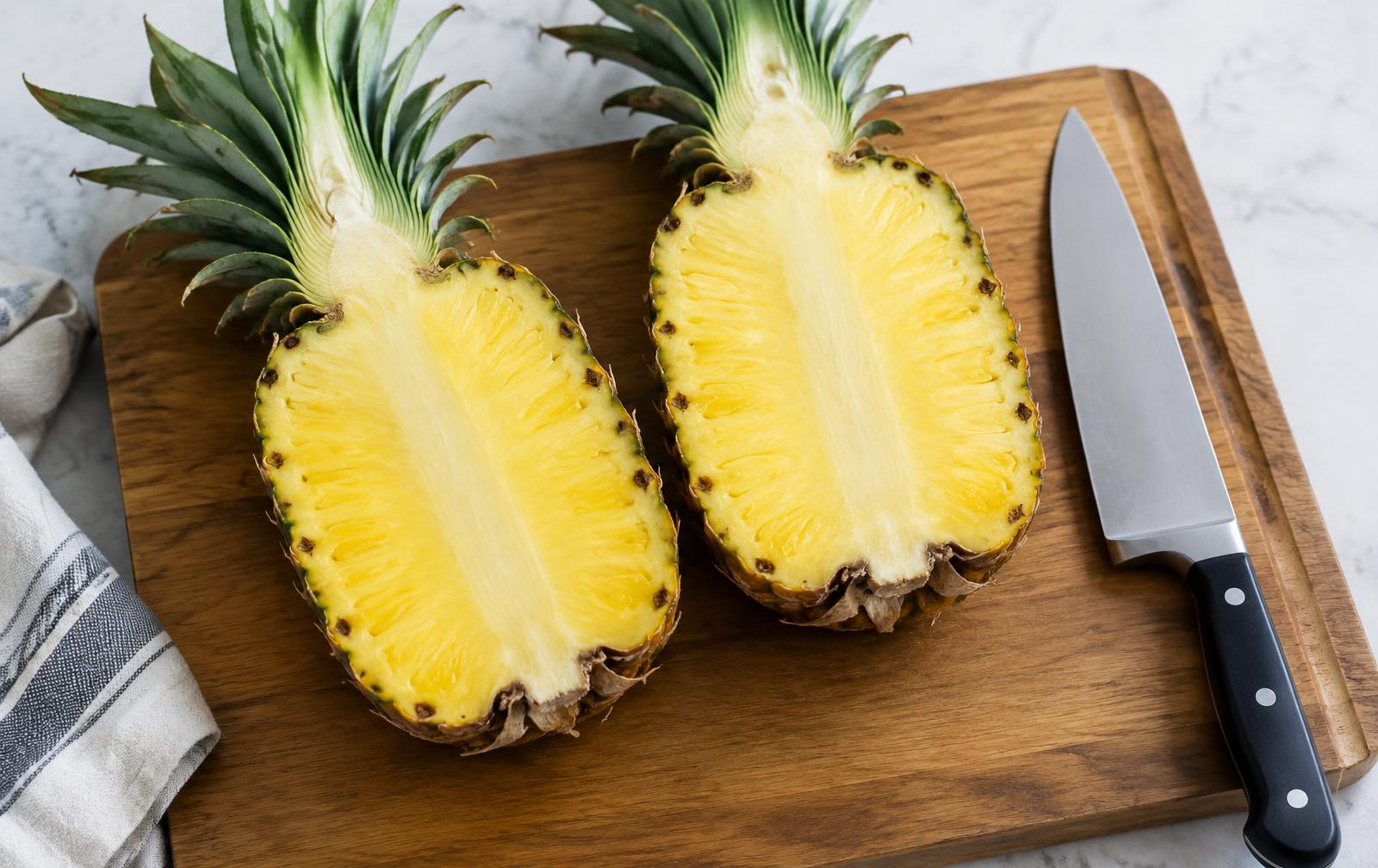
Bromelain is concentrated in the plant's stem, which is why commercial bromelain comes from stems rather than fruit. The core of the fruit connects directly to that stem tissue. Many people find it the harshest part to chew, and cutting it out is a sensible first step. Precise concentrations vary by variety and study, so treat this as a practical tip rather than a hard rule.
Ripeness and variety
Riper pineapple is sweeter and often less acidic, so it tends to taste gentler even when enzyme activity is similar. Research on whether bromelain itself rises or falls as the fruit ripens is mixed and depends on variety, so we won't give you a firm rule here. What is well established is that sugar softens the perception of acid. A very ripe, fragrant fruit usually feels friendlier than a pale, sour one.
Fresh, canned, grilled, frozen: which pineapple tingles?
| Form | Bromelain activity | Why | Tingle risk |
|---|---|---|---|
| Fresh, raw | High | Enzyme is intact and active | Highest |
| Frozen | Largely intact | Freezing slows enzymes but does not destroy them; activity returns as it thaws | High |
| Canned | Very low | Canning heat inactivates bromelain, which is why canned fruit sets in gelatin | Low |
| Grilled or roasted | Low on the surface, variable inside | High heat denatures the enzyme where the fruit gets hot enough | Low |
| Pasteurized juice | Reduced | Juice makers heat-treat to inactivate bromelain for product stability (Sriwatanapongse et al., 2000) | Low to moderate, acid still stings |
That last row points to an important detail. Heat inactivates bromelain but doesn't touch the acidity, so pasteurized juice can still sting a mouth that is already sore. The thermal inactivation study on pineapple juice was written specifically because bromelain has to be switched off for canned and bottled pineapple products to stay stable and acceptable to shoppers.
Pineapple isn't the only fruit with a protease
Pineapple has plenty of company among protein-cutting plants. The same enzymes that make cooks careful with gelatin show up across the produce aisle.
| Food | Protease | Known for |
|---|---|---|
| Pineapple | Bromelain | Mouth tingle, gelatin failure, meat tenderizing |
| Papaya | Papain | The classic powdered meat tenderizer |
| Kiwifruit | Actinidin | Tingle plus raphides, softens dairy desserts |
| Fig | Ficin | Tenderizing, milky latex on fresh stems |
| Fresh ginger | Zingibain | Tenderizing marinades, ginger milk curd |
This is also why a pineapple marinade can go too far. Leave raw meat in fresh pineapple juice for too long and the surface turns mushy instead of tender, because bromelain doesn't stop at the tough bits. Most marinade guides keep pineapple contact short for this reason, often measured in minutes or a few hours rather than overnight.
How to eat pineapple without the tingle
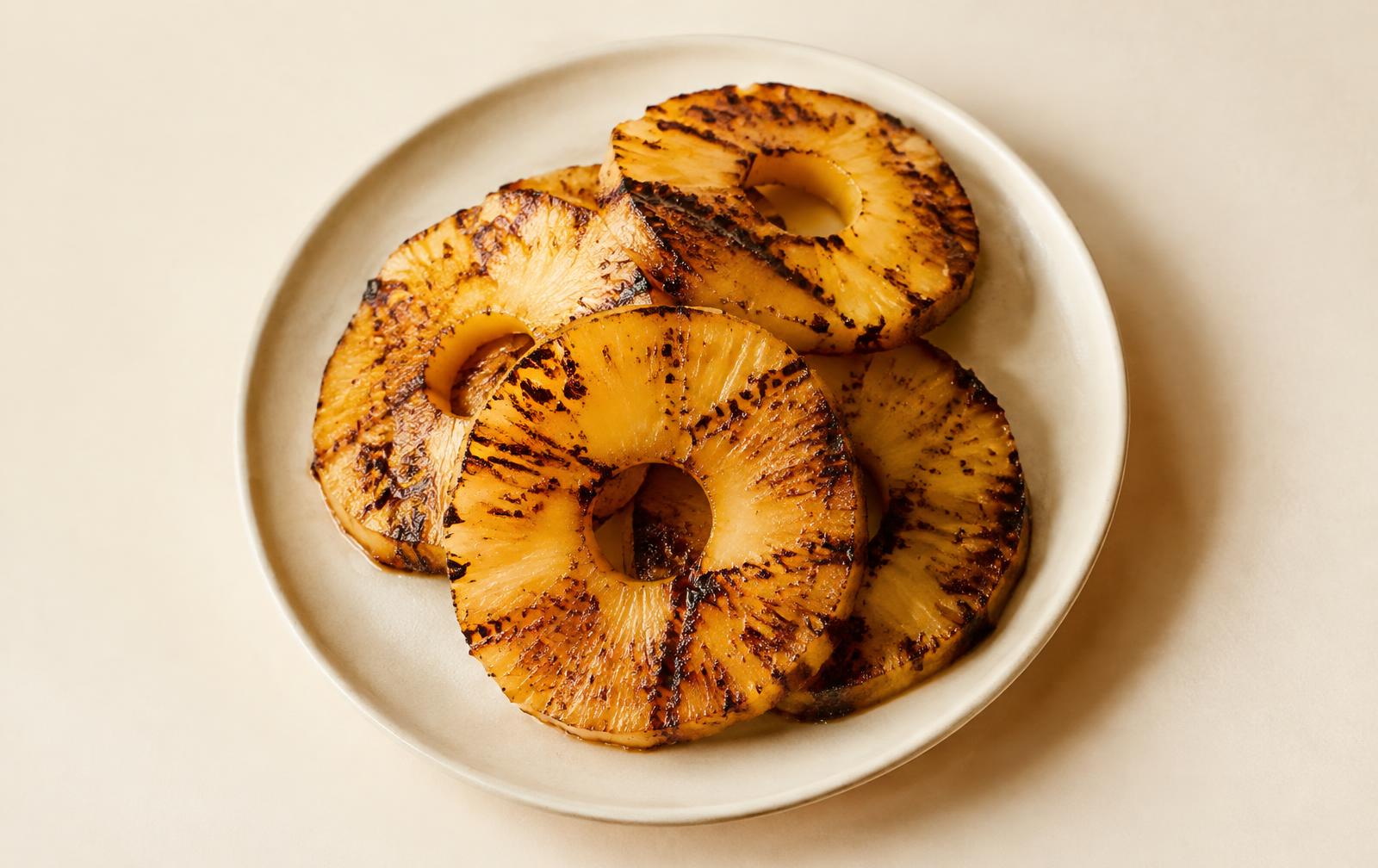
- <strong>Cook it.</strong> Grilling, roasting, or simmering until the fruit is hot all the way through inactivates bromelain. Grilled pineapple is the most delicious fix.
- <strong>Use canned for big portions.</strong> If you want a big bowl of pineapple, canned in juice gives you the flavor without active enzyme.
- <strong>Cut out the core.</strong> It's fibrous and tends to be the harshest part.
- <strong>Eat it with other food.</strong> Yogurt, cottage cheese, or a meal gives bromelain other proteins to break down and dilutes the acid. That makes sense chemically, but it isn't well tested, so treat it as a reasonable theory.
- <strong>Try a salt soak.</strong> Soaking pineapple in lightly salted water is a long-standing habit in Taiwan and parts of Southeast Asia. Salt also makes the fruit taste sweeter. Whether it meaningfully slows bromelain in a quick soak is not well established, so it may mostly work by changing the flavor.
- <strong>Slow down.</strong> Smaller amounts spread out give your saliva time to rebuild the protective layer.
If a sweet-sour flavor that seems like it shouldn't work appeals to you, it's worth reading how lemon and cinnamon combine to taste like cola. It's another case where the chemistry behind a familiar taste is stranger than you'd expect.
Tingle or allergy? How to tell the difference
The bromelain tingle is nearly universal and follows a predictable pattern. It builds the more you eat, stays on the surfaces the fruit touched, and fades within hours. Pineapple allergy is different and much less common. Warning signs include swelling of the lips, tongue, or throat, itching that spreads beyond the mouth, hives, stomach cramps, or wheezing, sometimes after just one bite.
People with latex allergy sometimes react to certain fruits, a cross-reaction known as latex-fruit syndrome, and anyone with that history should be cautious. Any trouble breathing or throat tightness is an emergency. Otherwise, if a small amount of pineapple always causes symptoms beyond a mild tingle, talk to an allergist rather than trying to push through it.
The surprising part: you're both eating each other
Here's the detail worth repeating at dinner. Bromelain doesn't care whose protein it's breaking down, and that includes the fruit's own. That's part of why fresh pineapple goes soft and ferments fast once it's cut. It also explains the most common kitchen failures with pineapple: gelatin that won't set, meat that turns mushy, and pineapple and cream desserts that turn bitter. That bitterness comes from milk proteins being broken into bitter-tasting peptides.
And the reassuring part: your mouth wins. The cells lining your mouth are among the fastest-renewing in the body, so the tender, sanded feeling after a pineapple binge is usually gone by the next day. The fruit gets a head start, and you still come out ahead.
Frequently asked questions
Your turn: run the pineapple test
Try this at home. Eat a piece of fresh pineapple, a piece of canned pineapple, and a piece you've grilled for two minutes a side, then notice which one your tongue objects to. Then tell us: are you a fresh-pineapple purist who accepts the burn, or a grilled convert? More experiments are waiting in Science.
Sources and further reading
- McGill Office for Science and Society: Why does pineapple make your mouth tickle? (2023)
- Perera et al., Calcium oxalate crystals: the irritant factor in kiwifruit, Journal of Food Science (1990)
- Synergistic defensive function of raphides and protease (PMC)
- Sriwatanapongse, Balaban and Teixeira, Thermal inactivation kinetics of bromelain in pineapple juice (2000), FAO AGRIS
- ThoughtCo: The science behind why pineapple ruins gelatin
Filed under
More from Science
The Trick Stylists Use to Make Pancakes Look Perfect
The famous motor oil story is mostly a myth. The real trick is a waterproofed top pancake, thickened syrup that refuses to soak in, and a stack held up by cardboard.
Clara Bennett · · 11 min read
Chocolate and Cheese: The Pairing That Shouldn't Work but Does
Aged cheese and dark chocolate share more flavor chemistry than almost any other pair on the board. Once you taste it, the cracker starts to feel unnecessary.
Priya Raman · · 10 min read

Why Lemon and Cinnamon Together Taste Like Cola
It is not a coincidence and it is not magic. Lemon and cinnamon taste like cola because cola was built from citrus oils and warm spice in the first place.
Tomás Reyes · · 10 min read