
What Medieval Peasants Ate Every Single Day
Pottage, coarse bread and small ale, three times a day, for most of a lifetime. The monotony is real, but so are the details: cheese rations, harvest beef, and a bread law with dates attached.
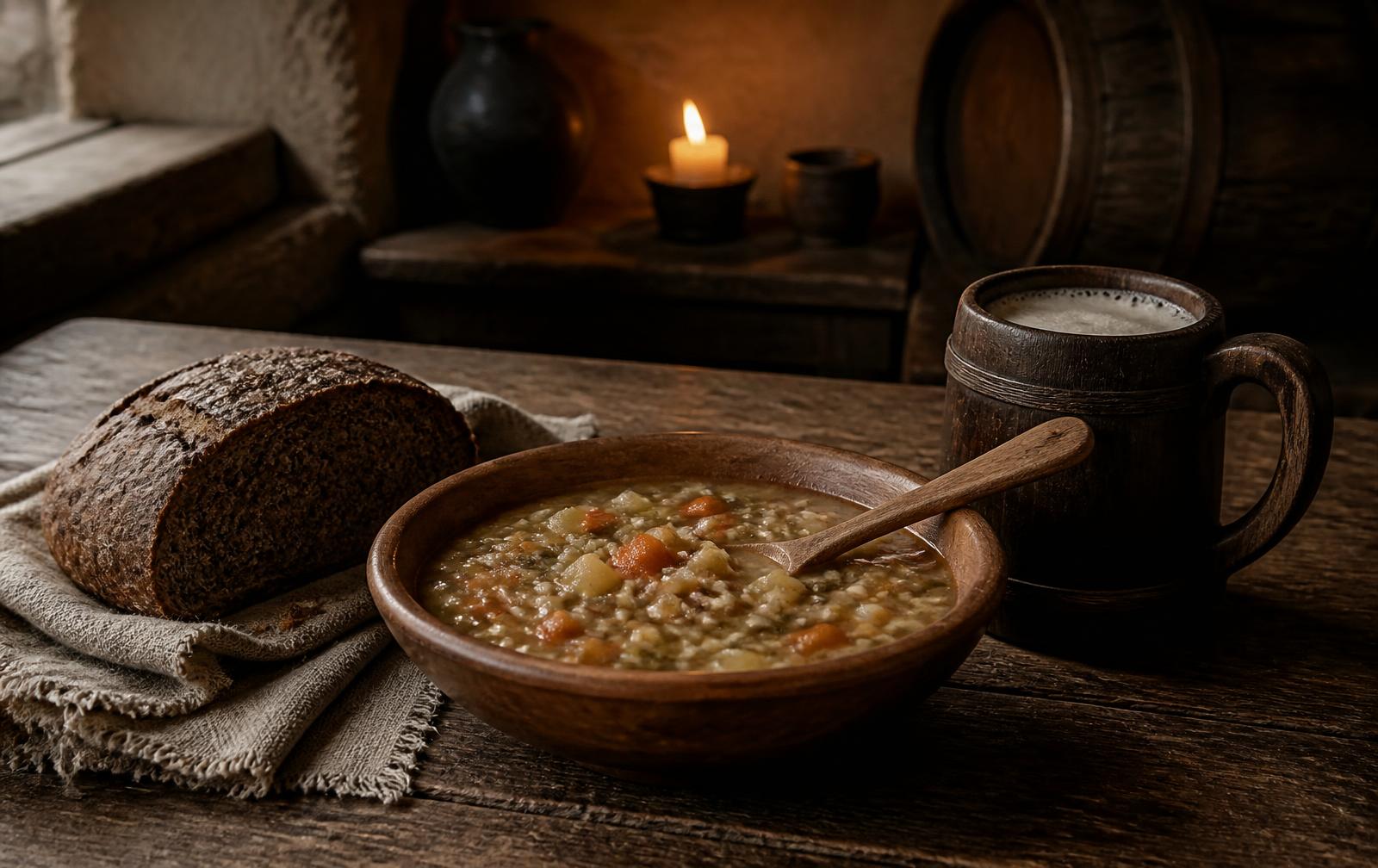
What medieval peasants ate every single day was, in the plainest terms, pottage, dark bread and weak ale, and a great deal of all three. Pottage was a thick grain and vegetable stew simmered in a single cauldron over the hearth, usually built on barley or oats with peas, beans, onions, leeks and cabbage. Bread was coarse and dark, made from rye, barley or a mixed grain called maslin, not the white wheat loaves the lord ate. Ale was the everyday drink, brewed weak and drunk in quantities that sound alarming until you learn how thin it was. Meat appeared, but rarely, and mostly as bacon, salt pork or a scrap of fat used to season the pot rather than as a portion on a plate.
Pottage was not a dish, it was a system
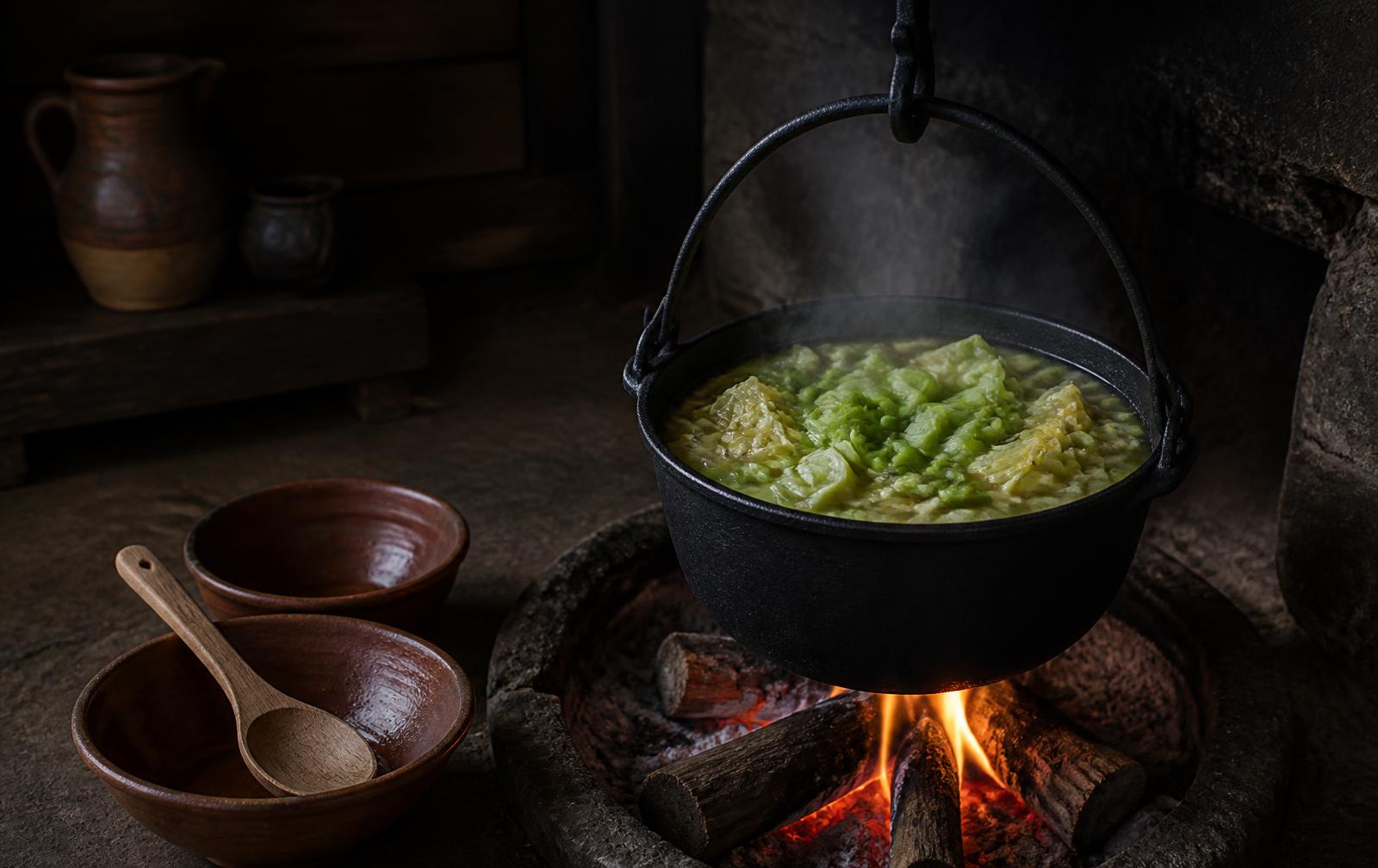
Pottage sat in the cauldron more or less permanently. You added grain, pulses and whatever greens the season offered, ate from it, then topped it back up. The nursery rhyme about pease porridge nine days old is not a joke about laziness, it is a description of how a hearth economy with no refrigeration and expensive fuel actually worked.
The base grain varied by region and by what the soil allowed. Barley and oats dominated in northern England and Scotland, rye across much of northern Europe, and wheat went mostly to market or to the manor because it was worth more. The pulses did the heavy nutritional lifting: field peas, broad beans and vetch, which are cheap, store for years dried, and carry real protein.
This is also where the seasoning happened. A knob of bacon fat, a handful of dried herbs from the toft (the garden plot beside the house), salt if you could afford it, and in wealthier peasant households a little butter or cheese stirred through at the end. Nobody was buying pepper. Spices were priced for a different class of person entirely, which is part of the story we tell in our look at what the ancient Romans really put on their food.
The bread was dark, dense, and legally regulated
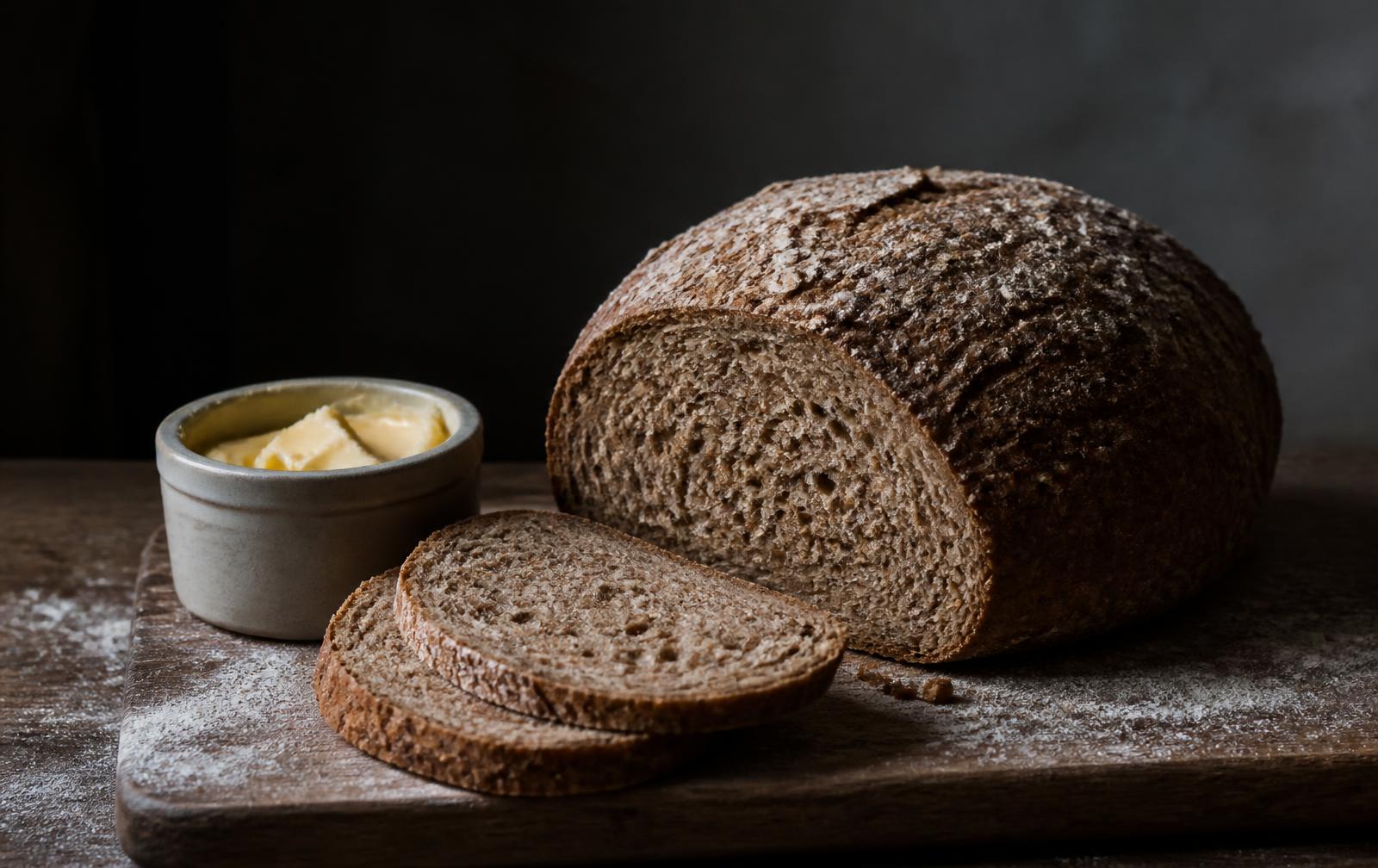
Peasant bread was not the sourdough boule of a modern bakery. It was made from rye, barley, oats or maslin (a wheat and rye mix), often stone-ground with the bran left in, and frequently baked as flat, dense loaves in a communal oven or on a hearthstone. Where grain was scarce it got stretched with peas, beans or even acorn flour in famine years.
Bread mattered enough to be legislated. The Assize of Bread and Ale, issued in England in 1266 under Henry III, fixed the price and weight of loaves and the price of ale according to the cost of grain, and it stayed in force in various forms for centuries [1]. Bakers who shorted the weight were fined or pilloried, which is roughly where the phrase about a baker's dozen comes from: throwing in a thirteenth loaf was cheap insurance against a fine.
Wheat's status is worth sitting with. Grades of bread were a social ladder, from white pandemain at the top through wheaten and then brown horse-bread of bran and pulses at the bottom. Eating white bread was a visible marker of rank, not a preference, and a peasant who suddenly served wheaten bread was signalling something to the neighbours.
They drank ale all day, and it was not what you think
Everyday ale, often called small ale, was brewed from the second or third mash of the grain and came out low in alcohol, cloudy, slightly sweet, and closer to a thin grain drink than to modern beer. It was nutritious, calorie-bearing, and safe because it had been boiled. Ale went sour within days, so brewing was constant and mostly done by women, the alewives, in the home.
The daily quantities in monastic and manorial records look enormous by modern standards, sometimes a gallon or more per person a day for working adults, and that is only shocking if you assume the strength of a modern pint. Hops did not become standard in English brewing until the fifteenth century, arriving from the Low Countries, which is why documents distinguish ale (unhopped) from beer (hopped) for a long stretch of the period.
The persistent claim that medieval people drank ale because all the water was dangerous is overstated. Wells and springs were used constantly, and medical writing of the period discusses water quality with some care. Ale was preferred because it delivered calories, kept a little longer than milk, and tasted like something after a fourteen-hour day.
The surprising part: harvest work came with a proper meal
Here is the detail most people never hear. Manorial custom obliged lords to feed peasants who worked extra days at harvest, and the records specify what they got. One such customary account, quoted in the Tasting History episode above, states that those who came to the wheat harvest boonwork received soup, wheaten bread, beef and cheese for dinner, and bread, cheese and their fill of ale for supper, with as much bread as each wished to eat [2].
Beef. Wheat bread. Unlimited ale. It reads like a completely different diet, because it was: a negotiated benefit written into the customs of the manor, not charity. The medieval food year had peaks as well as troughs, and the peaks were built around labour the lord needed done quickly.
Much of what historians know about ordinary eating comes from exactly this kind of paperwork rather than cookbooks, since surviving medieval recipe collections were written for wealthy kitchens. Estate accounts, tithe records, court rolls and, increasingly, archaeology fill the gap. The Museum of London's medieval collections and excavation reports on deserted villages such as Wharram Percy in Yorkshire have contributed a great deal of the physical evidence, including charred barley and pulses in hearths [3].
A day of eating, hour by hour
Meal times followed daylight and labour, not clocks. The main meal, confusingly called dinner, landed around late morning or midday, because working from dawn on an empty stomach for six hours was already the plan and nobody wanted to do it for ten.
| When | What was eaten | Why |
|---|---|---|
| Dawn, before work | Often nothing, or a piece of bread with small ale | Breakfast carried a whiff of gluttony in Church thinking, though field labourers ate it anyway |
| Mid-morning break | Bread, cheese, sometimes onions or an apple, ale | Portable food eaten where the work was, not at a table |
| Dinner, late morning to midday | Pottage with bread, cheese or curds, occasionally bacon | The main meal, timed for the best light and the hardest part of the day |
| Supper, at dusk | The same pottage topped up, more bread, ale | Cooking twice meant burning fuel twice, so the pot simply continued |
| Feast days and harvest | Beef or mutton, wheaten bread, cheese, unlimited ale | Church calendar and manorial custom both created genuine surplus days |
Meat, dairy and the fish rule nobody expects
Meat was not absent, it was rationed by economics. A pig was the smallholder's animal because it fed itself on scraps and woodland acorns, and it was killed in late autumn and preserved as bacon, salt pork and sausage to last the winter. Cattle were too valuable for traction and milk to eat casually, and sheep were worth more in wool.
Dairy carried the slack. Cheese, butter, curds and buttermilk were collectively known as white meats, and they were a staple protein for peasant households, particularly in summer when animals were in milk. Cheese in the records is often hard, salty and made from skimmed milk, since the cream went to butter for sale.
Then the rule that reshaped everything: the Church prohibited meat on Fridays, often Wednesdays and Saturdays, through all of Lent and on numerous vigils, which added up to well over a hundred meatless days a year. That is why cheap preserved fish, above all salted herring and dried cod (stockfish), became one of the most traded foodstuffs in medieval Europe. Whole North Sea and Baltic economies grew around it, and the tradition of a fish-centred religious meal survives directly in customs like the one behind the Italian Christmas Eve seafood table.
Was it actually healthy? Mostly yes, until it wasn't
On paper the diet looks decent, and this is general historical and nutritional context rather than personalized dietary advice. Wholegrain porridge and dark bread, legumes daily, seasonal vegetables, fermented dairy, very little sugar, and enormous physical activity is a pattern nutritionists would recognize approvingly, and it overlaps more than you would expect with the pattern we examined in our assessment of the Mediterranean diet's evidence.
The problems were the ones agriculture creates. Calories were adequate only in average or good years. Vitamin C ran low in late winter before spring greens returned. Fat and vitamin A were often short. Grain stored in damp conditions could carry ergot, a fungus responsible for outbreaks of the burning, hallucinatory illness recorded as Saint Anthony's fire. And a run of bad weather was catastrophic: the Great Famine of 1315 to 1317, triggered by years of relentless rain across northern Europe, killed a substantial share of the population and is one of the best-documented famines of the period [4].
It is also worth resisting the flat picture. A peasant in fourteenth-century Provence ate olive oil, wine, chestnuts, figs and chickpeas. A peasant in Yorkshire ate oats, butter, ale and salt fish. Both were peasants. The similarity is structural, not culinary, and pretending medieval Europe had one diet is like claiming everyone in Asia eats the same lunch.
The myths worth dropping
- They did not use heavy spices to disguise rotten meat. Spices cost more than the meat did, and anyone who could afford saffron could afford fresh mutton.
- They did not all drink ale because water was poisonous. Water was used routinely, and ale was chosen for calories, flavour and keeping quality.
- Trenchers were real but not universal. Stale bread as a plate was mostly a wealthier household practice, and the soaked bread was often given away as alms afterwards.
- Potatoes, tomatoes, maize, chocolate, turkey and green beans were absent from Europe until after 1492, which quietly rules out most people's mental image of a peasant dinner.
- The diet was not exclusively vegetarian by principle. It was low in meat by cost, and peasants ate meat with real enthusiasm the moment it was available.
- Forks were not in general use. Spoons, knives, bread and hands did the work, and dishes were designed around that.
How to taste it yourself, honestly
If you want the closest legitimate approximation with a modern kitchen, cook pearl barley and dried split peas together in water with onion, leek, cabbage, a bay leaf and a small piece of bacon or a spoon of butter, then simmer it until the grain collapses and salt it at the end. Eat it with dense rye bread and a hard, salty cheese. It is better than its reputation, savoury and deeply filling, and it explains a lot about why every European country still has a version of it.
The flavour lesson is the useful one. Long, slow cooking of grain and pulses builds savouriness without meat, which is the same principle behind the depth in a modern broth-heavy bowl like the ones in our guide to the real ramen behind every anime bowl, and the reason cheap ingredients cooked patiently outperform expensive ones cooked carelessly.
Your turn
Make one pot of proper barley and pea pottage this week, eat it two days in a row exactly as it came, and tell us whether the monotony broke you or whether you understood the appeal by the second bowl. And if you know of a regional peasant staple we skipped, a Polish żurek ancestor, a Provençal chestnut bread, a Scottish brose, send it our way, because the regional variation is the most interesting part of this story and the hardest to research well.
Medieval peasant food: common questions
Sources and further reading
- Encyclopaedia Britannica, Assize of Bread and Ale (England, 1266)
- Tasting History with Max Miller, How to Eat Like a Medieval Peasant, quoting manorial harvest custom
- Historic England, research on Wharram Percy deserted medieval village
- Encyclopaedia Britannica, Great Famine of 1315 to 1317
- Tasting History, How to Feed a Medieval Peasant, episode notes and sources
Filed under
More from History
What the Ancient Romans Really Put on Their Food
Forget salt and pepper. Ancient Romans built their entire flavor palette around fermented fish sauce, reduced grape must, and an herb that no longer exists.
Elena Rossi · · 10 min read
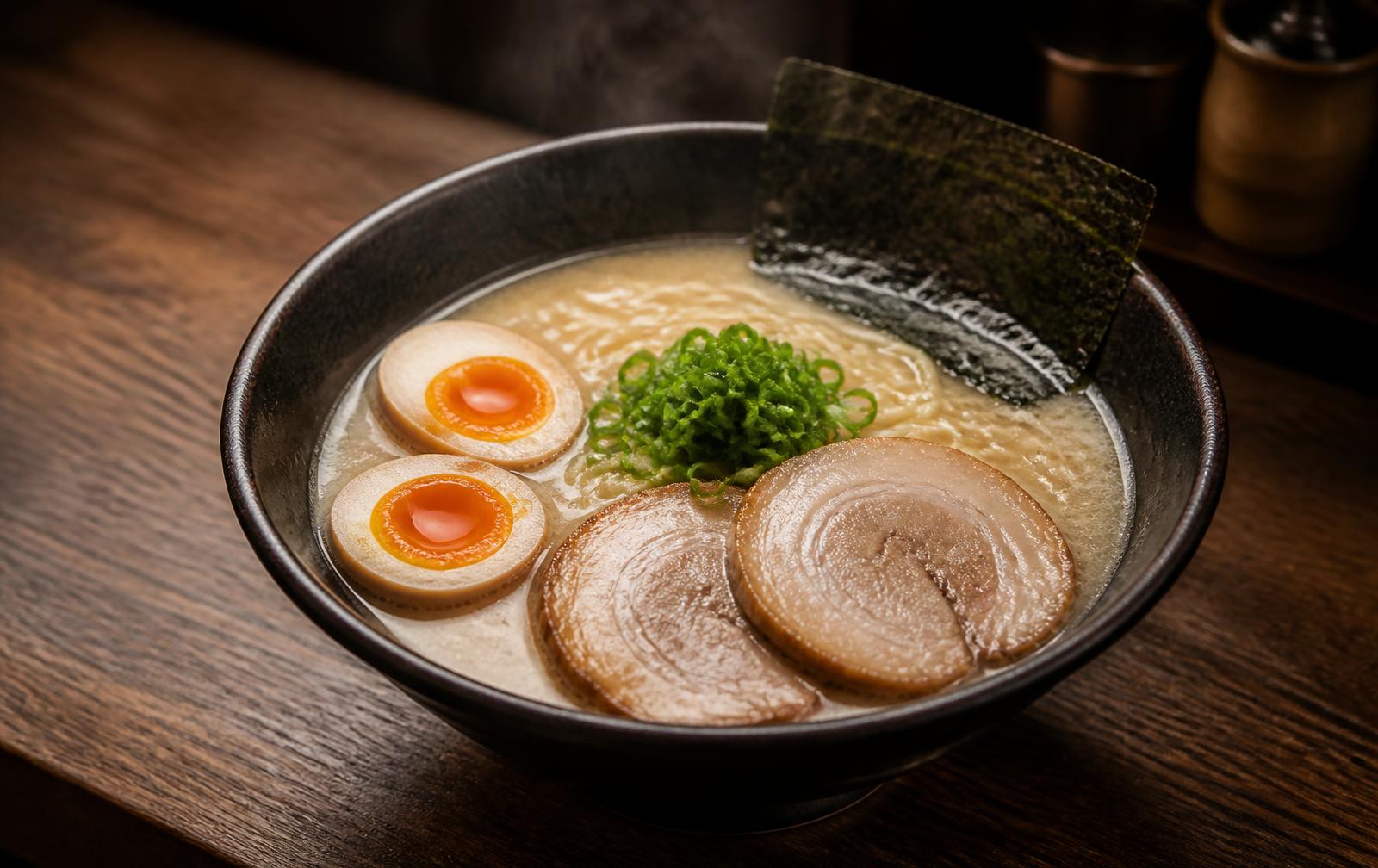
The Real Ramen Behind Every Anime Bowl You've Drooled Over
That glowing bowl with the pink swirl is not fantasy food. It is usually Tokyo-style shoyu ramen, and every topping on it has a name, a region, and a reason.
Clara Bennett · · 12 min read
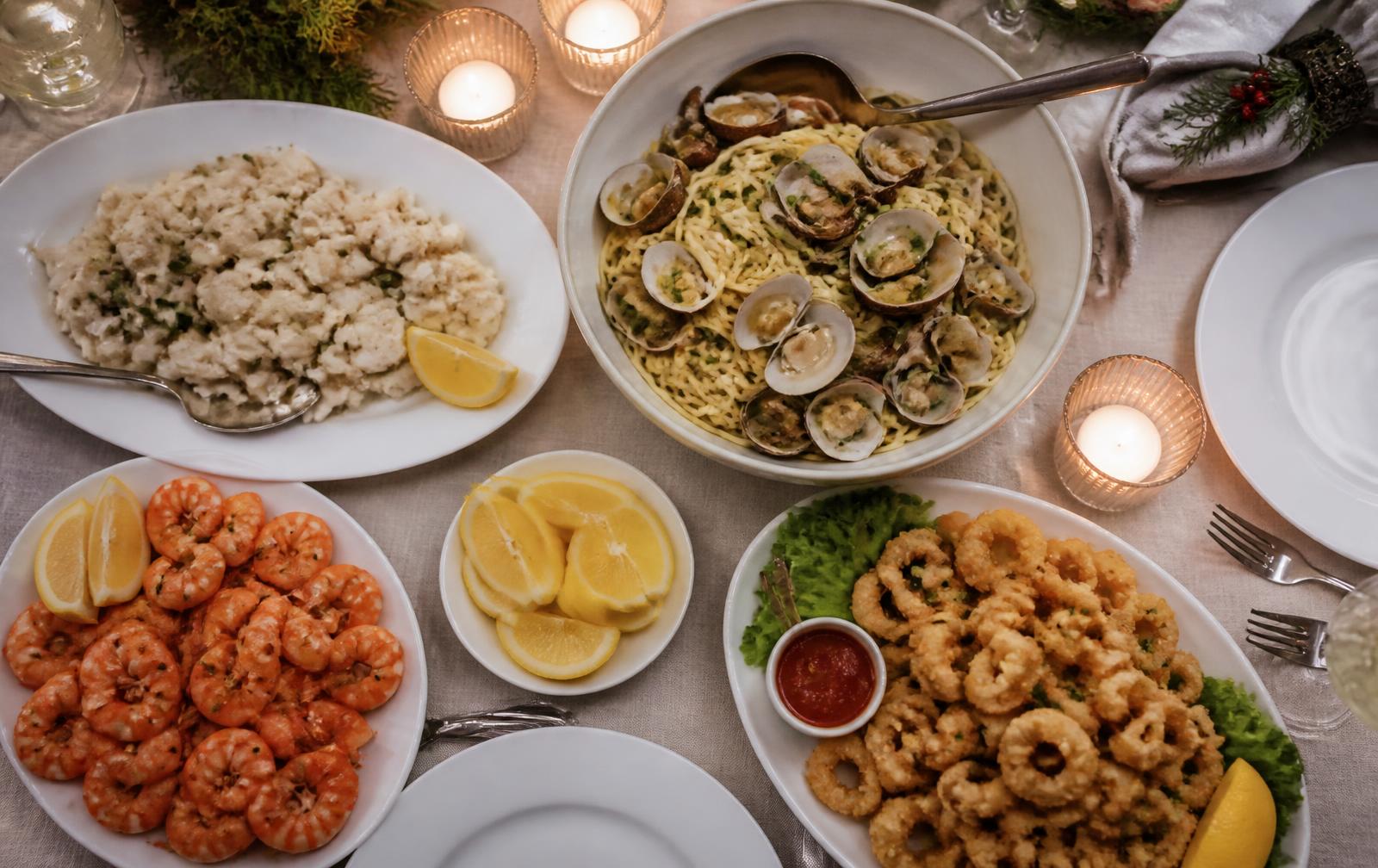
Why Italians Eat Seven Fishes on Christmas Eve
The Feast of the Seven Fishes comes from a Catholic rule about meat, not from a rule about seven. Here is where the number came from, and what is actually on the table.
Clara Bennett · · 11 min read