
Why We Eat Turkey at Thanksgiving and When It Started
The 1621 harvest meal probably featured venison and wild fowl, not a roast turkey. The bird got its seat at the table more than two centuries later.
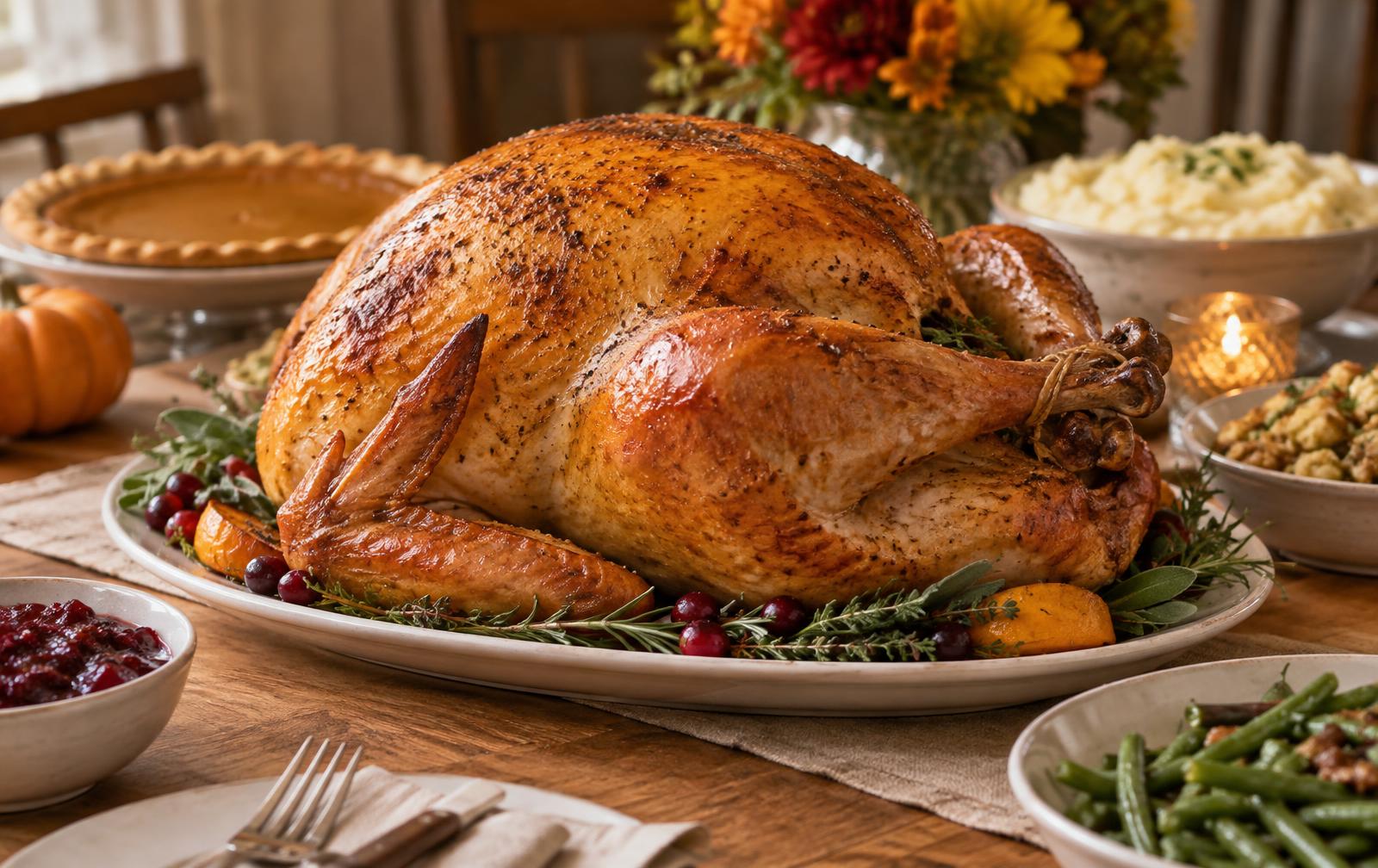
Turkey at Thanksgiving is not a straight line back to the Pilgrims. It is the result of a nineteenth century magazine campaign, a wartime proclamation, and a bird that happened to be the right size for a big family meal. The 1621 harvest gathering in Plymouth almost certainly served venison and wild fowl, and nobody wrote down that a turkey was on the table.
What actually happened at Plymouth in 1621
The only two firsthand accounts of the 1621 gathering are Edward Winslow's letter, printed in a pamphlet later called Mourt's Relation, and William Bradford's history Of Plymouth Plantation, written years afterward. Winslow mentions that the colonists went "fowling" and brought back enough birds to feed the company for almost a week, and that the Wampanoag guests, led by Massasoit, contributed five deer. Bradford separately notes that the colony had "a great store of wild Turkies" that autumn, but he does not say a turkey was actually served at that meal.
That gap between "turkeys were around" and "turkey was eaten" is the whole contested question. Wild fowl in a seventeenth century New England context could mean turkey, but it could just as easily mean duck, goose, or swan, all of which the colonists hunted. Venison, by contrast, is confirmed twice. If you had to bet on the single most-eaten meat at the first Thanksgiving, deer is the safer wager, not turkey.
The two centuries in between
For most of the colonial and early republic period, Thanksgiving was not one national holiday. New England states and towns declared their own thanksgiving days, on their own dates, for their own reasons, sometimes several times a year after a good harvest or a military victory. There was no fixed menu and no fixed calendar date, so there was no single dish doing the symbolic work that turkey does today.
This is also the period when American food writing was becoming a genre of its own, a trend that runs alongside the way ancient Romans recorded, and constantly revised, their own recipe collections. Regional harvest meals slowly absorbed turkey because the bird was native, plentiful in the countryside, and did not have a role in ongoing dairy or egg production the way cows and hens did. You could kill a turkey without giving anything up.
Sarah Josepha Hale's forty year campaign
The person most responsible for turning Thanksgiving into a fixed national event is Sarah Josepha Hale, editor of Godey's Lady's Book, the most widely read women's magazine in antebellum America. Starting in the 1840s, Hale used her editorials and letters to lobby a string of presidents to declare a single, permanent, national Thanksgiving Day. Godey's also printed sample menus and domestic advice that repeatedly featured roast turkey with stuffing, which pushed the bird toward the center of the plate for readers across the country, not just in New England.
Hale's persistence paid off in 1863, when Abraham Lincoln, in the middle of the Civil War, issued a proclamation setting aside the last Thursday of November as a national day of Thanksgiving. The timing mattered as much as the content. A country tearing itself apart got an annual, official, unifying ritual, and the magazines that had been quietly building the turkey-and-stuffing template for twenty years were ready to fill it with recipes the moment the holiday went national [1](https://www.history.com/news/thanksgiving-turkey-tradition).
Why a big bird made economic sense
By the late 1800s, turkey had a practical case that other meats could not match at a family scale. A single turkey easily feeds eight to twelve people, more than a chicken and without the cost of slaughtering a whole pig or a portion of a cow. Turkeys were also seasonal in a useful way: they reached good eating weight in autumn, right when the holiday landed on the calendar.
Farmers responded to the demand. Turkey raising shifted from small dooryard flocks toward more organized production through the twentieth century, and the industry that emerged still shapes the American holiday table, in much the same way farming economics quietly shape what ends up on plates around the world, the way you can see in everyday dishes to eat in Japan that trace back to specific regional agriculture.
Key dates
| Year | Event |
|---|---|
| 1621 | Harvest gathering at Plymouth; Winslow's letter records "fowling" and five deer, no confirmed turkey. |
| 1630s to 1780s | Individual New England colonies and states declare separate, irregular thanksgiving days. |
| 1789 | George Washington proclaims a one-time national day of thanksgiving, not an annual holiday. |
| 1827 to 1863 | Sarah Josepha Hale campaigns in Godey's Lady's Book for a fixed, annual national Thanksgiving. |
| 1863 | Abraham Lincoln proclaims the last Thursday of November as a national Thanksgiving Day. |
| 1941 | Congress fixes Thanksgiving by law as the fourth Thursday of November. |
How many households actually serve turkey
Turkey's grip on the holiday is not just folklore, it shows up in production numbers every year. The National Turkey Federation has estimated that the vast majority of Americans eat turkey on Thanksgiving, and the U.S. Department of Agriculture tracks a clear seasonal spike in turkey production and cold storage ahead of the holiday [2](https://www.eatturkey.org/turkey-history/).
U.S. turkeys raised annually (USDA estimates, millions of birds)
millions of turkeys
Annual U.S. turkey production has stayed in a roughly similar range for two decades, with a clear autumn processing peak tied to the holiday.
The contested parts, kept contested
- Whether turkey was eaten in 1621 at all is not settled. Bradford confirms wild turkeys existed nearby that season, but neither source states one was cooked for the gathering.
- The 1621 event was not called "Thanksgiving" by the participants. The label was applied by later historians describing a harvest celebration, not a religious thanksgiving observance as the Puritans understood the term.
- Some food historians argue Hale's influence is overstated relative to Lincoln's proclamation and the Civil War context; both threads clearly mattered, and the sourcing does not let you cleanly rank them.
A genuinely surprising detail
Here is the fact worth repeating at dinner: turkey was likely not even the most common bird on early New England thanksgiving tables well into the 1700s and 1800s. Regional accounts and period cookbooks show goose held its own for decades, and it took Hale's magazine and the standardized menus that followed to settle the question in turkey's favor nationwide.
Tell us what's actually on your table
If your family's Thanksgiving centerpiece is not turkey at all, that puts you closer to the messy, regionally varied original than the postcard version most of us grew up picturing. Considering how much of the modern menu is closer to a nineteenth century magazine spread than a seventeenth century harvest meal, which part of your own table do you think would surprise the Plymouth colonists most?
Frequently asked questions
Sources and further reading
Filed under
More from Culture & Holidays
What the Ancient Romans Really Put on Their Food
Forget salt and pepper. Ancient Romans built their entire flavor palette around fermented fish sauce, reduced grape must, and an herb that no longer exists.
Elena Rossi · · 10 min read