
Classic Neapolitan Pizza Dough From Scratch
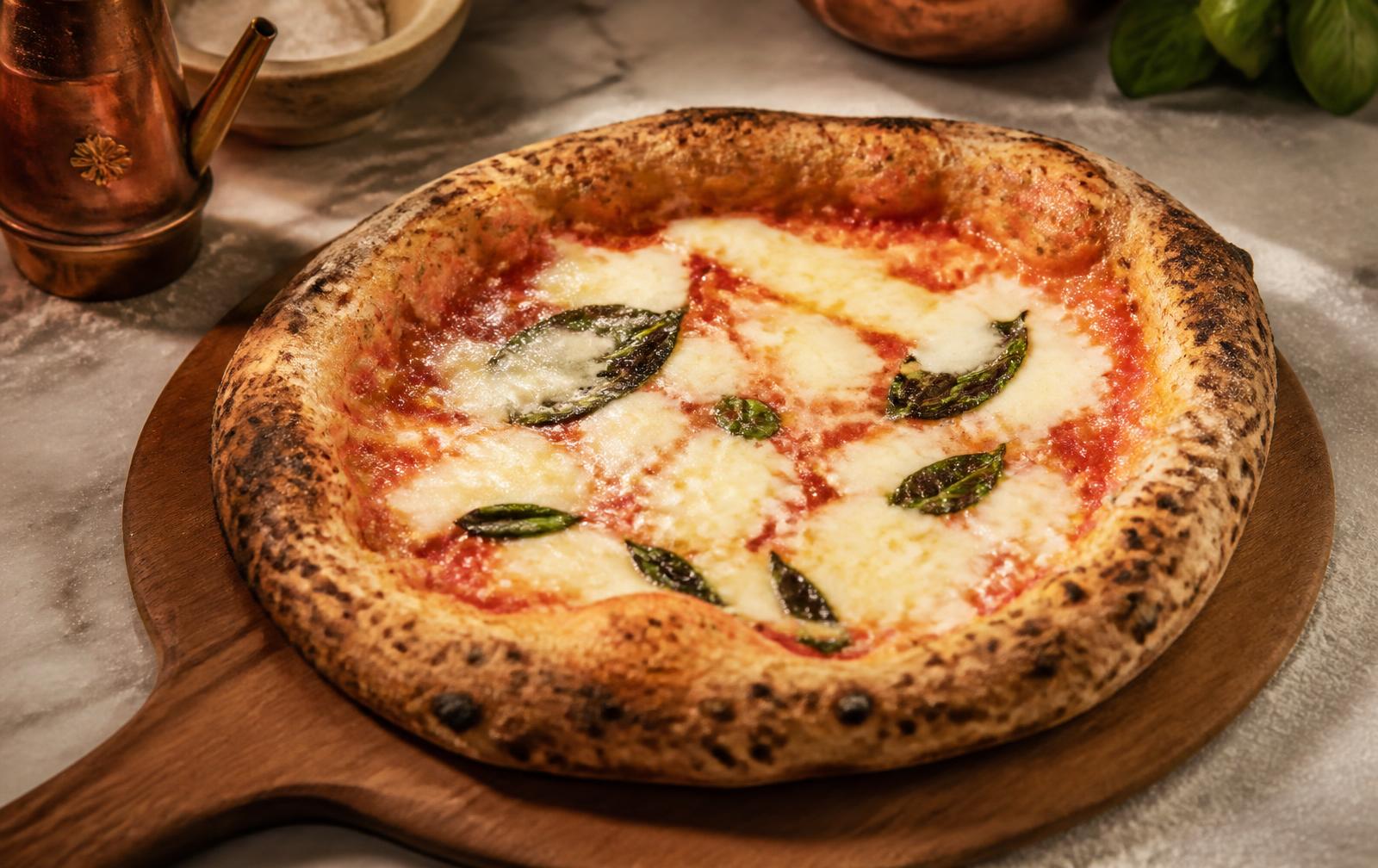
Flour, water, salt, yeast and time. The gram weights, the 63 percent hydration and the 24-hour ferment that give you a puffed, leopard-spotted cornicione at home.
Recipe
Classic Neapolitan Pizza Dough
Four-ingredient Neapolitan pizza dough at 63 percent hydration with a 24-hour cold ferment. Makes 4 dough balls of about 250 g each for 10 to 11 inch pizzas.
Equipment Digital scale that reads to 0.1 g, or 1 g plus careful measuring, Large mixing bowl, Bench scraper, Lidded container or proofing box for the dough balls, Pizza steel, stone, or heavy cast iron pan, Pizza peel or a rimless baking sheet
Ingredients
The dough, four ingredients only
- 600 g 00 pizza flour, about 4 3/4 cups, ideally 12 to 13 percent protein
- 380 g water, about 1 2/3 cups, cool at roughly 65°F (18°C)
- 18 g fine sea salt, about 1 tbsp, dissolved into the water first
- 0.6 g instant dry yeast, about 1/6 tsp, a genuinely tiny pinch
- 3 tbsp semolina flour, optional, for dusting the peel so the pizza slides (optional)
Tap Swap on any ingredient to see substitutions and ratios.
Nutrition
- Serving
- 1 dough ball, about 250 g, crust only
- Calories
- about 340 kcal, toppings not included
- Protein
- about 11 g
- Carbohydrates
- about 70 g
- Fat
- under 1 g, no fat in the dough
- Sodium
- about 1,750 mg per ball, from the traditional 3 percent salt
Estimated per serving. Total time 38 minutes.
Method
- 1
Weigh everything before you start. This recipe is a set of ratios, and cup measures for flour swing by 20 percent, which is the single most common reason home Neapolitan dough fails.
- 2
Pour the 380 g of cool water into a large bowl and stir in the 18 g of salt until it fully dissolves. Add the yeast and stir once. Salt-first is the traditional Naples order and does no harm at this dilution.
- 3
Add about 10 percent of the flour, roughly 60 g, and whisk to a thin slurry. This disperses the small amount of yeast evenly instead of leaving pockets of it.
- 4
Add the remaining flour in three additions, mixing with a hand or a wooden spoon until a shaggy, sticky mass forms with no dry flour left. Do not knead yet. Cover and rest 20 minutes so the flour hydrates.
- 5
Knead on an unfloured counter for 8 to 10 minutes, using a bench scraper to fold the dough over itself. It goes from sticky and ragged to smooth and slightly tacky. It should pull back when stretched and stop tearing. Resist adding flour, since the stickiness disappears as gluten develops.
- 6
Shape into one tight ball, place seam side down in a lightly oiled container, cover tightly and refrigerate 24 hours. 48 hours gives more flavor. This is the step people skip and then wonder why the crust tastes like nothing.
- 7
Take the dough out and divide it into 4 pieces of about 250 g each, weighing rather than eyeballing so the pizzas bake evenly.
- 8
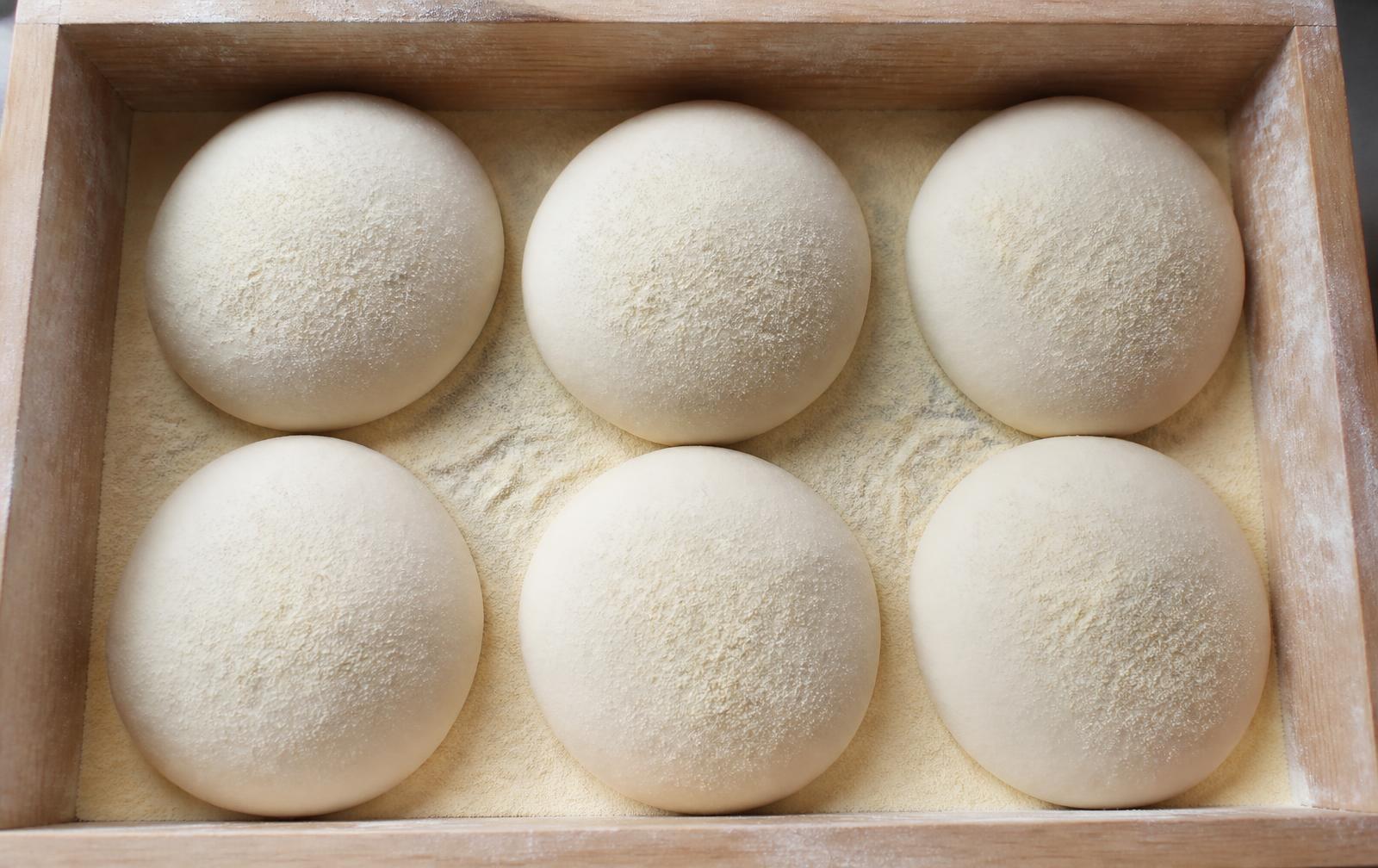
Ball each piece: pull the edges into the center, flip it seam side down, then cup your hand and drag it in a small circle on the counter until the surface goes taut and smooth. A slack ball spreads flat instead of rising at the rim.
- 9
Space the balls at least 2 inches apart in a lightly floured lidded container and let them rise at room temperature for 4 to 6 hours, until roughly 1 1/2 times their size and visibly puffy. Press one gently: the dent should fill back slowly, not instantly and not at all.
- 10
About 1 hour before baking, set a pizza steel or stone on the upper-middle rack and heat the oven to its maximum, usually 500 to 550°F (260 to 290°C). Turn on the broiler for the last 10 minutes. Heat is what puffs the cornicione, so do not rush this.
- 11
Open each ball on a floured surface with your fingertips, pressing from the center outward and leaving the outer 3/4 inch untouched. Never use a rolling pin, which crushes the gas bubbles that become the airy rim.
- 12
Dust a peel with semolina, transfer the base, top it quickly and lightly, and launch. A thin, sparse topping layer is not a stylistic choice: too much sauce or wet cheese leaves the center soggy.
- 13
Bake 6 to 8 minutes on a home steel with the broiler on, or 60 to 90 seconds in a pizza oven at 850 to 900°F. It is done when the rim is puffed with dark leopard spots and the base lifts stiff off the peel. Serve immediately.
Neapolitan pizza dough is the simplest bread recipe in Italian cooking and the least forgiving: flour, water, salt, yeast, and nothing else. No oil, no sugar, no milk. What makes this version work is the numbers. 63 percent hydration keeps it extensible enough to open by hand, 3 percent salt matches the Naples tradition and holds the fermentation in check, and a tiny amount of yeast over 24 hours in the refrigerator builds real flavor instead of a yeasty puff. Active prep 30 minutes, fermentation 24 to 48 hours, bake 90 seconds to 8 minutes depending on your oven. Makes 4 dough balls, so 4 pizzas about 10 to 11 inches wide. Difficulty: medium.
Why these four numbers matter
True Neapolitan dough is defined by ratio, not by brand. The Associazione Verace Pizza Napoletana specifies 00 or 0 wheat flour, water, salt and yeast, with hydration in the region of 55 to 62 percent and a total leavening of at least 8 hours. We sit at 63 percent because home ovens are drier than a 900°F wood oven and a slightly wetter dough survives a longer bake without turning into a cracker.
The salt does double duty. At 3 percent of flour weight it seasons the crust, which has no other flavoring, and it slows yeast activity so a 24-hour ferment does not blow out. Skimp on salt and the dough over-proofs and tastes flat. The yeast quantity looks absurdly small, and it is meant to. 0.1 percent instant yeast plus refrigeration is what produces the faintly sweet, almost beery smell of a properly matured dough.
Flour choice is the one place to spend money. 00 flour is milled finer than all-purpose and typically runs 12 to 13 percent protein, so it takes the long ferment without going slack. Bread flour works, all-purpose is acceptable, and both need slightly less water. Ratios for those swaps are in the substitutions below, and if you want the argument about which pizza style actually deserves the top spot, we settled it in our ranking of every major pizza style.
Fermentation and bake times by setup
| Setup | Peak temperature | Bake time | What to expect |
|---|---|---|---|
| Wood or gas pizza oven | 850 to 900°F | 60 to 90 seconds | Full leopard spotting, textbook puffed rim |
| Home oven with steel plus broiler | 500 to 550°F | 6 to 8 minutes | Good puff, lighter spotting, slightly crisper base |
| Home oven with stone, no broiler | 500 to 550°F | 8 to 10 minutes | Drier crust, still very good; keep toppings sparse |
| Cast iron skillet on the stove, finished under broiler | high heat plus broiler | 3 minutes plus 3 minutes | Best option with no stone or steel |
Substitutions and variations
- No 00 flour: bread flour at 365 g water, or all-purpose at 355 g water. Both work, both are slightly less tender.
- No scale: this is the one recipe where you really do need one. If you have to use cups, spoon flour into the cup and level it, and expect to adjust water by feel.
- Faster version: increase yeast to 2 g and ferment 4 hours at room temperature. Convenient, noticeably less flavor.
- Longer version: 48 to 72 hours cold gives a deeper, faintly sour flavor. Past 72 hours the gluten starts breaking down and the dough tears when opened.
- Scale it up: multiply everything by the same factor, including the yeast. For 8 balls use 1,200 g flour, 760 g water, 36 g salt and 1.2 g yeast.
- Make it a spicier finish: brush the baked rim with chili oil, or add a scatter of Calabrian chili to the toppings rather than to the dough.
Tips, storage and make-ahead
- Common mistake one: too much yeast. If the dough smells strongly of alcohol or collapses when touched, it over-proofed. Use less yeast or a colder fridge next time.
- Common mistake two: a rolling pin. It destroys the gas structure and you will never get a puffed cornicione from a rolled base.
- Common mistake three: a lukewarm oven. Under 500°F you are baking flatbread, not pizza. Preheat a steel for a full hour.
- Doneness cues: puffed rim, dark spots on the underside, and a base stiff enough that the pizza does not sag when lifted at the edge.
- Make-ahead: the dough is designed for it. Mix on Friday, bake Saturday or Sunday.
- Storage: refrigerated dough balls keep 3 days total. After that they get slack and hard to open.
- Freezing: freeze balled dough in individual bags for up to 3 months. Thaw overnight in the refrigerator, then give it 4 hours at room temperature before shaping.
- Leftover baked pizza: reheat in a dry skillet over medium heat for 4 minutes, covered for the last minute. Refrigerate cooked pizza within 2 hours and eat within 3 to 4 days.
What to put on it
A true margherita is crushed San Marzano tomatoes with a pinch of salt, torn fior di latte, a few basil leaves and a thread of olive oil after baking. That is the whole thing. Uncooked sauce is correct here, since the 90-second bake finishes it. If you are cooking a full Italian meal around it, the Feast of the Seven Fishes is a useful map of how Italian tables actually build a menu, and the fat-and-salt logic behind pairing a wine with it is the same one we unpacked in the cheese that makes cheap wine taste expensive.
If you want a dinner with the same look-impressive payoff and none of the waiting, the 20-minute dinner that looks like you tried hard is the weeknight counterweight to a weekend dough project. And for the record of what a serious pizzeria charges for exactly this, see how the styles compare in our honest ranking of overrated fast food.
Neapolitan pizza dough questions
Sources and further reading
Filed under
More from Recipes
Crispy Baked Salmon With Garlic Butter
A hot oven, a dry fillet and garlic butter added at the right moment. Crisp skin, moist center, four servings, twenty-five minutes start to finish.
Priya Raman · · 8 min read
Authentic Chicken Tikka Masala at Home
Yogurt-marinated chicken charred under the broiler, then folded into a tomato, butter and cream sauce built on bloomed spices. Serves 4.
Priya Raman · · 9 min read
High-Protein Greek Yogurt Breakfast Bowl
Thick strained yogurt, a scoop of protein-forward mix-ins, fruit for acid and nuts for crunch. Five minutes, no cooking, about 35 grams of protein.
Priya Raman · · 7 min read