
The Surprising Cheese That Makes Cheap Wine Taste Expensive
A wedge of aged Gouda does more for a $9 bottle than a decanter ever will. Fat, salt and crystallized amino acids reshape how harsh tannin and acid actually read on the palate.
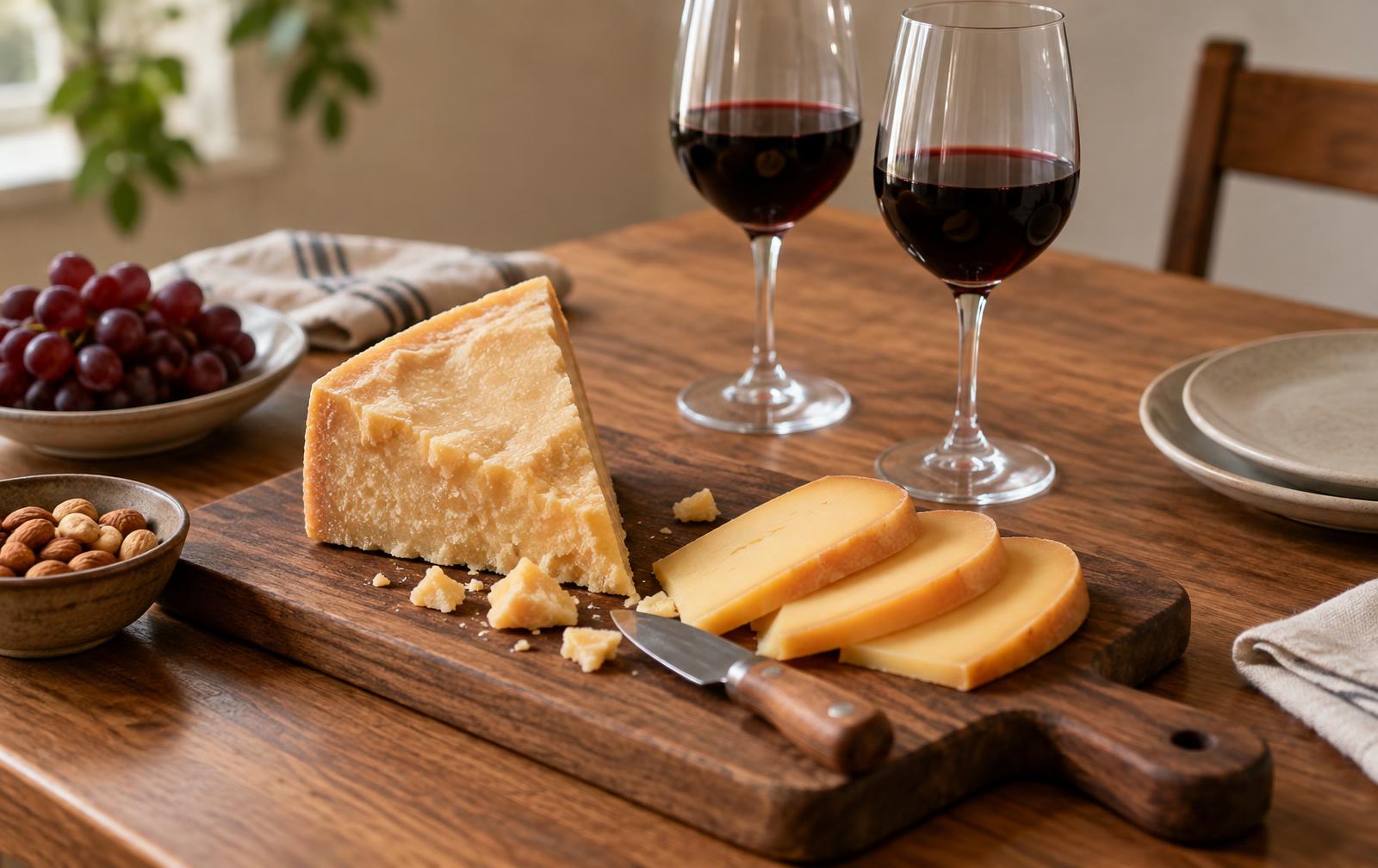
Aged Gouda is the cheese to reach for if you want cheap wine to taste better. Its fat and salt coat the tongue and dull harsh tannin and sharp acidity, while its crunchy, savory tyrosine crystals and nutty, caramelized notes add a sense of length the wine doesn't actually have on its own. This is a real, published sensory effect, not a bar trick, but it is a shift in perception, not a change in the wine itself.
Why cheese changes how cheap wine tastes
Tannins, the compounds behind that drying, gripping feeling in red wine, bind to the proteins in saliva. Cheese is loaded with both fat and casein protein, and each interferes with that binding in a different way. Fat coats the mouth and slows how quickly tannin reaches your palate, while cheese's own protein competes with the proteins in your saliva for those tannin molecules. The net effect is a wine that feels rounder and less puckering right after a bite of cheese.
A 2006 study from the University of California, Davis, published in the American Journal of Enology and Viticulture, had trained sensory panelists evaluate red wines before and after eating cheese and found that cheese consistently reduced perceived astringency and shortened how long fruit-driven flavors lingered afterward [1]. That's the scientific backbone of the whole "cheese makes wine taste better" idea, and it is worth being precise about what it shows: cheese does not add fruit or complexity to the wine, it suppresses the harsher elements competing with whatever fruit is already there.
A 2024 in vitro study modeling cheese and red wine interaction reached a similar conclusion, finding that cheese proteins and fats measurably bind and soften tannin compounds during simulated tasting [2]. Two independent lines of research, twenty years apart, land on the same mechanism, which is about as solid as sensory science gets.
Why aged Gouda specifically, and not brie
Soft, young cheeses like brie are famous on cheese boards, but they are not the strongest wine rescue tool. Aged Gouda, at eighteen months or older, develops small, crunchy white crystals of tyrosine, a natural byproduct of protein breakdown during aging, along with caramel, toffee and toasted-nut flavors from slow Maillard browning inside the wheel. Those roasted, savory notes give the palate something to focus on besides the wine's rough edges, extending the sense of "finish" well past where a cheap wine actually stops tasting like anything.
Aged Parmigiano Reggiano works on the same principle and arguably even harder: it is saltier, drier and more concentrated than Gouda, with its own dense tyrosine crunch. Either cheese beats a soft, high-moisture cheese for this specific job, because moisture dilutes the fat-and-salt coating effect right when you want it working hardest.
Matching cheese style to what's actually wrong with the wine
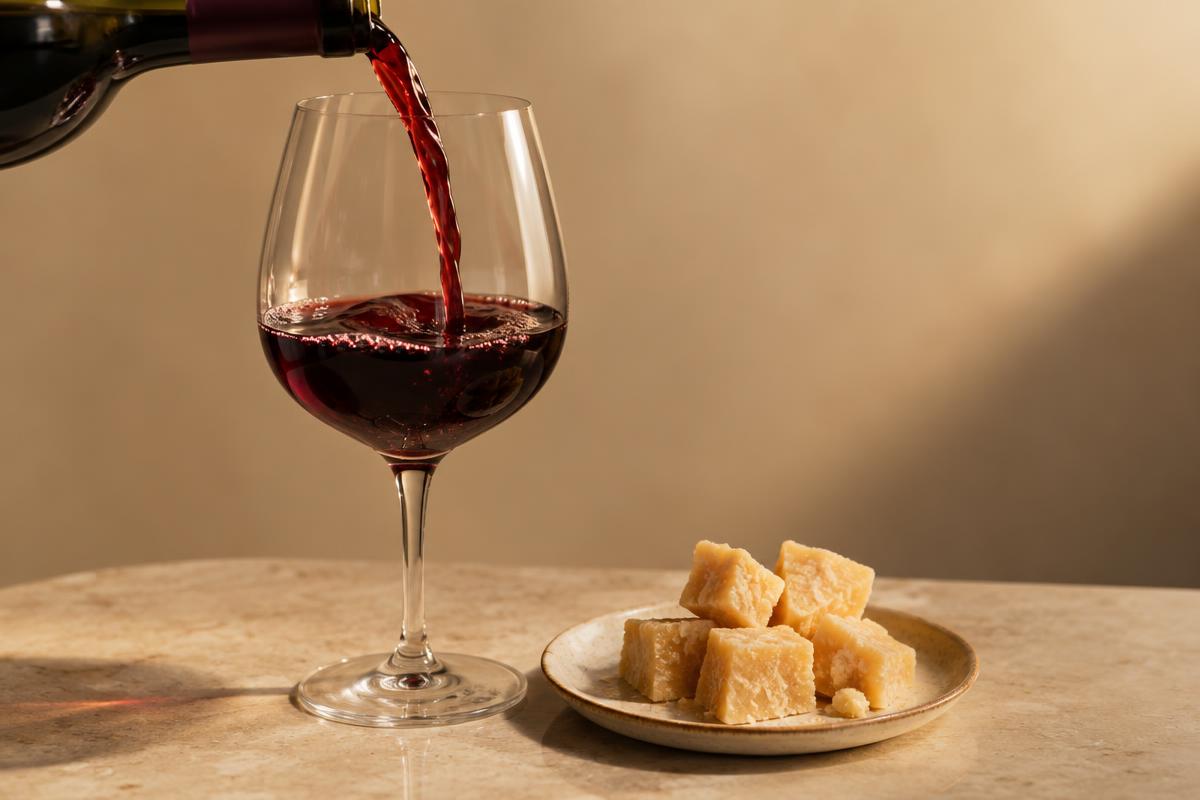
A cheap wine usually has one of two problems: too much rough tannin, or too much sharp acidity with nothing to round it out. Picking the cheese for the specific flaw works better than grabbing whatever wedge is in the fridge, the same way understanding what miracle berry does to taste buds explains why some flavor tricks target sourness specifically while others target bitterness.
| Wine problem | Cheese to reach for | Why it works |
|---|---|---|
| Harsh, gripping tannin (cheap Cabernet, young Malbec) | Aged Gouda or aged Parmigiano Reggiano | High fat and casein bind and blunt tannin on contact |
| Thin, sharp acidity (bargain Chianti, light Sangiovese) | Aged cheddar | Salt and fat round out acid without adding sweetness |
| Flat, short finish (mass-market red blends) | Gruyère or Comté | Nutty, savory depth extends perceived length |
| Overly sweet, jammy fruit (bulk Zinfandel) | Sharp blue cheese | Salt and funk cut through and rebalance the sweetness |
The honest caveat: it is perception, not transformation
None of this changes the chemistry inside the bottle. A cheap wine with genuine faults, like a cooked, jammy character from heat damage or an actual sourness fault, will still have those problems after the cheese is gone. What changes is how your palate processes the wine while cheese is still in your mouth and for a short window afterward. Calling that "tastes more expensive" is fair shorthand, but it is really "tastes smoother and longer," which happens to be exactly what more expensive wine usually offers on its own.
It is a genuinely useful trick for a Tuesday night bottle, and it is not so different from other ways food science quietly edits our sense of a dish before we consciously register why, the same underlying idea behind how food photographers fake ice cream: the eye and palate can be steered without the underlying product actually changing.
The one arguable call in this piece
Plenty of sommeliers would push back and argue that a nutty Comté, not aged Gouda, is the single best all-purpose partner for a rough cheap red, since it brings similar fat and salt with a more elegant, less caramel-forward flavor. That's a fair argument and largely a matter of style preference rather than mechanism. We are sticking with aged Gouda as the top pick here because it is cheaper, more widely available in ordinary supermarkets, and its stronger caramelized flavor does more heavy lifting against a genuinely rough, inexpensive bottle rather than a merely simple one.
A surprising fact worth trying tonight
The effect is strong enough that trained tasting panels can measurably shift their own astringency scores for the identical glass of wine, tasted twice, with only a bite of cheese in between. Nothing about the wine changes between those two tastings except what is still sitting in the taster's mouth.
Try it and tell us what happened
Grab the roughest cheap red you own, cut a slice of well-aged Gouda, and taste the wine before and after. If the effect matches what the UC Davis panel found, the second sip should feel noticeably rounder. Which cheap bottle in your fridge do you think needs the rescue most, and what cheese would you actually reach for?