
High-Protein Greek Yogurt Breakfast Bowl
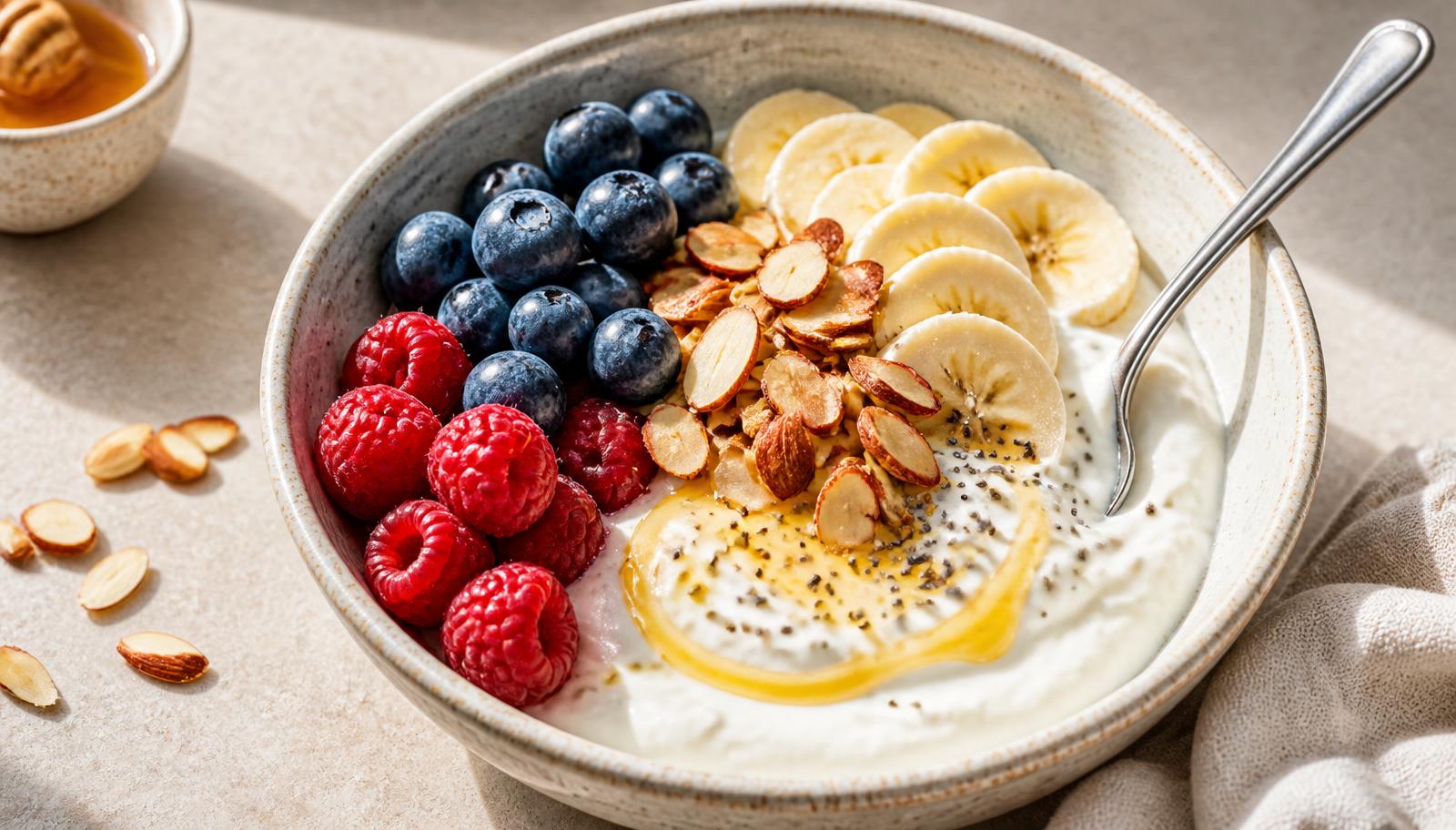
Thick strained yogurt, a scoop of protein-forward mix-ins, fruit for acid and nuts for crunch. Five minutes, no cooking, about 35 grams of protein.
Recipe
High-Protein Greek Yogurt Breakfast Bowl
A no-cook breakfast bowl of 5 percent Greek yogurt boosted with milk powder, chia and nuts, finished with fruit, honey and salt. Serves 2, about 35 g protein per bowl.
Equipment Medium mixing bowl, Spoon or small whisk, Kitchen scale (helpful, not required), Small skillet for toasting nuts
Ingredients
For the yogurt base
- 500 g Greek yogurt, about 2 cups, 5 percent or 2 percent milkfat, cold
- 3 tbsp nonfat milk powder, adds about 6 g protein without changing the texture
- 0.5 tsp vanilla extract
- 2 tsp honey, or maple syrup, stirred into the base
- 1 pinch flaky salt, small but not optional; it sharpens everything
- 20 g unflavored or vanilla whey protein powder, one scant scoop, only if you want 45 g protein per bowl (optional)
For the toppings
- 2 tbsp chia seeds
- 40 g sliced almonds, about 0.33 cup, toasted
- 200 g mixed berries, about 1.5 cups blueberries and raspberries, fresh or thawed
- 1 medium banana, sliced just before serving
- 1 tsp lemon juice, squeezed over the fruit
- 2 tbsp creamy almond butter, warmed 10 seconds so it drizzles (optional)
- 0.25 tsp ground cinnamon (optional)
- 1 tbsp hemp hearts, adds about 3 g protein per bowl (optional)
Tap Swap on any ingredient to see substitutions and ratios.
Nutrition
- Calories
- about 430 kcal per bowl (approximate)
- Protein
- about 35 g, or about 45 g with protein powder
- Carbohydrates
- about 40 g
- Fat
- about 15 g
Estimated per serving. Total time 5 minutes.
Method
- 1
Toast the sliced almonds in a dry small skillet over medium heat for 3 to 4 minutes, shaking often, until they smell nutty and turn pale gold. Tip them onto a plate right away, because almonds go from golden to burnt in about 30 seconds in a hot pan. Skip this only if you truly have no time; raw almonds taste flat by comparison.
- 2
Put the Greek yogurt in a medium bowl. Sprinkle the milk powder over the surface rather than dumping it in one spot, then whisk gently for about 20 seconds until no dry pockets remain. Lumps happen when the powder goes in all at once.
- 3
Stir in the vanilla, honey and the pinch of flaky salt. If you are using protein powder, add it now and whisk just until smooth. Stop as soon as it comes together, because overworking Greek yogurt breaks the strained texture and turns it loose and runny.
- 4
Stir in the chia seeds. If you want a thicker, pudding-like bowl, let the mixture sit 10 minutes in the fridge at this point so the chia hydrates. Serving immediately is fine too; the seeds will just stay crunchy.
- 5
Toss the berries and sliced banana with the lemon juice. This takes five seconds and is the difference between fruit that tastes sweet and fruit that tastes bright.
- 6
Divide the yogurt base between two bowls, around 300 g each once the mix-ins are in. Spread it out and hollow the center slightly with the back of a spoon so the toppings sit in a dip instead of sliding off.
- 7
Top each bowl with the fruit, toasted almonds, and hemp hearts if using. Drizzle over the warmed almond butter, dust with cinnamon, and eat within a few minutes while the nuts are still crisp.
A high-protein Greek yogurt breakfast bowl is strained yogurt built up with seeds, nuts, fruit and a small amount of sweetener until it eats like a real meal instead of a snack. It is worth making because it lands about 35 grams of protein with zero cooking, which is the fastest route to a breakfast that actually holds you until lunch. This version works because it fixes the two usual problems: it uses 5 percent or 2 percent Greek yogurt rather than nonfat, so it tastes rich rather than chalky, and it counts the protein rather than hoping. Prep 5 minutes, cook 0 minutes, total 5 minutes. Serves 2. Difficulty: easy.
Why this version works
Three decisions do the work. First, the base is 5 percent Greek yogurt, which is strained twice as long as regular yogurt and lands around 9 to 10 grams of protein per 100 grams. Nonfat is slightly higher in protein but reads sour and thin, and people fix that with so much honey that the whole exercise stops making sense. Second, the protein is stacked, not concentrated: yogurt plus a spoonful of milk powder plus nuts and seeds, so nothing tastes like a supplement. Third, there is acid and salt. A pinch of flaky salt and a squeeze of lemon on the fruit makes a bland bowl taste finished, and almost nobody does it.
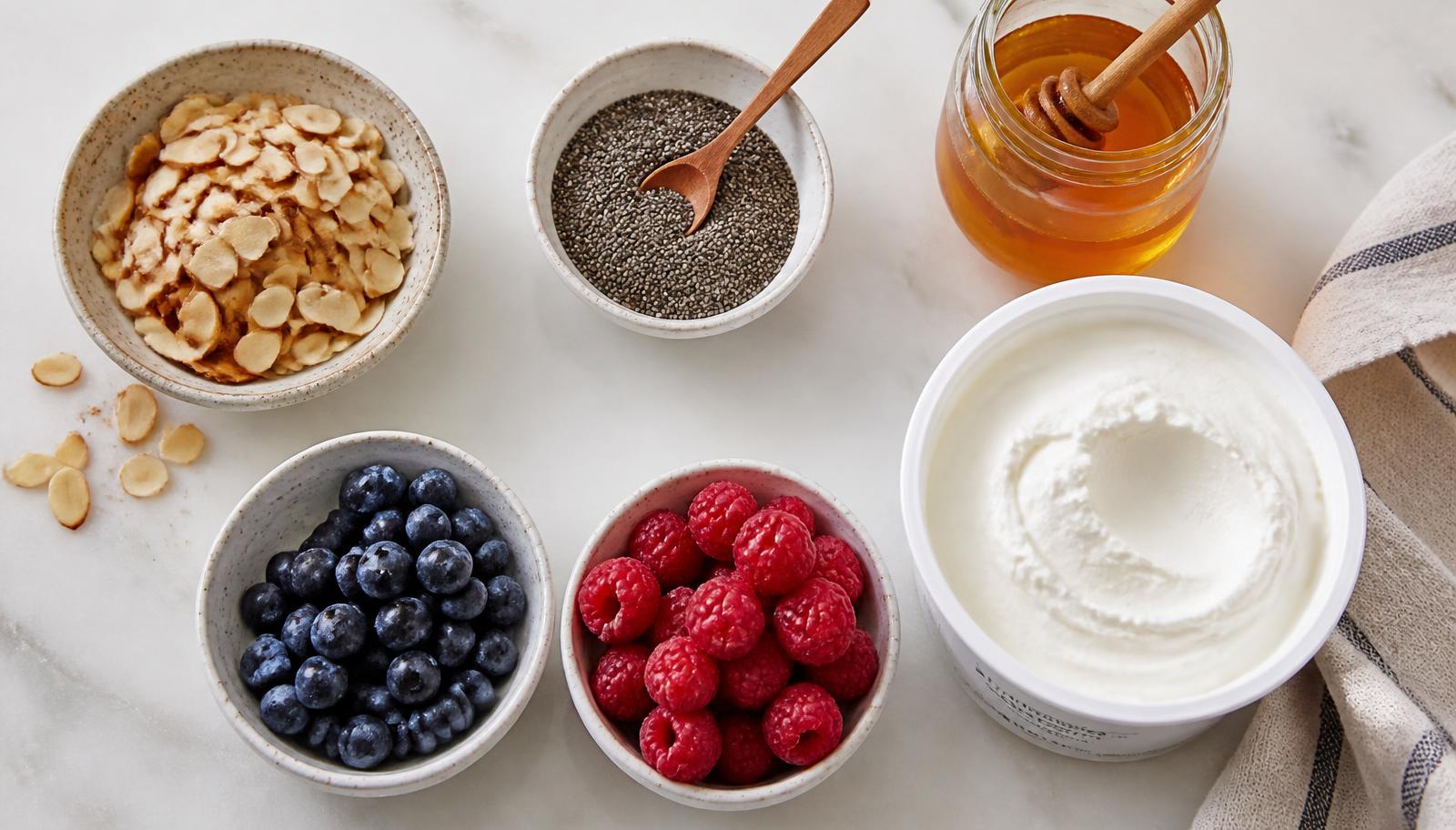
High-protein Greek yogurt breakfast bowl, the recipe
Where the protein actually comes from
| Component | Amount per bowl | Approximate protein |
|---|---|---|
| Greek yogurt, 5 percent | 250 g | about 24 g |
| Nonfat milk powder | 1.5 tbsp | about 5 g |
| Sliced almonds | 20 g | about 4 g |
| Chia seeds | 1 tbsp | about 2 g |
| Fruit, honey, vanilla | as listed | under 2 g |
| Optional whey protein | 10 g | about 8 g |
| Optional hemp hearts | 1.5 tsp | about 3 g |
Substitutions and variations
- No Greek yogurt: use the same weight of skyr, or strain regular whole-milk yogurt in a cheesecloth-lined sieve for 2 hours, which reduces the volume by roughly a third and concentrates the protein.
- No milk powder: add 100 g of low-fat cottage cheese per bowl and blend the base smooth. It hits similar protein and tastes just as good, though it does need a blender.
- No honey: maple syrup at a 1:1 ratio, or 2 pitted dates blended into the base. Note that honey is not suitable for children under one year old.
- Make it dairy-free: use a thick coconut or soy yogurt, skip the milk powder, and add 25 g of a plant protein powder plus 1 tbsp hemp hearts to keep the protein near 30 g. Soy yogurt has far more protein than coconut or almond versions.
- Make it nut-free: replace almonds with 30 g toasted pumpkin seeds and use sunflower seed butter in place of almond butter, keeping the same amounts.
- Scale it up: the base multiplies cleanly to 4 or 6 servings. Keep toppings separate until serving no matter how many you make.
- Allergen note: as written this bowl contains dairy and tree nuts. The substitutions above introduce soy, coconut, or seeds, so check labels on yogurts and protein powders if you are cooking for allergies.
Tips, storage and make-ahead
- The most common mistake is nonfat yogurt plus a lot of honey. Use 5 percent or 2 percent and you will need half the sweetener.
- The second is stirring too hard. Greek yogurt thins out when you beat it, so fold gently and stop the moment it looks smooth.
- Texture cue: the base should hold a soft peak on the spoon. If it slumps flat, chill it 10 minutes and the chia will pull it back together.
- Make-ahead: mix the base up to 3 days in advance and keep it covered in the fridge. Store the toppings separately in jars so the nuts stay crisp.
- Storage: assembled bowls go soft within a couple of hours, so build them right before eating. Keep the yogurt refrigerated at 40°F (4°C) or below, and do not leave it out on the counter for more than 2 hours.
- Freezing: the base does not freeze well and turns grainy on thawing. Instead, freeze it in an ice cube tray and blend the cubes into a smoothie later.
- No reheating needed. This one is meant to be cold, and warming Greek yogurt makes it separate.
What to eat it with
On its own it is a full breakfast, but a slice of toasted sourdough alongside makes it feel like a proper sit-down meal. If you are eating this because you are tracking protein, it slots neatly into the plan in our day of high-protein eating. If you are eating it because mornings are chaos, the same logic that makes this fast is the logic behind our 20-minute dinner formula. And if you have ever wondered whether you need breakfast at all, we looked at the evidence in is breakfast really the most important meal of the day. Yogurt-heavy eating is also a pillar of the pattern we examined in is the Mediterranean diet actually worth the hype. For something at the other end of the day, the fudgy brownies are waiting.
Frequently asked questions
Build it once with the salt and the lemon, then tell us if you can go back to plain yogurt and granola. We could not.
Filed under
More from Recipes
Authentic Chicken Tikka Masala at Home
Yogurt-marinated chicken charred under the broiler, then folded into a tomato, butter and cream sauce built on bloomed spices. Serves 4.
Priya Raman · · 9 min read
The Best Fudgy Brownies From Scratch
Melted chocolate and butter, a hard whisk into the sugar and eggs for that shiny crackly top, and just enough flour to hold it together. One bowl, 16 squares.
Priya Raman · · 8 min read

Creamy Tuscan Chicken in One Pan
Seared chicken, a garlicky sun-dried tomato cream sauce built in the same pan, and spinach wilted in at the end. Thirty-five minutes, four servings, one skillet.
Marcus Feld · · 8 min read