
Crispy Baked Salmon With Garlic Butter
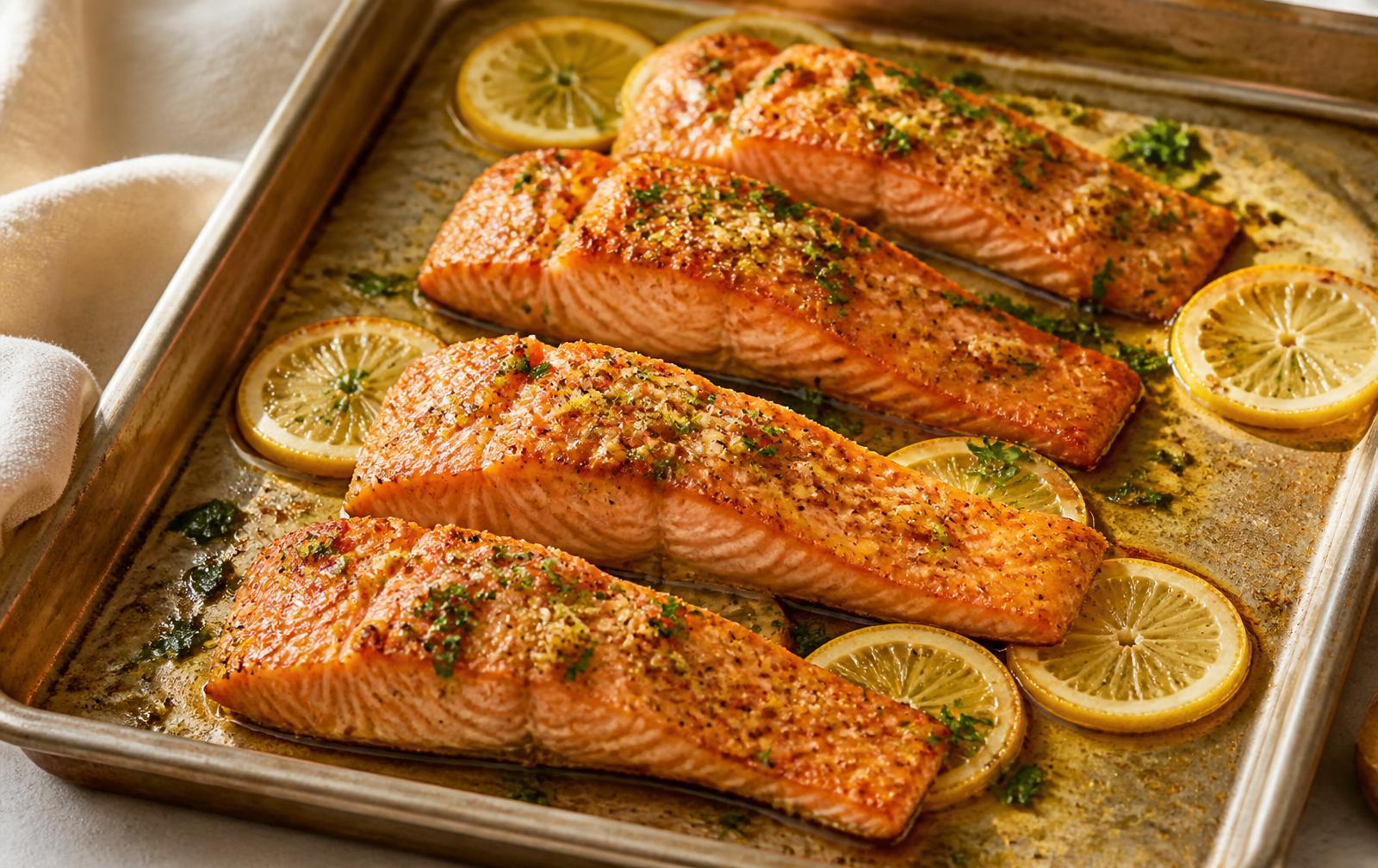
A hot oven, a dry fillet and garlic butter added at the right moment. Crisp skin, moist center, four servings, twenty-five minutes start to finish.
Recipe
Crispy Baked Salmon With Garlic Butter
Salmon fillets baked at high heat for crisp skin and a moist center, finished with garlic butter, lemon and parsley. Serves 4 in 25 minutes.
Equipment Rimmed sheet pan, Paper towels, Small saucepan or microwave-safe bowl, Instant-read thermometer, Fish spatula
Ingredients
For the salmon
- 4 fillets skin-on salmon fillets, 6 oz (170 g) each, about 1 to 1.25 inches thick, patted very dry
- 1.25 tsp kosher salt, divided, applied 10 minutes before baking
- 0.5 tsp black pepper, freshly ground
- 1 tbsp olive oil, rubbed thinly over the skin and flesh
- 0.5 tsp smoked paprika, optional, for color and a faint smokiness (optional)
For the garlic butter
- 4 tbsp unsalted butter, 57 g, melted
- 4 cloves garlic, finely minced or grated on a microplane
- 1 tbsp lemon juice, from about half a lemon, plus wedges to serve
- 1 tsp Dijon mustard, helps the butter cling instead of running off
- 2 tbsp fresh parsley, chopped; dill or chives work equally well
- 0.25 tsp red pepper flakes, optional, for heat (optional)
Tap Swap on any ingredient to see substitutions and ratios.
Nutrition
- Calories
- about 460 kcal per fillet
- Protein
- about 35 g
- Fat
- about 33 g
- Carbohydrates
- about 2 g
- Sodium
- about 620 mg, varies with salting
- Omega-3
- high, roughly 1.5 to 2 g per fillet depending on species
Estimated per serving. Total time 24 minutes.
Method
- 1
Put a rimmed sheet pan on the upper-middle rack and heat the oven to 450°F (230°C). Let the pan heat with the oven for at least 15 minutes. A cold pan is the most common reason oven-baked salmon skin stays flabby.
- 2
Pat the salmon completely dry on both sides with paper towels, pressing rather than wiping. Season the flesh with 1 tsp of the kosher salt and the pepper, and let the fillets sit at room temperature for 10 minutes. Blot any beads of moisture that appear.
- 3
Rub the fillets all over with the olive oil, then sprinkle the skin with the remaining 1/4 tsp salt and the smoked paprika if using. Oil plus salt on dry skin is what produces crackle.
- 4
While the fish rests, melt the butter in a small saucepan over low heat or in the microwave. Stir in the garlic, lemon juice, Dijon and red pepper flakes. Do not cook the garlic in the butter, since raw garlic added to the fish late tastes sweet rather than scorched.
- 5
Pull the hot pan out and quickly lay the fillets skin side down, spacing them at least an inch apart. They should sizzle audibly on contact. Return the pan to the oven immediately.
- 6
Bake 9 to 11 minutes for 1-inch fillets, or 12 to 14 minutes for thicker cuts. Do not open the door in the first 8 minutes.
- 7
Spoon the garlic butter over the fillets and bake 3 more minutes, until the butter is bubbling and the garlic smells toasty. Watch it: garlic goes from golden to bitter in about a minute at this heat.
- 8
Check the thickest part with an instant-read thermometer. Pull at 145°F for fully cooked salmon following USDA guidance, or at 125 to 130°F if you prefer a medium, slightly translucent center and are using high-quality fish. Salmon carries over about 5 degrees while resting.
- 9
Rest 3 minutes, then serve with the pan butter spooned over and lemon wedges alongside. Slide a fish spatula between skin and pan in one confident motion so the skin lifts with the fillet.
Crispy baked salmon with garlic butter is a weeknight dinner that behaves like a restaurant plate: shatter-crisp skin, a moist coral-pink center, and a pool of garlicky butter to spoon over everything. This version works because of three decisions. The oven runs hot at 450°F, the fillets go in bone dry and lightly oiled so the skin can actually crisp instead of steam, and the garlic butter goes on in the last few minutes rather than at the start, so the garlic perfumes the fish without burning. Prep 10 minutes, cook 12 to 14 minutes, total 25 minutes. Serves 4. Difficulty: easy.
Why this method gets crisp skin in the oven
Crisp skin needs three things: dryness, fat, and heat arriving fast. Water on the surface has to evaporate before browning can begin, and at a gentle 350°F the fish overcooks long before that happens. At 450°F the skin dehydrates and browns in the same window the flesh needs to just set.
So blot the fillets hard with paper towels, salt them 10 minutes ahead so surface moisture draws out and can be wiped away again, and set them skin side down directly on a preheated sheet pan. Preheating the pan matters more than the pan itself: the skin starts cooking on contact instead of slowly warming up.
The butter timing is the other half. Garlic burns and turns bitter after a couple of minutes at this temperature, so it is melted with butter separately and spooned over during the last 3 minutes. You get sweet toasted garlic instead of scorched flecks, which is the same lesson behind building a sauce late in the one-pan creamy Tuscan chicken.
Doneness and timing at a glance
| Fillet thickness | Time at 450°F | Pull temperature | What it looks like |
|---|---|---|---|
| 3/4 inch | 8 to 9 minutes | 125°F medium, 145°F well | Flakes easily, center just losing translucency |
| 1 inch | 9 to 11 minutes | 125 to 130°F medium | Thin translucent line at the center, deep pink |
| 1 1/4 inch | 12 to 14 minutes | 130°F medium, 145°F well | Firm outside, glossy and moist within |
| Whole side, 2 to 3 lb | 16 to 20 minutes | 130 to 145°F at the thickest point | Thinner tail end finishes first, so serve from the middle |
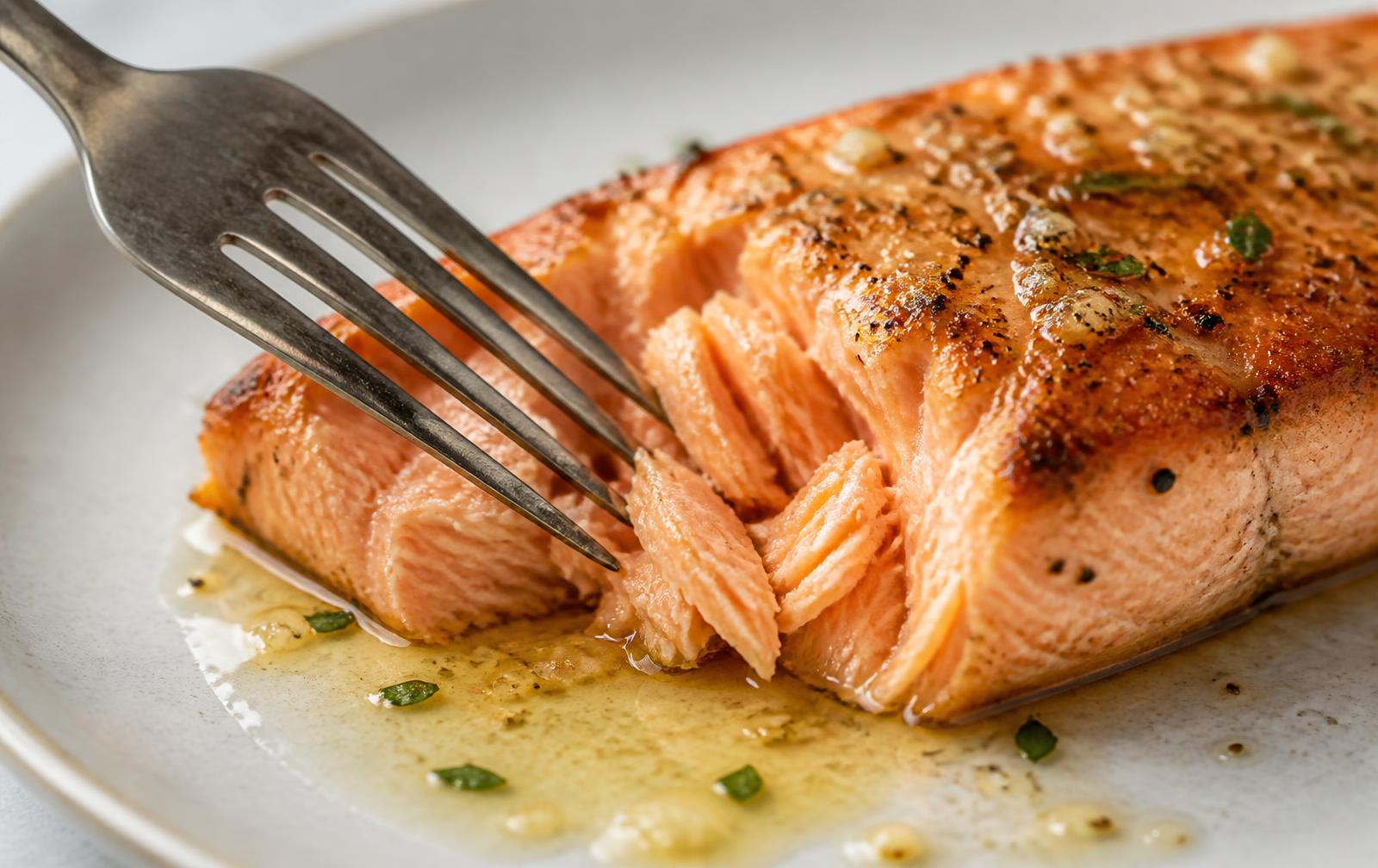
One safety note worth stating plainly: the USDA recommends cooking fish to an internal temperature of 145°F, at which point it flakes easily with a fork [1]. Restaurants routinely serve salmon at 125 to 130°F, and plenty of home cooks do too, but that is a lower-temperature choice with a small added risk, and it is not appropriate for young children, pregnant people, older adults or anyone immunocompromised.
Substitutions and variations
- No butter: use 3 tbsp olive oil in place of 4 tbsp butter. Still excellent, less rich, fully dairy-free.
- Different fish: arctic char and steelhead trout swap in one for one. Cod and halibut need 2 to 3 extra minutes and will not crisp the same way.
- Make it spicier: add 1/2 tsp gochugaru or 1 tsp chili crisp to the butter, plus a teaspoon of honey to balance it.
- Make it a sheet-pan dinner: roast broccolini or halved baby potatoes at 450°F for 15 minutes first, push them to the edges, then add the salmon and continue as written.
- Scale it up: for 8 servings use two pans on separate racks rather than crowding one, and add 2 minutes. Crowding traps steam and kills the crisp skin.
- Frozen salmon: thaw completely in the refrigerator overnight, never on the counter, then dry it even more aggressively since thawed fish releases extra water.
Tips, storage and make-ahead
- Biggest mistake: a cold pan and wet skin. Both guarantee soft, gray skin no matter how hot the oven is.
- Second biggest: adding garlic at the start. It burns within 4 minutes at 450°F and turns the whole dish bitter.
- Doneness cue without a thermometer: press gently at the thickest point. Flakes that separate but still look glossy inside mean it is ready. Chalky white and dry means it went too far.
- White stuff on the surface is albumin, a harmless protein pushed out by heat. Less of it appears when you salt ahead and avoid overcooking.
- Make-ahead: mix the garlic butter up to 3 days in advance and refrigerate it, then melt before using. Season the fish no more than 30 minutes ahead.
- Storage: refrigerate leftovers in an airtight container within 2 hours and eat within 3 days.
- Reheating: 275°F oven for 8 to 10 minutes, covered loosely. Microwaving turns salmon dry and gives it that unmistakable smell.
- Freezing: cooked salmon freezes acceptably for up to 2 months but loses texture. Better to plan leftovers into salads or grain bowls cold.
What to serve with it
The garlic butter wants something to soak into: crushed potatoes, orzo, or plain rice. A sharp green salad or blanched green beans with lemon keeps the plate from feeling heavy. For a fuller spread, our 20-minute dinner that looks like you tried hard has side ideas that scale to guests, and if you want the protein numbers for the week, the high-protein Greek yogurt breakfast bowl pairs neatly with a salmon dinner.
Wine is easy here, since the butter does the work: an unoaked white or even a light red both hold up, and the reason has less to do with the fish than with fat and salt, which is exactly what we got into in the piece on the cheese that makes cheap wine taste expensive. If you are cooking salmon partly for the omega-3s, our review of whether the Mediterranean diet is worth the hype covers what the evidence on oily fish actually supports.
Crispy baked salmon questions
Sources and further reading
Filed under
More from Recipes

Classic Neapolitan Pizza Dough From Scratch
Flour, water, salt, yeast and time. The gram weights, the 63 percent hydration and the 24-hour ferment that give you a puffed, leopard-spotted cornicione at home.
Priya Raman · · 9 min read
Authentic Chicken Tikka Masala at Home
Yogurt-marinated chicken charred under the broiler, then folded into a tomato, butter and cream sauce built on bloomed spices. Serves 4.
Priya Raman · · 9 min read
High-Protein Greek Yogurt Breakfast Bowl
Thick strained yogurt, a scoop of protein-forward mix-ins, fruit for acid and nuts for crunch. Five minutes, no cooking, about 35 grams of protein.
Priya Raman · · 7 min read