
Soft and Chewy Chocolate Chip Cookies
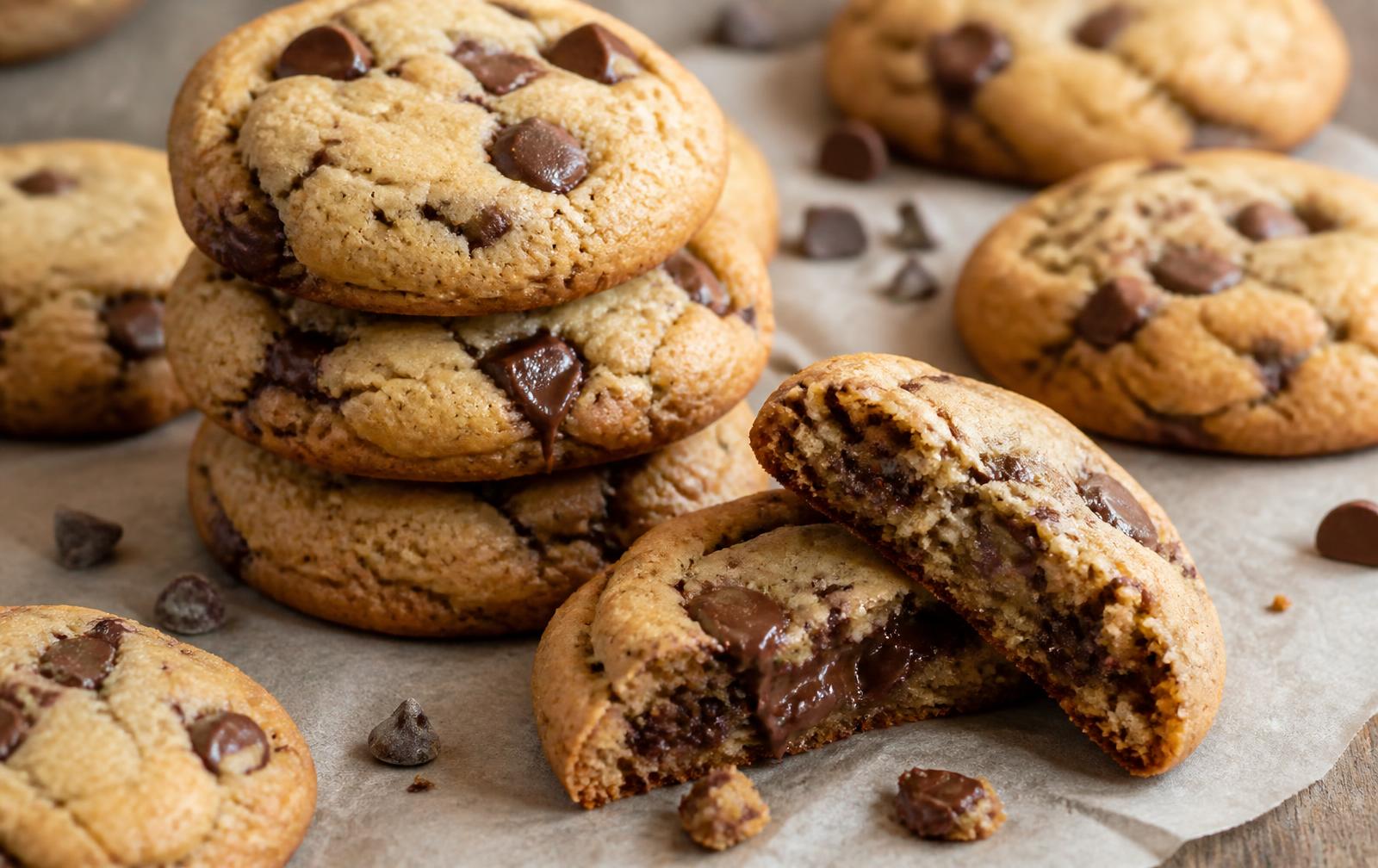
Melted butter, extra brown sugar, one extra yolk and bread flour. That combination is what makes a cookie chewy instead of crisp, and it takes no special equipment.
Recipe
Soft and Chewy Chocolate Chip Cookies
Thick bakery-style chocolate chip cookies made with melted butter, extra brown sugar, an additional egg yolk and a little bread flour. Makes 20 cookies.
Equipment Large mixing bowl, Whisk and flexible spatula, Kitchen scale (recommended), Two half sheet pans, Parchment paper, Wire cooling rack
Ingredients
Wet ingredients
- 170 g unsalted butter, 12 tbsp, melted and cooled until just warm, not hot
- 200 g light brown sugar, 1 cup packed
- 100 g granulated sugar, 0.5 cup
- 1 whole large egg, at room temperature
- 1 whole large egg yolk, the extra yolk is what makes the centers gooey
- 2 tsp vanilla extract
Dry ingredients
- 220 g all-purpose flour, about 1.75 cups, spooned and leveled
- 60 g bread flour, about 0.5 cup; use all-purpose if you have none
- 1 tsp baking soda
- 2 tsp cornstarch, keeps the middles soft
- 0.75 tsp fine sea salt
Chocolate and finishing
- 300 g semisweet chocolate, about 1.75 cups; roughly chopped bars beat chips for melty pools
- 1 pinch flaky sea salt, sprinkled on top of each cookie before baking (optional)
- 80 g toasted chopped walnuts or pecans, about 0.75 cup, folded in with the chocolate (optional)
Tap Swap on any ingredient to see substitutions and ratios.
Nutrition
- Calories
- about 265 kcal per cookie (approximate)
- Carbohydrates
- about 33 g
- Fat
- about 14 g
- Protein
- about 3 g
Estimated per serving. Total time 31 minutes.
Method
- 1
Melt the butter in a small saucepan or microwave, then let it sit 5 minutes until it is warm rather than hot. Butter above about 110°F (43°C) will start cooking the egg when you add it, which gives the dough a scrambled, grainy look.
- 2
Whisk the warm melted butter with both sugars in a large bowl for about 45 seconds, until the mixture looks glossy and slightly thickened like wet sand. You are dissolving sugar, not aerating, so there is no need to go longer.
- 3
Whisk in the whole egg, the extra yolk and the vanilla for another 30 seconds, until the mixture turns a shade paler and ribbons off the whisk. This is the only real mixing the dough gets.
- 4
In a separate bowl, whisk together the all-purpose flour, bread flour, baking soda, cornstarch and fine salt so the leavener is evenly distributed. Clumps of baking soda leave bitter spots.
- 5
Add the dry mixture to the wet and fold with a spatula just until no dry flour is visible, about 20 strokes. Stop early rather than late; overmixing develops too much gluten and gives you tough, bready cookies.
- 6
Fold in the chopped chocolate and the nuts if using. The dough will look soft and shiny at this stage, which is correct.
- 7
Scoop into 20 balls of about 55 g each, roughly 3 tablespoons, and set them on a plate or tray. Make the balls tall rather than round, with a slightly craggy top, so the surface bakes into ridges.
- 8
Chill the scooped dough uncovered for at least 30 minutes, or cover and refrigerate up to 72 hours. Two hours or longer gives a noticeably deeper, more caramel flavor, so plan ahead if you can.
- 9
Heat the oven to 350°F (177°C) and line two sheet pans with parchment. Arrange 8 dough balls per pan with at least 2 inches between them, and bake one pan at a time on the middle rack for even heat.
- 10
Bake 10 to 12 minutes. Pull them when the edges are set and light golden but the centers still look pale, puffed and slightly underdone. This is the moment people get wrong; a cookie that looks fully baked in the oven will be crisp once cool.
- 11
Leave the cookies on the hot pan for 5 minutes to finish setting from residual heat, then slide them onto a wire rack. If you want perfectly round cookies, swirl a wide glass or round cutter around each one within 30 seconds of taking the pan out.
- 12
Sprinkle with flaky salt while the tops are still warm and eat within about 10 minutes for the full molten-chocolate version, or cool completely for the chewiest texture.
These are thick, soft chocolate chip cookies with crisp edges, a bendy middle, and pools of melted chocolate rather than tidy chips. They are worth making because chewiness is a formula, not luck: more brown sugar than white, melted butter instead of creamed, one extra egg yolk, and a little bread flour for extra gluten. No stand mixer needed. Prep 20 minutes plus 30 minutes chilling, bake 11 minutes per tray, total about 1 hour 10 minutes. Makes 20 cookies. Difficulty: easy.
Why this version stays chewy
Four choices carry the whole recipe. Brown sugar is hygroscopic, meaning it holds onto water, so a dough that leans brown stays soft for days where an all-white-sugar dough turns snappy overnight. Melted butter skips the air you would beat into softened butter, and less air means a denser, chewier crumb instead of a cakey one. The extra yolk adds fat and emulsifiers without extra water, which is why the centers read gooey rather than dry. And swapping a portion of the flour for bread flour raises the protein, giving the dough enough gluten to pull back slightly as you bite it. That pull is what people mean by chewy.
The half hour in the fridge is not optional. Cold dough spreads slower, so the cookie sets while it is still tall. Room-temperature dough spreads into a thin disc before the structure catches up, and thin cookies cannot be chewy no matter what is in them.
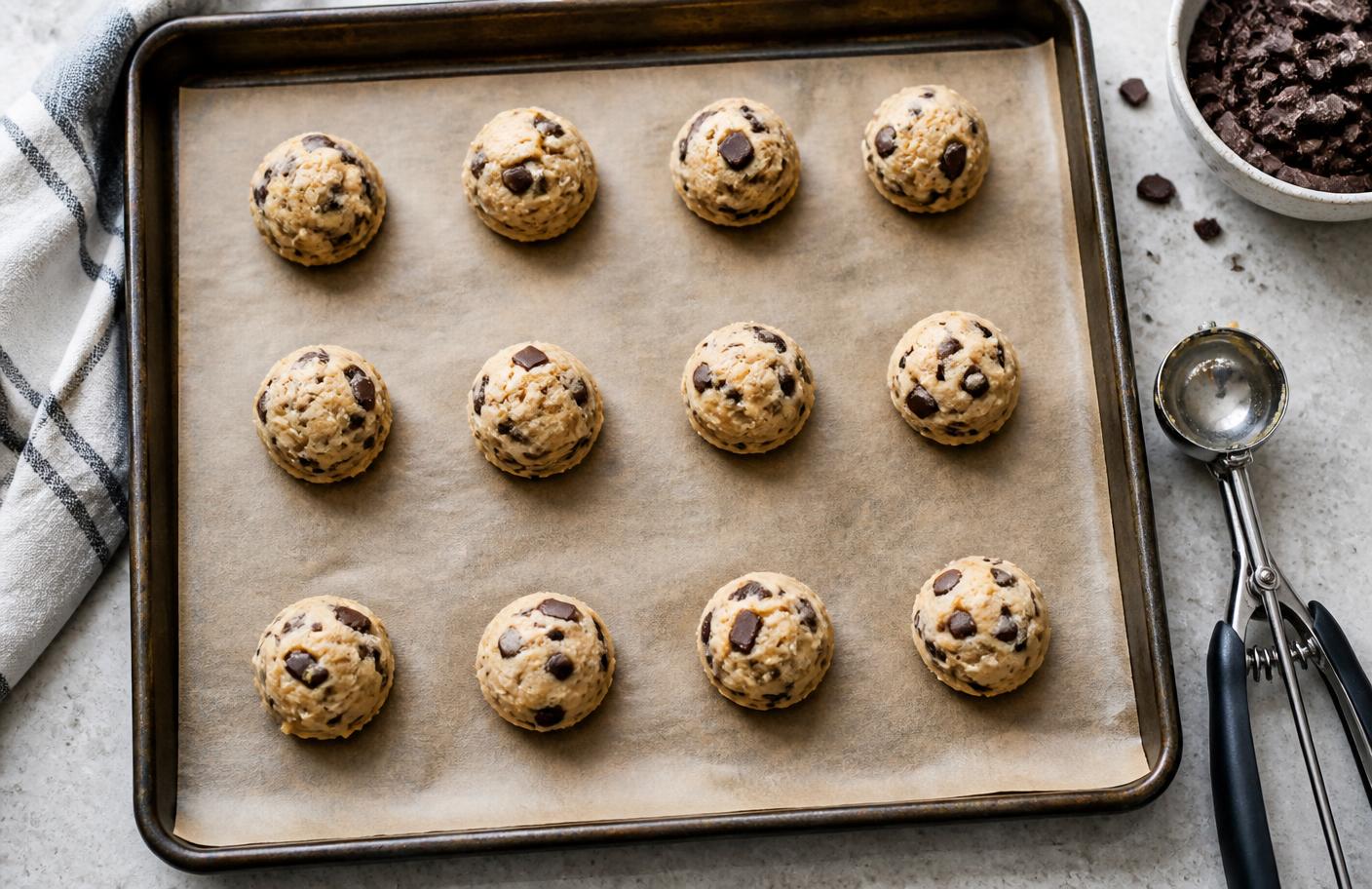
Soft and chewy chocolate chip cookies, the recipe
Doneness and texture guide
| Bake time | What it looks like | Texture once cool |
|---|---|---|
| 9 minutes | Edges just barely set, centers wet and glossy | Very gooey, slightly raw in the middle |
| 10 to 11 minutes | Edges golden, centers puffed and pale | Soft and chewy, the target |
| 12 minutes | Golden throughout, centers just settling | Chewy edges, firmer middle |
| 13 to 14 minutes | Evenly browned, tops fully cracked | Crisp, snappy, keeps well but not chewy |
Substitutions and variations
- No bread flour: use 280 g all-purpose total. The cookies will be slightly less chewy but still very good.
- No cornstarch: leave it out and add 10 g more all-purpose flour. The middles will be a touch less tender.
- Salted butter: use it and cut the fine sea salt to 0.5 tsp.
- Dark brown sugar instead of light: a 1:1 swap that gives a deeper molasses flavor and an even softer cookie.
- No granulated sugar: use 300 g brown sugar total. Expect a softer, slightly cakier cookie with less crisp edge.
- Dairy-free: replace the butter with 170 g refined coconut oil or a firm vegan block at a 1:1 ratio, and use dairy-free chocolate. Coconut oil doughs spread more, so chill a full hour.
- Egg-free: whisk 2 tbsp ground flaxseed with 5 tbsp water, rest 10 minutes, and use it in place of the egg and yolk. The cookies will be denser and less gooey.
- Scale it up: the recipe doubles cleanly. Keep the dough refrigerated between trays so later batches do not spread more than the first.
- Allergen note: as written these contain wheat, dairy and egg, and the optional nuts add tree nuts. Check chocolate labels for milk and nut warnings if you are baking for allergies.
Tips, storage and make-ahead
- Weigh the flour if you can. A packed cup can run 20 percent heavy, and too much flour is the number one cause of dry, cakey cookies.
- Chop a chocolate bar instead of using chips. Chips contain stabilizers that help them hold their shape, which is the opposite of what you want.
- Bake one pan at a time in the middle of the oven. Two pans at once means uneven browning and one tray of pale cookies.
- Doneness cue: the centers should still look slightly wet when you pull the pan. They set on the hot sheet in the next 5 minutes.
- Storage: keep cooled cookies in an airtight container at room temperature for up to 4 days. A slice of sandwich bread in the container keeps them soft.
- Reheating: 8 to 10 seconds in the microwave brings a day-old cookie right back to melty.
- Make-ahead: chill the scooped dough up to 3 days, or freeze the balls solid on a tray then bag them for up to 3 months. Bake from frozen, adding 2 minutes.
- Safety: this dough contains raw egg and raw flour, both of which can carry Salmonella or E. coli, so do not taste it unbaked or let kids eat scraps. Bake it through and refrigerate any dough you are not baking within 2 hours.
What to serve them with
Cold milk is the honest answer, and vanilla ice cream between two of them is the better one. If you are in a baking mood, our fudgy brownies from scratch use the same melted-butter logic in a pan. For the science of why chocolate tastes the way it does, read chocolate and cheese, the pairing that should not work but does. For dinner before dessert, there is the one-pan creamy Tuscan chicken or the faster 20-minute dinner that looks like you tried hard. And if you want more like this, everything lives in our recipes section.
Frequently asked questions
Bake one tray at 10 minutes and one at 12, then decide which camp you are in. Almost nobody guesses their own preference correctly the first time.
Filed under
More from Recipes
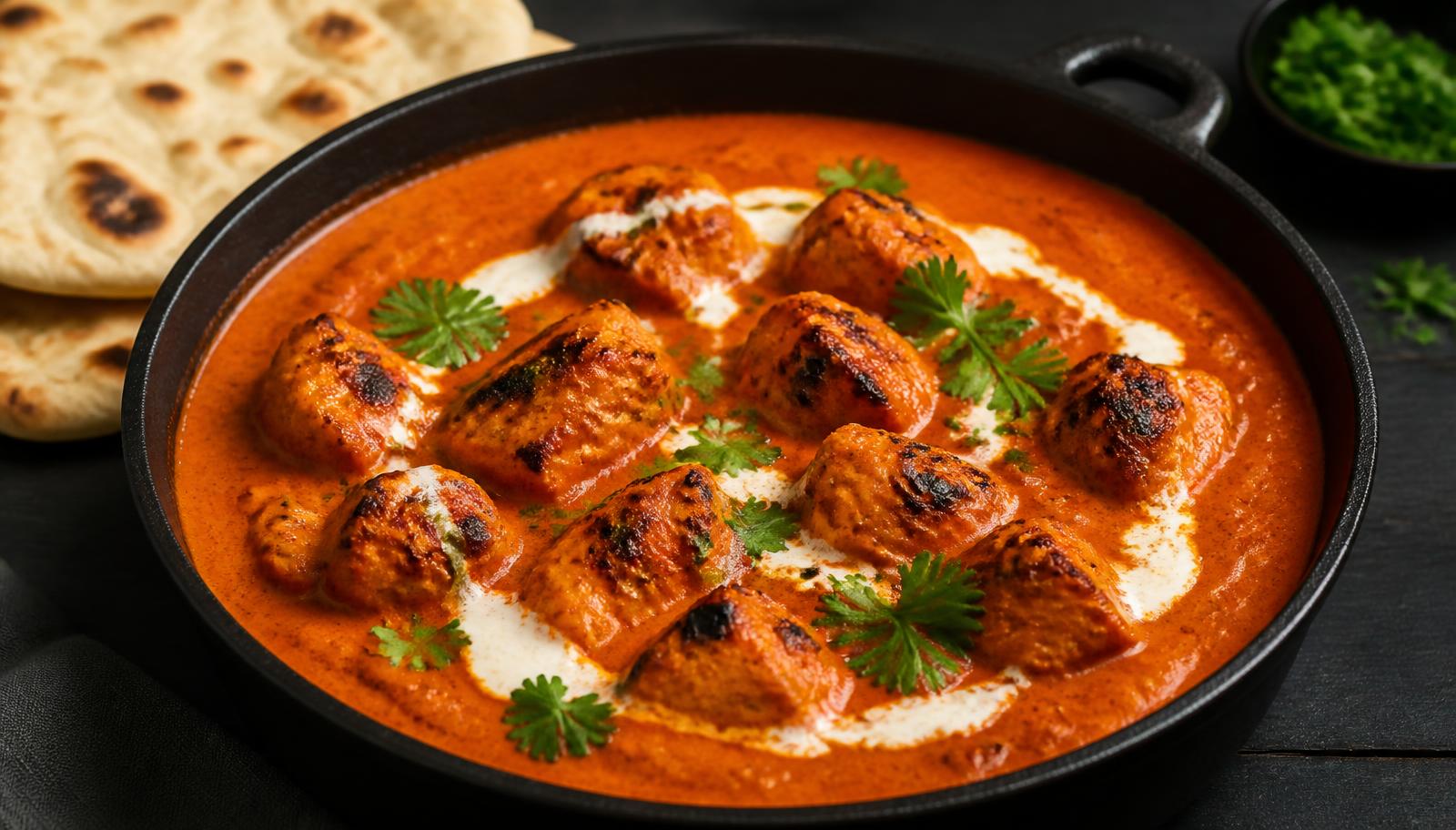
Authentic Chicken Tikka Masala at Home
Yogurt-marinated chicken charred under the broiler, then folded into a tomato, butter and cream sauce built on bloomed spices. Serves 4.
Priya Raman · · 9 min read
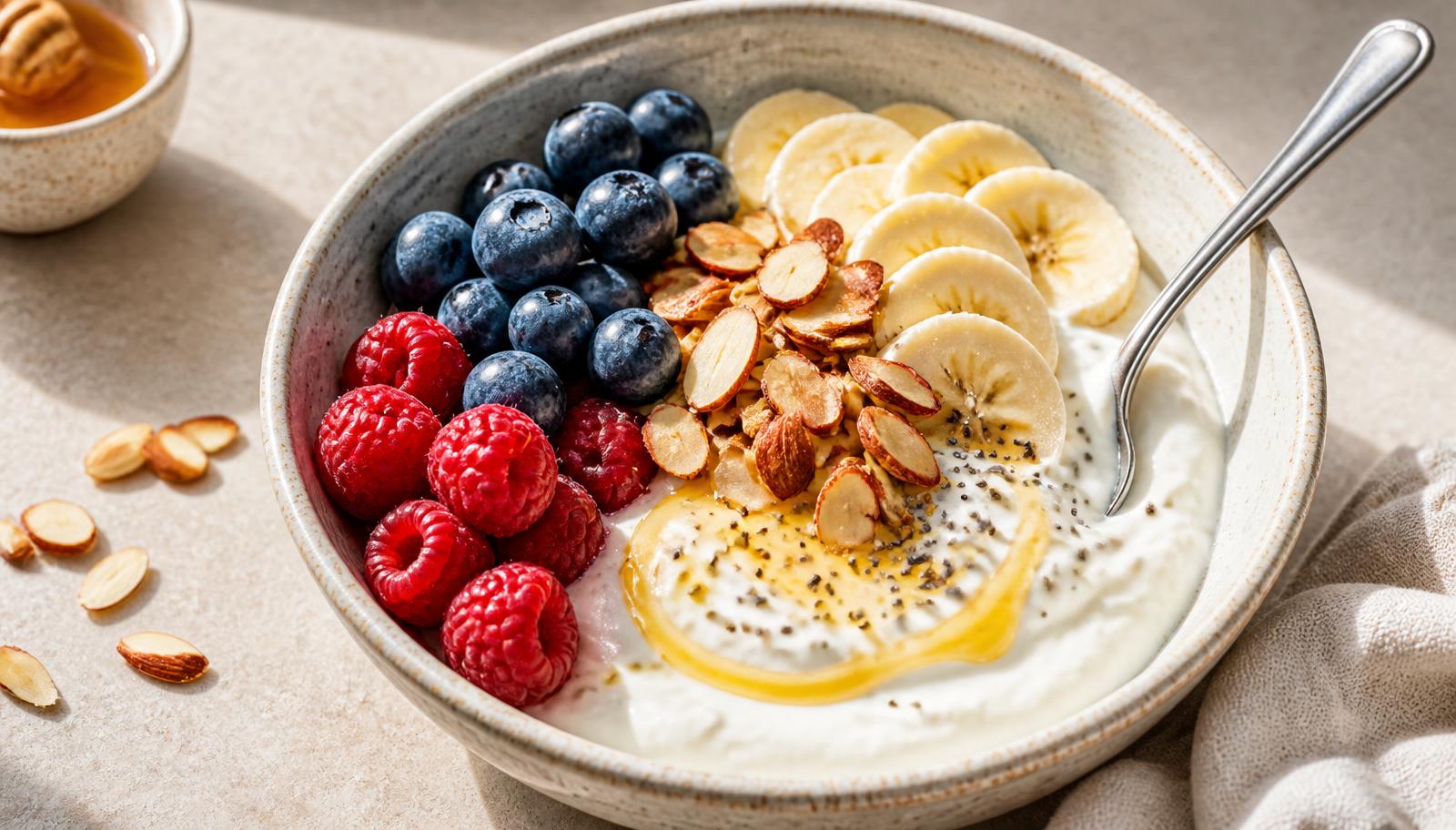
High-Protein Greek Yogurt Breakfast Bowl
Thick strained yogurt, a scoop of protein-forward mix-ins, fruit for acid and nuts for crunch. Five minutes, no cooking, about 35 grams of protein.
Priya Raman · · 7 min read
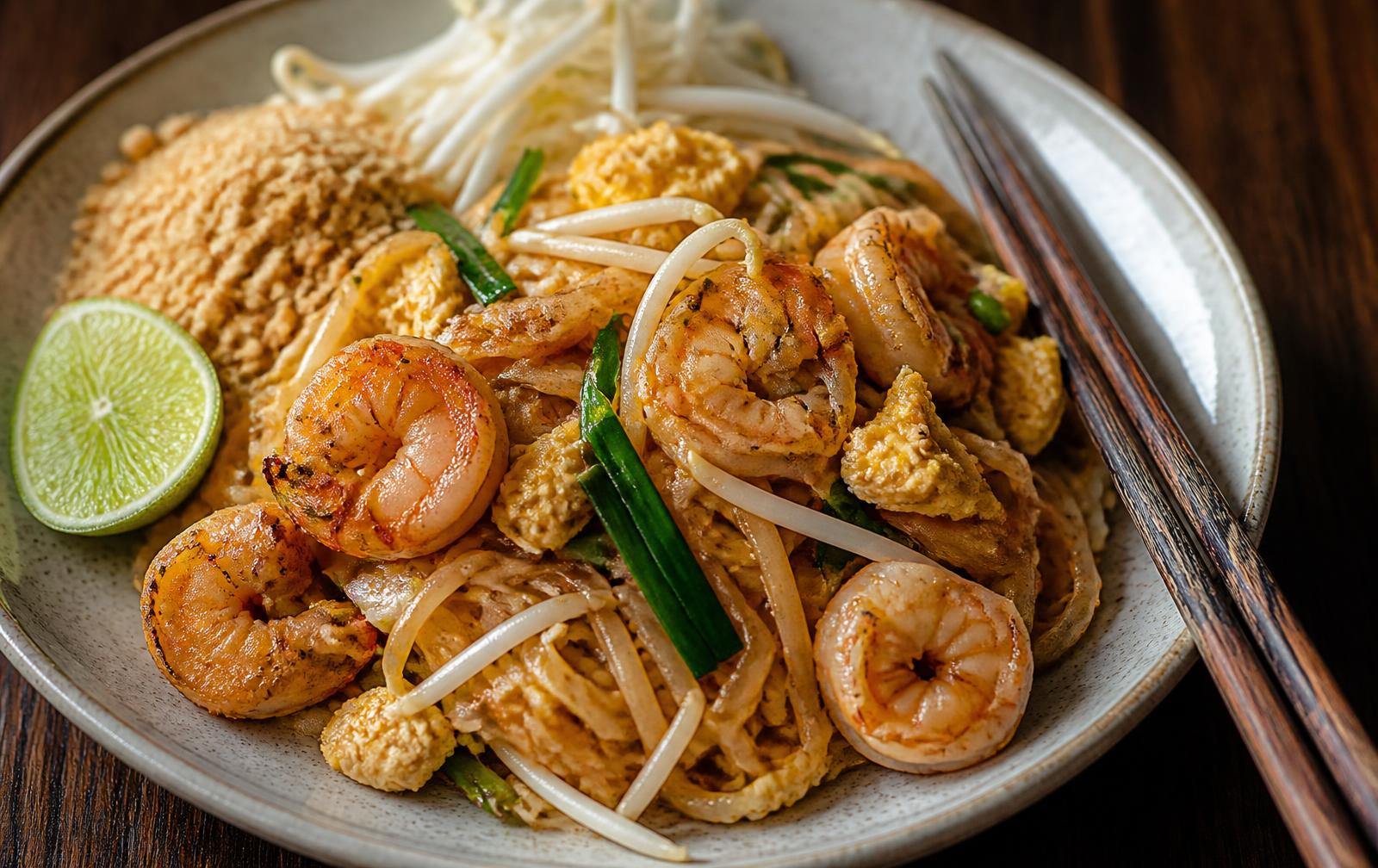
Easy Weeknight Pad Thai
Tamarind, fish sauce and palm sugar in a three-part ratio, noodles soaked rather than boiled, and everything cooked in two fast batches. Thirty minutes, one pan.
Priya Raman · · 8 min read